Official Manual
Start here
Goal - how to win (and lose)
- Win: Be the last player still Lit (your Candle has cards left and you are not Possessed).
- Lose - Consumed: Your Candle is empty at The Draw or Am I Alive? (see Consumed by the Darkness). Running out mid-turn does not eliminate you on the spot.
- Lose - Possessed: At the end of your turn, you have 3+ ghosts of the same suit in your Shadow (4+ for The Sufferer). Ghosts added on other players’ turns wait until your turn ends.
Turn summary
- Haunting - Burn 1 per ghost (or play Ace Reprieve first to skip Burning; see The Passage of Time).
- The Draw - Draw 1 from your Candle. If it is empty, you are Consumed.
- The Ritual - Exactly one action: Haunt, Banish, Cast/Summon, Flicker, Séance, or Abstain. Some classes also offer an Ability that does not use this action.
- The Burden - Discard to hand limit (usually 5).
- Am I Alive? - Empty Candle check (Consumed) or Possession.
Your first game
- Read Goal and Turn summary above.
- Skim The Passage of Time (Rank & suit and the logic tables) and The Grimoire.
- Set up with The Setup, then each player picks a class via Class selection.
- Save until needed: haunter markers, FAQ, large groups.
Physical vs digital
- Physical: Any standard deck(s) plus Jokers (see Supplies). Deathwick art is optional. Pick classes with this page’s selector. Optional: Soundboard for table SFX.
- Digital (Play game): Pass-and-play on one device (not online). Up to 8 per circle. Use in-game RULES as a refresher.
1. The Setup
Any standard deck(s) work. Deathwick art and printed class cards are optional.
The Supplies
Each ritual circle has its own pool. Use 1 deck (52 cards) per 2 players in that circle, plus Jokers:
- Decks / Jokers (this circle): 1–2 players → 1 deck, 2 Jokers; 3–4 → 2 decks, 4 Jokers; 5–6 → 3 decks, 6 Jokers; 7–8 → 4 decks, 8 Jokers. Most decks only have 1–2 Jokers; take extras from another deck or mark spare cards.
- Shuffle that circle’s decks and Jokers into one pool, then deal as below.
- Circle size: Best at up to 8. With 9+, split into separate circles (own pool and Dark each) - see Large groups & Final Ritual. One bigger circle still works, but rounds run long. A Final Ritual uses a fresh pool for the Last Lit, not the combined piles.
- Example split: 9 players as 5 + 4 → the 5 use 3 decks and 6 Jokers; the 4 use 2 decks and 4 Jokers. All 9 at one table would be 5 decks and 10 Jokers.
- Optional haunter markers: Only if The Voodoo Doll, The Clown, The Sealbinder, or The Plague is in play (or you want Haunt origin clear after Mirror/Possess). One marker style per player, many pieces each. See Tracking who Haunted whom.
Card backs (optional)
If you use Deathwick art or print reference sheets, three back designs help tell piles apart at the table. With plain decks, label piles or use separate discard areas instead:
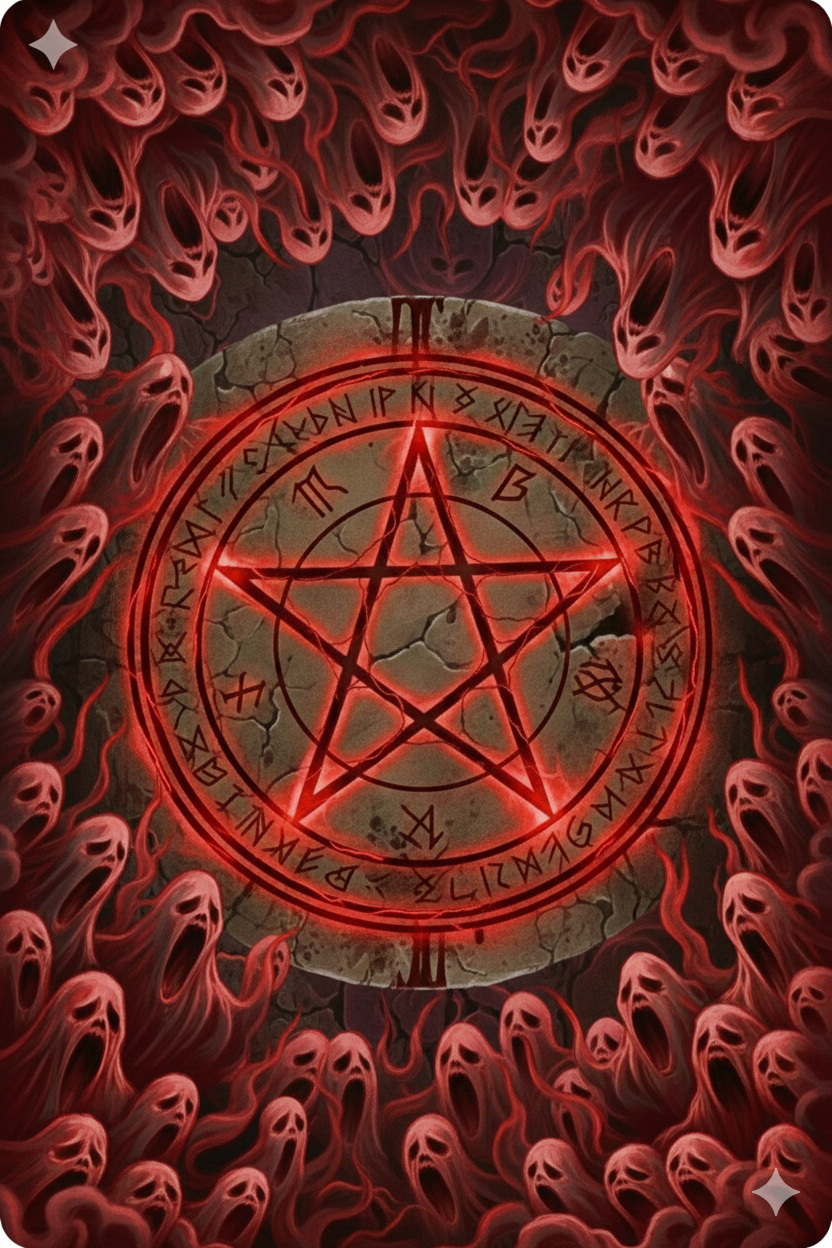
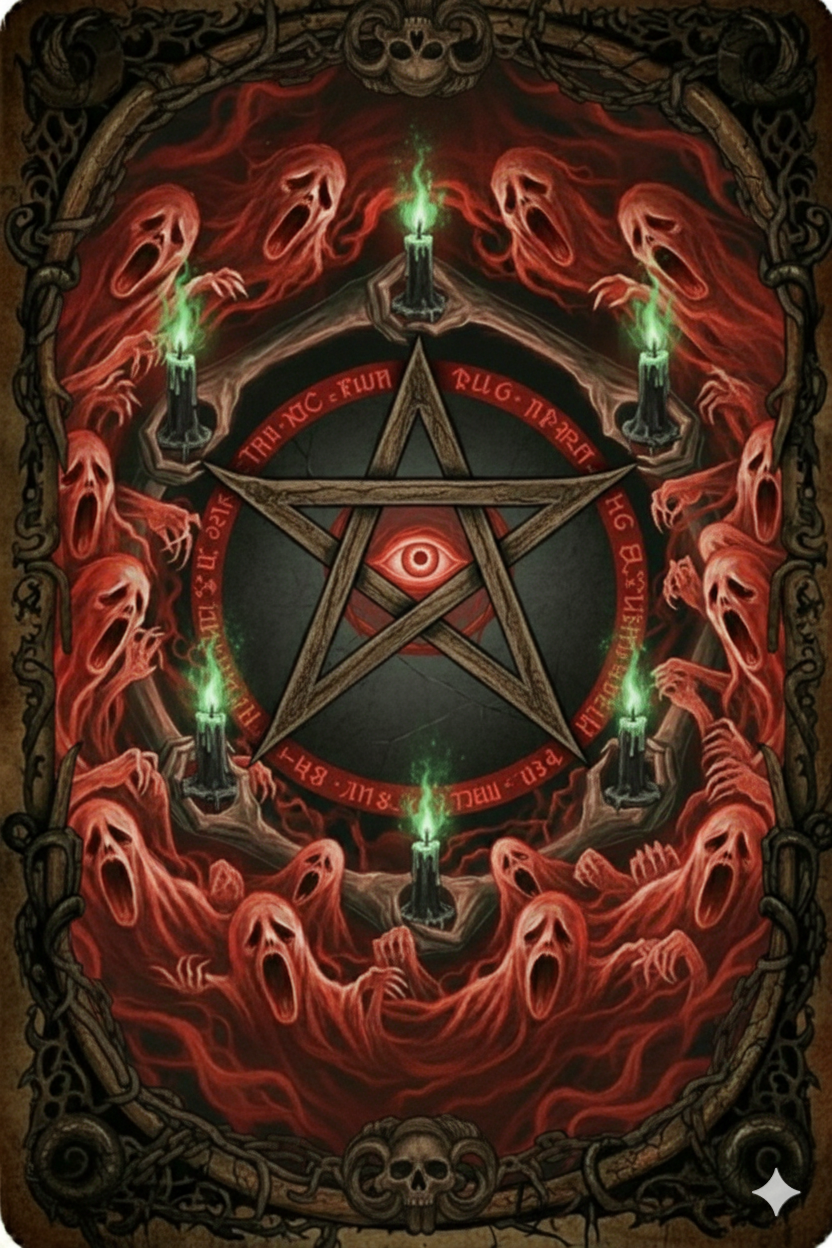
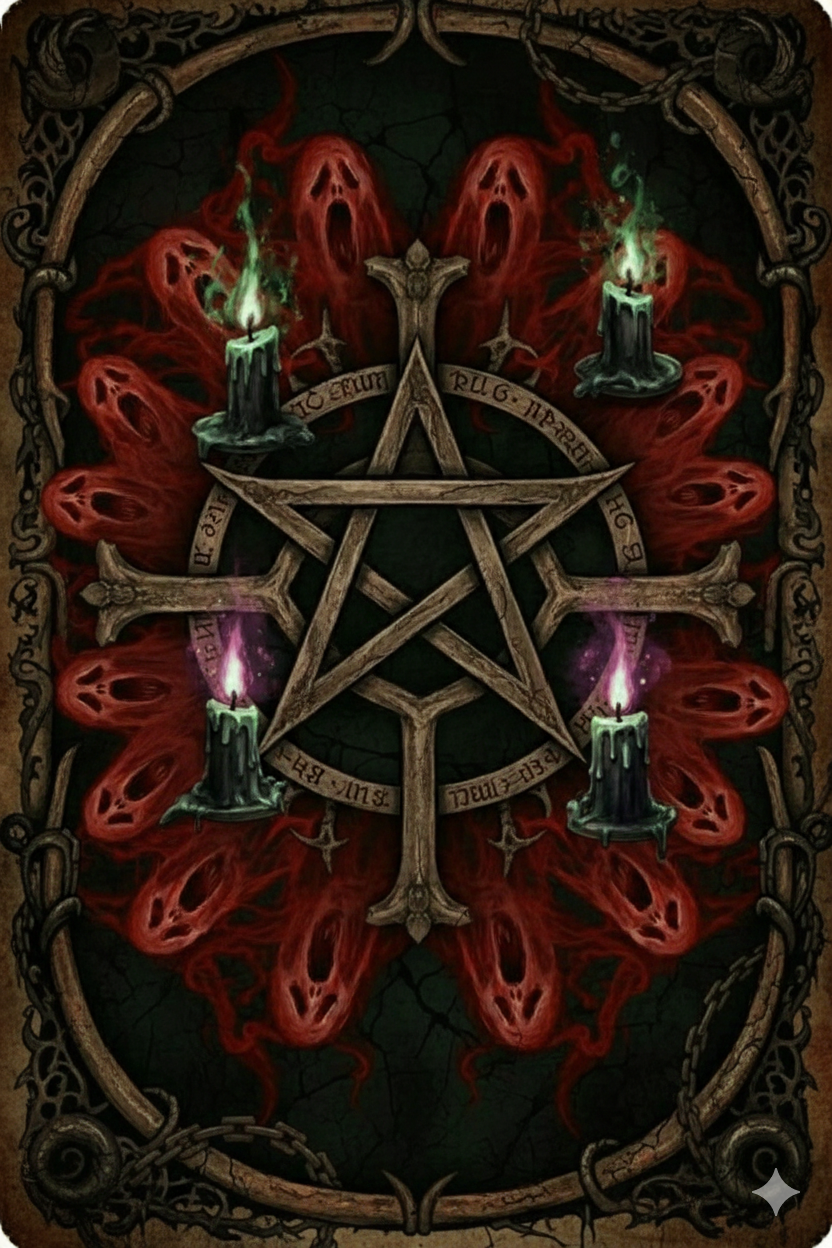
The Circle & The Start
- Sit in a circle.
- Deal exactly 27 cards (half a deck) to each player. This is your Candle.
- Place any remaining undealt cards Face Up into THE DARK (Discard Pile) to start the game.
- Each player draws 3 cards from their Candle into their hand; this is their starting hand. The Hoarder draws 5.
- Turn order: Decide who goes first (class selection follows this order). Play then passes clockwise, one full turn at a time.
- Physical (pick one tiebreaker): last to light a candle, last to tell a ghost story, last to watch a horror movie, or The Chilling Touch (coldest hands). The winner chooses go first (pick class first, act first) or go last (pick last, act last).
- Digital: Agree who won the tiebreaker, then select them and first/last - or use Random.
Consumed by the Darkness (Empty Candle)
You are Consumed only if your Candle is empty at one of two checks: The Draw (after the Haunting, you must Draw 1 and cannot) or Am I Alive? (end of your turn, after The Burden). Running out during the Haunting, mid-action, or on someone else’s turn does not eliminate you immediately.
Possession
Checked only at the end of your turn (after your action and The Burden). If you then have 3+ ghosts of the same suit in your Shadow (Walls do not count), you are Possessed and lose. The Sufferer needs 4. Ghosts added on other turns (Haunt, BOO!, Possess, Plague, death split, etc.) wait until your turn ends - you still get that turn to answer.
Class Selection
Choose your class
Every player chooses exactly one class before the first turn, in turn order (first player picks first). Each is offered 3 random classes and takes one. The last picker sees every earlier choice. The tiebreaker winner already chose first or last when setting turn order.
Class pool by group size
| Players | Pool size | Notes |
|---|---|---|
| 2 | 25 classes | 9 classes excluded (see table below) |
| 3 | 31 classes | 3 classes excluded (4+ only) |
| 4+ | 34 classes | All classes |
Excluded classes (automatic in digital game & selector)
| Class | Min players | Reason |
|---|---|---|
| The Mime | 3+ | Redirect needs a third player at the table |
| The Watcher | 3+ | Sight effect needs two neighbours |
| The Plague | 3+ | Spreading needs a larger circle |
| The Vulture | 3+ | Death timing needs more players |
| The Lich | 3+ | Revive steal needs multiple living players |
| The Gravedigger | 3+ | Neighbour death effects need a larger circle |
| The Occultist | 4+ | Possess-any-player needs a larger circle |
| The Witness | 4+ | Cannot win; win-condition pressure needs 4+ (read class before picking) |
| The Funeral Bell | 4+ | Death ripple needs enough players at the table |
The digital game and this selector use the correct pool automatically. Turn order is set first, then class picks follow it.
Class selection tool
First choose how many players (this sets the class pool):
Choose a pool above, then draw or track.
Each draw shows three classes with card art and rules text. Click a card image to zoom; use Choose this class when you are ready.
...
...
...
Playing with physical cards? Tap Track this class as each player chooses at the table. Picks appear in the pin bar at the bottom so you can follow along on your device.
Every class in this pool is tracked. Use Clear classes in the pin bar to start over.
2. The Ritual Circle
One player takes a full turn (Haunting, Draw, Ritual, Discard), then play passes clockwise to the next player still Lit. Diagrams: ❄️ is a typical starter.
Shadow (3+ players): Split the Shadow - ghosts on the left came from your left neighbour, on the right from your right. Useful for The Sealbinder (only their Haunted ghosts are sealed) and The Clown (their Haunted ghosts need Face or Cleanse to Banish). In 2 players there is one opponent, so one zone.
Optional: tracking who Haunted whom (physical play)
Left/right Shadow is enough for ordinary Haunts in 3+ games. Mirror (J), Possess (9), and death-split ghosts can move cards, so a marker on each Haunted ghost stays accurate. Only four classes read who Haunted a ghost. Skip markers for BOO! and other ghosts that were never Haunted (Voodoo Doll does not reflect those). The digital game tracks this automatically.
Give each player a style of marker (beads, caps, clips) and several of each (about 5–8 to start). When someone Haunts you, put one of their pieces on that ghost. Two Haunts from the same player need two pieces. When the ghost leaves, return the piece - or move it with the ghost if Mirror/Possess moved it. Reuse markers after a ghost is gone.
| Class / effect | Why the haunter matters |
|---|---|
| The Voodoo Doll | When you Burn at the Haunting, ♠/♣/♦ ghosts put there by a Haunt reflect: that haunter Burns 1 too. Mirror and Possess do not change who Haunted the ghost. |
| The Clown | Ghosts they Haunted onto you reject Banish with number cards (except Cleanse 7); only Face or Cleanse works. |
| The Sealbinder | Only ghosts they Haunted are sealed: those cannot be Possessed, Recalled, or moved by Mirror. Other ghosts in the same Shadow (Haunted by anyone else) can still be moved or Recalled normally. Mirror swaps the rest and leaves Sealbinder-Haunted ghosts where they are. |
| The Plague | Spreading only applies to ghosts they Haunted. Also track which players that ghost has already visited (it cannot return to the same player) - e.g. small checklist on paper or a second set of tokens, not just the haunter marker. |
Not on this list: Mime, Hex, Warlock, and other Haunt-adjacent classes still mark the original attacker when a ghost lands; they do not add extra haunter rules. Without the four classes above, left/right Shadow is usually enough until Mirror or Possess moves ghosts.
DARK
❄️
DARK
❄️
DARK
❄️
DARK
❄️
DARK
❄️
DARK
❄️
3. The Passage of Time
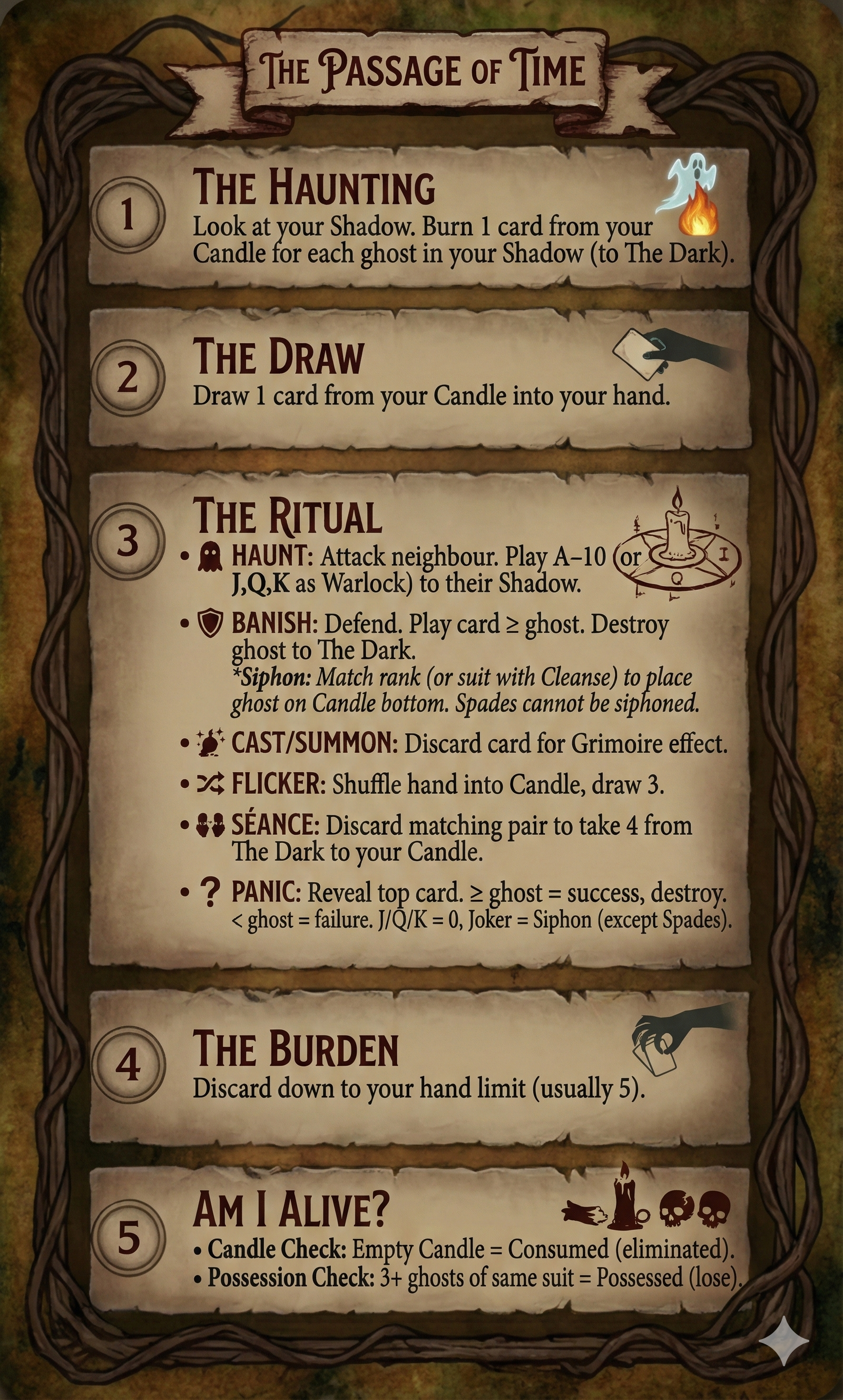
- Neighbours
- The two players immediately to your left and right in the circle. Most effects target one neighbour unless a card says otherwise (e.g. Drain (4) hits all neighbours).
- Shadow
- Area in front of you for ghosts. Ghosts vertical, Walls horizontal. Burn 1 from your Candle per ghost at the start of your turn. Physical markers: see haunter tracking if Voodoo Doll, Clown, Sealbinder, or Plague is in play.
- Burn
- Take the top card of your Candle and put it face up on top of The Dark.
- Suit tier
- For Banish tie-breaking: ♠ > ♥ > ♣ > ♦ (Spades, Hearts, Clubs, Diamonds). See Rank & suit.
Rank & suit (when they matter)
Banish, Cleanse, and Purge all remove ghosts, but they do not use rank and suit the same way.
- Rank values (Banish): Ace = 1; numbers as printed; J, Q, K = 10.
- Suit tier (Banish ties only): ♠ > ♥ > ♣ > ♦.
- Siphon = ghost to the bottom of your Candle instead of The Dark. Never: ♠, face-rank ghosts (J/Q/K), Banishing with a face card, or Purge.
Banish vs Cleanse vs Purge
| Action | What it is | What matters | On success |
|---|---|---|---|
| Banish | Force one ghost out by power. Matching rank is Banishing. | Equal or higher value. On a value tie, suit tier ♠ > ♥ > ♣ > ♦. | Ghost to The Dark, or Siphon only if ranks match on number cards (not ♠). No Siphon if the ghost is a face or you Banished with a face. |
| Cleanse (7) | Cast the 7 to wash one ghost out. Suit only. | When Cast: no value/rank check. Siphon uses suit only. | Ghost removed. Siphon if suits match (never ♠; never face ghosts). Rank match does not apply to Cast Cleanse. |
| Purge (K) | Wipe the Shadow. Neither Banish nor Cleanse. | Removes all ghosts. No value check. No Siphon. | Every ghost (any rank or suit, including matching suits and faces) goes to The Dark. Nothing returns to your Candle. |
If you Banish with a 7 (instead of Casting Cleanse), use Banish rules: Siphon on rank match is Banishing, not Cleansing.
Logic tables (examples)
Green = yes. Red = no. Suit tier for Banish ties: ♠ > ♥ > ♣ > ♦.
Banish
| Your card | Ghost | Can Banish? | Siphon? |
|---|---|---|---|
| 8♥ | 5♣ | Yes (higher) | No |
| 7♥ | 7♣ | Yes (equal; ♥ > ♣) | Yes (rank match) |
| 5♠ | 5♥ | Yes (equal; ♠ > ♥) | Yes (rank match) |
| 4♠ | 4♠ | Yes (equal) | No (♠ never Siphon) |
| 5♥ | 5♠ | No (equal; ♥ < ♠) | — |
| 7♥ | 7♠ | No (♥ < ♠ on tie) | — |
| 10♥ | J♣ | Yes (10 vs face=10; ♥ > ♣) | No (face ghost) |
| J♥ | 10♣ | Yes (face=10) | No (face card) |
| K♠ | K♥ | Yes | No (face / face) |
| 9♥ | 9♠ | No (suit tier) | — |
| 9♥ | 9♥ | Yes (equal) | Yes (rank match; not ♠) |
Cleanse (Cast the 7)
| Your 7 | Ghost | Removes? | Siphon? |
|---|---|---|---|
| 7♥ | 3♥ | Yes | Yes (suit match) |
| 7♥ | 9♣ | Yes | No (suit differs) |
| 7♥ | 7♣ | Yes | No (rank irrelevant; suits differ) |
| 7♠ | 4♠ | Yes | No (♠ never Siphon) |
| 7♥ | J♥ | Yes | No (face ghost) |
Purge (Summon the King)
| King | Ghosts in Shadow | What happens | Siphon? |
|---|---|---|---|
| K♥ | Any mix (numbers, faces, matching suits…) | All go to The Dark | Never |
The Haunting
Reprieve (Ace): Before Burning, you may play an Ace from hand to skip the Haunting (no Burn). This is not a Ritual action; then Draw and Ritual as normal.
If you have ghosts, Burn 1 from your Candle per ghost (face up on The Dark). No ghosts: skip Burning and go to The Draw.
The Draw
Draw 1 from your Candle. If it is empty, you are Consumed (see Consumed by the Darkness). Burning your last cards during the Haunting does not eliminate you until this check.
The Ritual
Take exactly one action, or Abstain. Class Abilities do not use this action unless the class says so - you may use a qualifying Ability and still take a Ritual action. Passive triggers (e.g. Grimoire of Rejection stocking a page) happen automatically. Abilities are generally not Salted; see FAQ.
Greed (2): the chosen player draws 2, then you perform another action this turn.
ABILITY Class
If it says Ability or “does not use your Ritual action,” it stacks with Haunt, Banish, Cast, etc. unless limited (e.g. once per turn). Examples: Mimic swaps Candles once per game; Oracle peeks your Candle before the Haunting.
HAUNT Attack
Number cards only (A–10). Faces (J, Q, K) and Jokers are Summoned, not Haunted (class exceptions: FAQ).
Play a number card into a neighbour’s Shadow; it becomes a ghost. They Burn 1 per ghost at the start of their next turn.
BANISH Defend
Play a card from hand onto one ghost in your Shadow. Full compare and Siphon rules: Banish vs Cleanse vs Purge and logic tables.
CAST / SUMMON Effect
Cast numbers (A–10) or Summon faces (J, Q, K) and Jokers: discard to The Dark for the effect. See The Grimoire.
FLICKER Reset
Shuffle your entire hand back into your Candle, then draw 3 new cards to your hand.
SÉANCE Heal
Discard a matching pair from your hand to the top of The Dark (two cards of the same rank). Take the bottom 6 cards of The Dark and add them to the bottom of your Candle. If The Dark has fewer, take all remaining.
ABSTAIN Skip
If you cannot or choose not to act, Abstain. It uses your action; no extra cost.
The Burden
Discard down to your hand limit (usually 5 cards). The Hoarder discards down to 8; those extras go to the bottom of their Candle, not The Dark.
Am I Alive?
Candle: empty at end of turn → Consumed (rule).
Possession: end of your turn only.
On death: ghosts in your Shadow split evenly to your two neighbours; you choose who gets the extra if odd. Details: FAQ.
4. The Grimoire
Art shown is ♠ Spades; effects are the same for every suit. Tap a card for a full-screen view, then swipe for the next (reference cards, Grimoire, then classes).
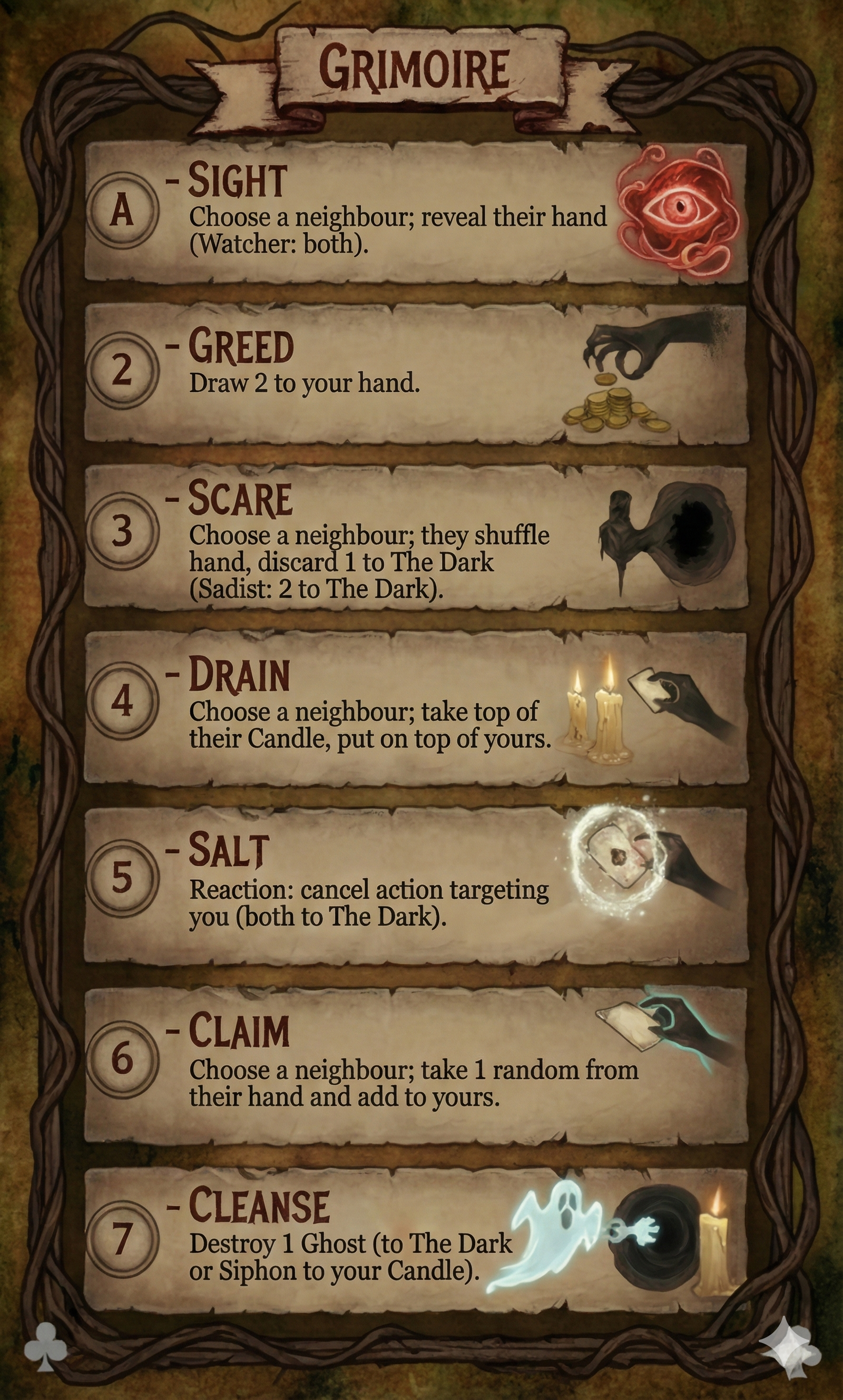
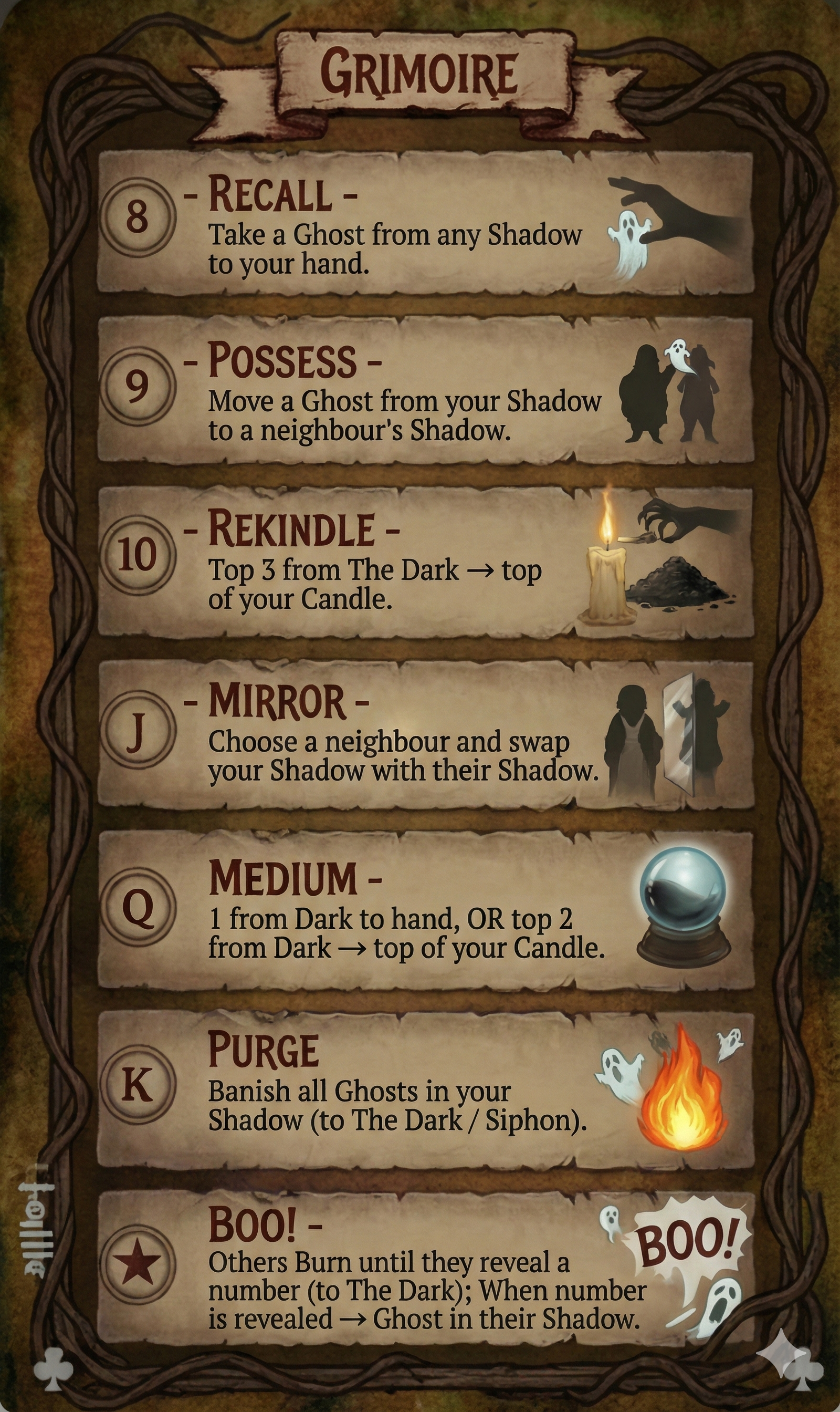
| Card | Rank | Name | Effect |
|---|---|---|---|
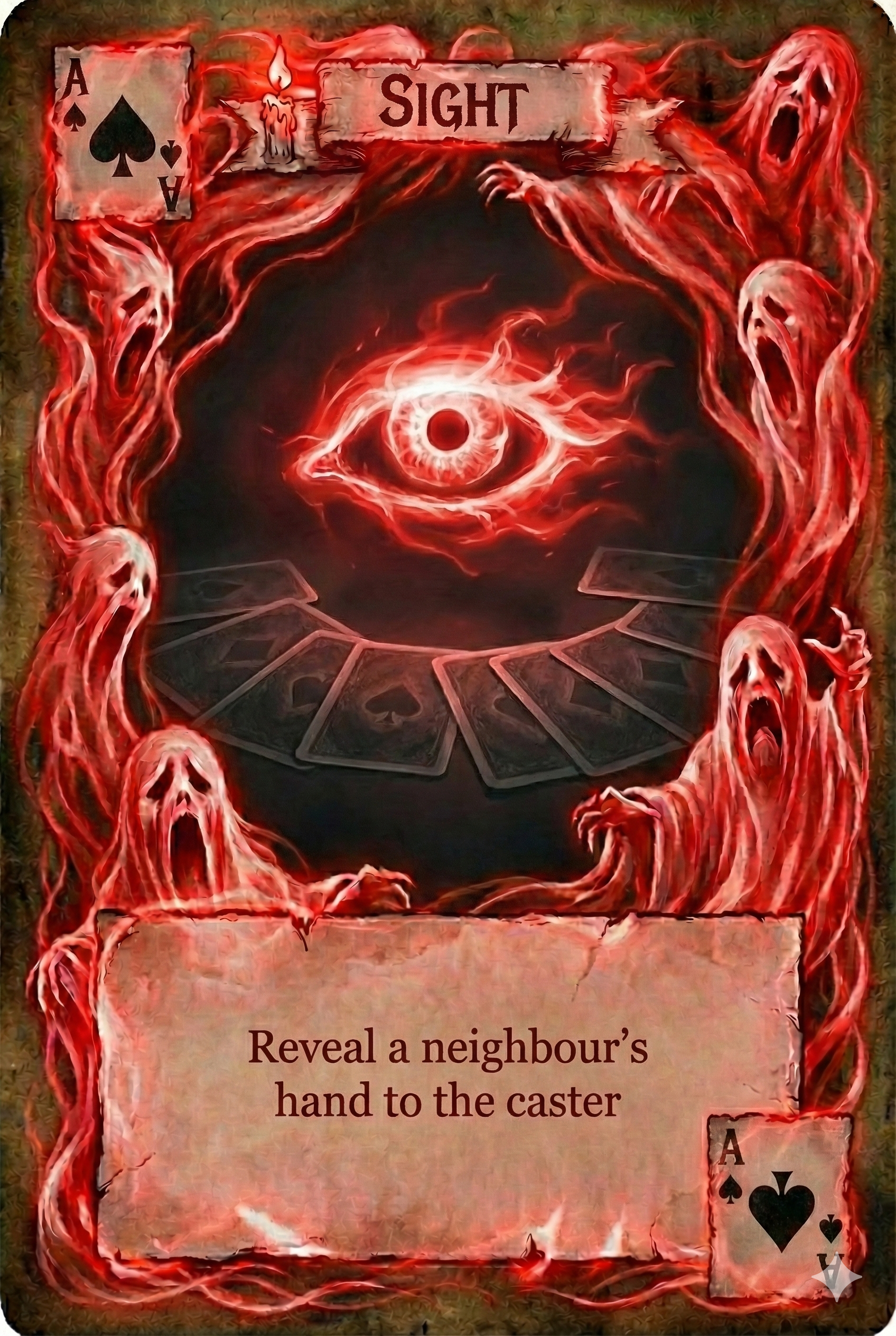 | A or 1 | REPRIEVE | Play at the start of your turn to skip the Haunting phase. Then Draw and perform the Ritual as normal. |
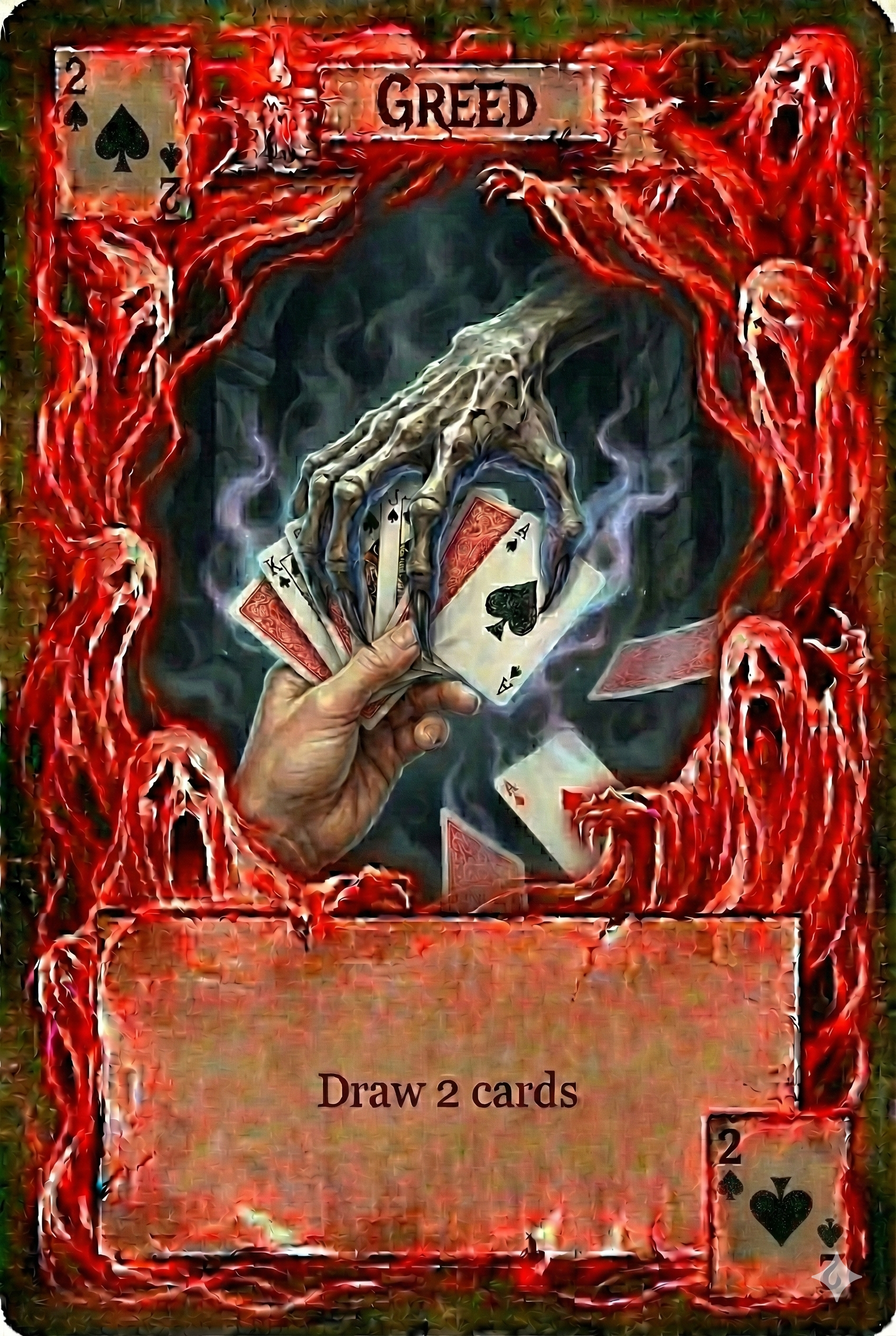 | 2 | GREED | Choose a neighbour or yourself. They draw 2 cards from their Candle to their hand. You then perform another action this turn. |
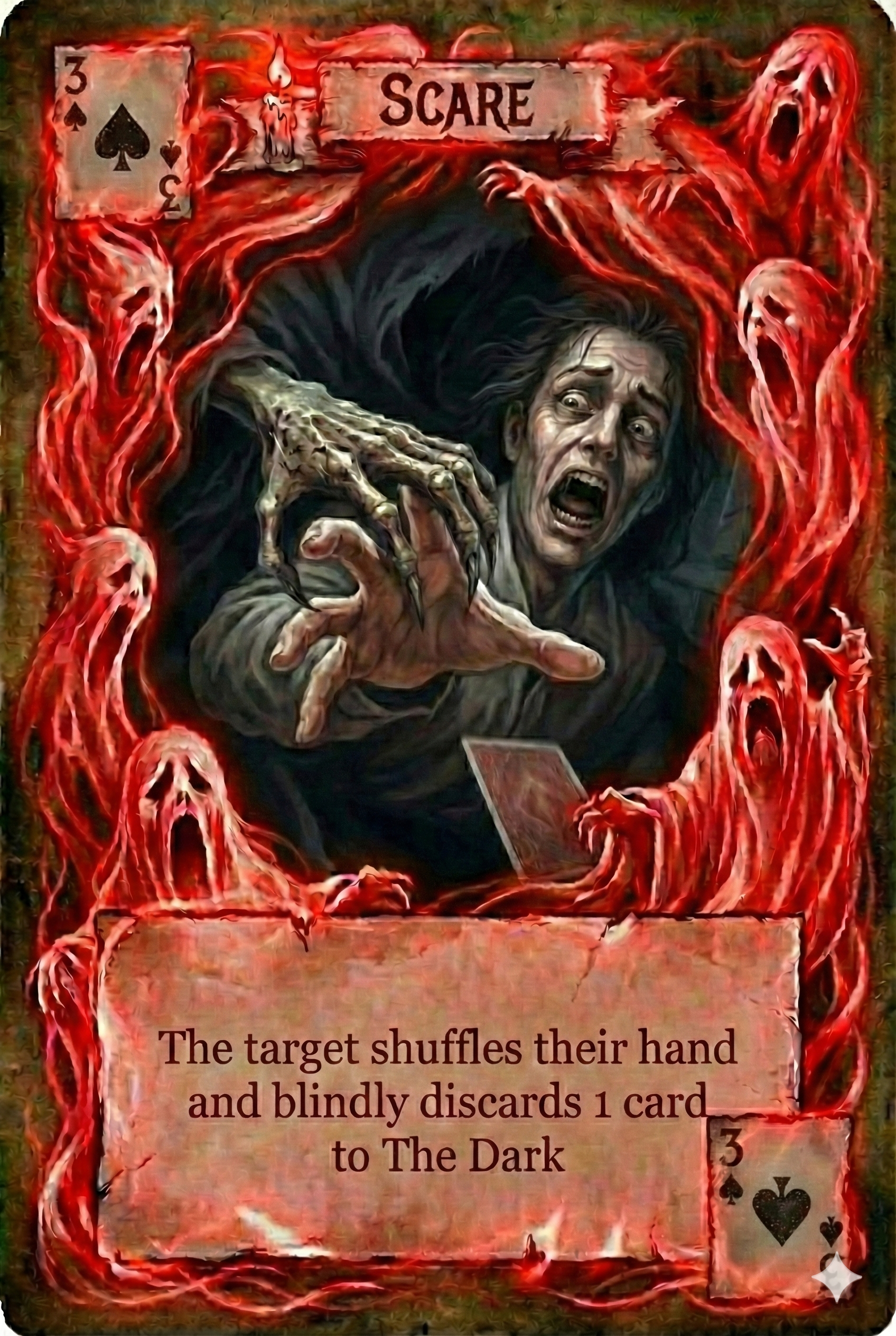 | 3 | SCARE | Choose a neighbour. They shuffle their hand and blindly discard 2 to The Dark. |
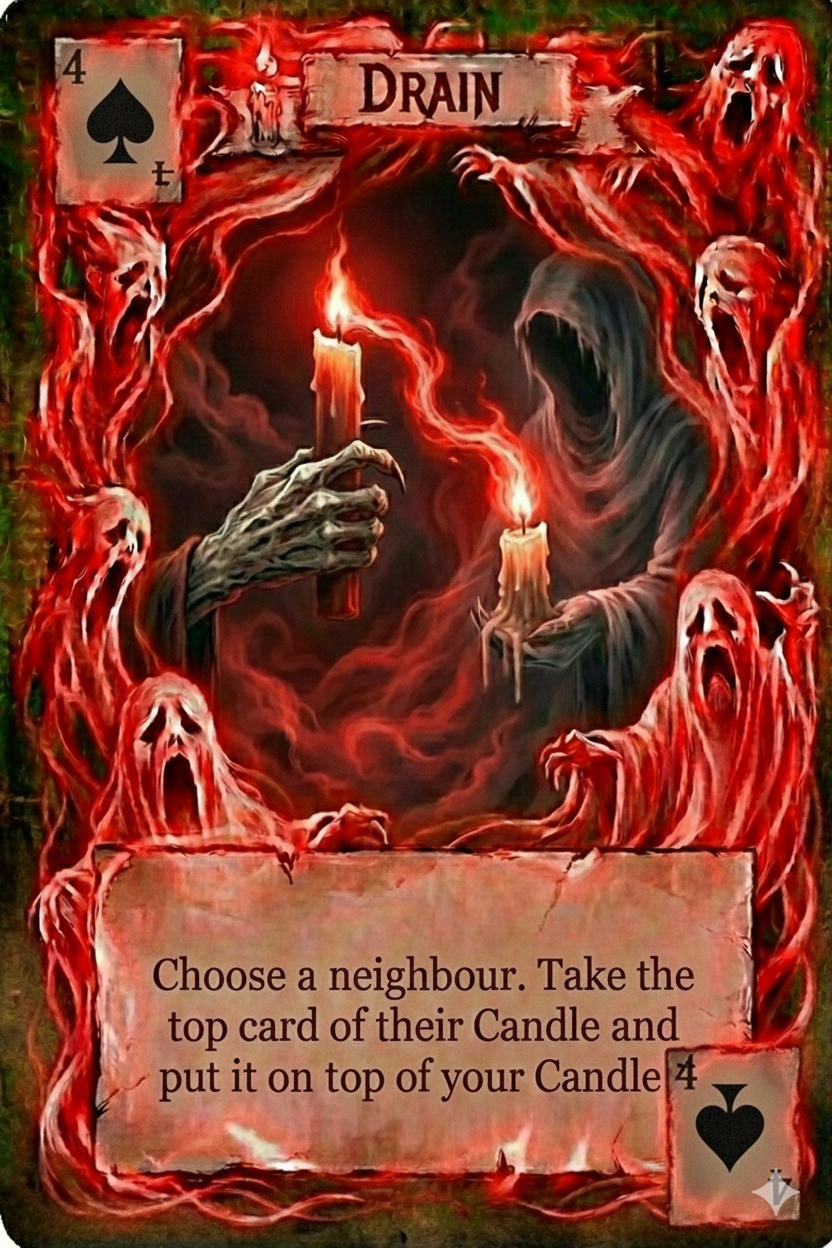 | 4 | DRAIN | Take the top 2 cards from each neighbour’s Candle onto yours. |
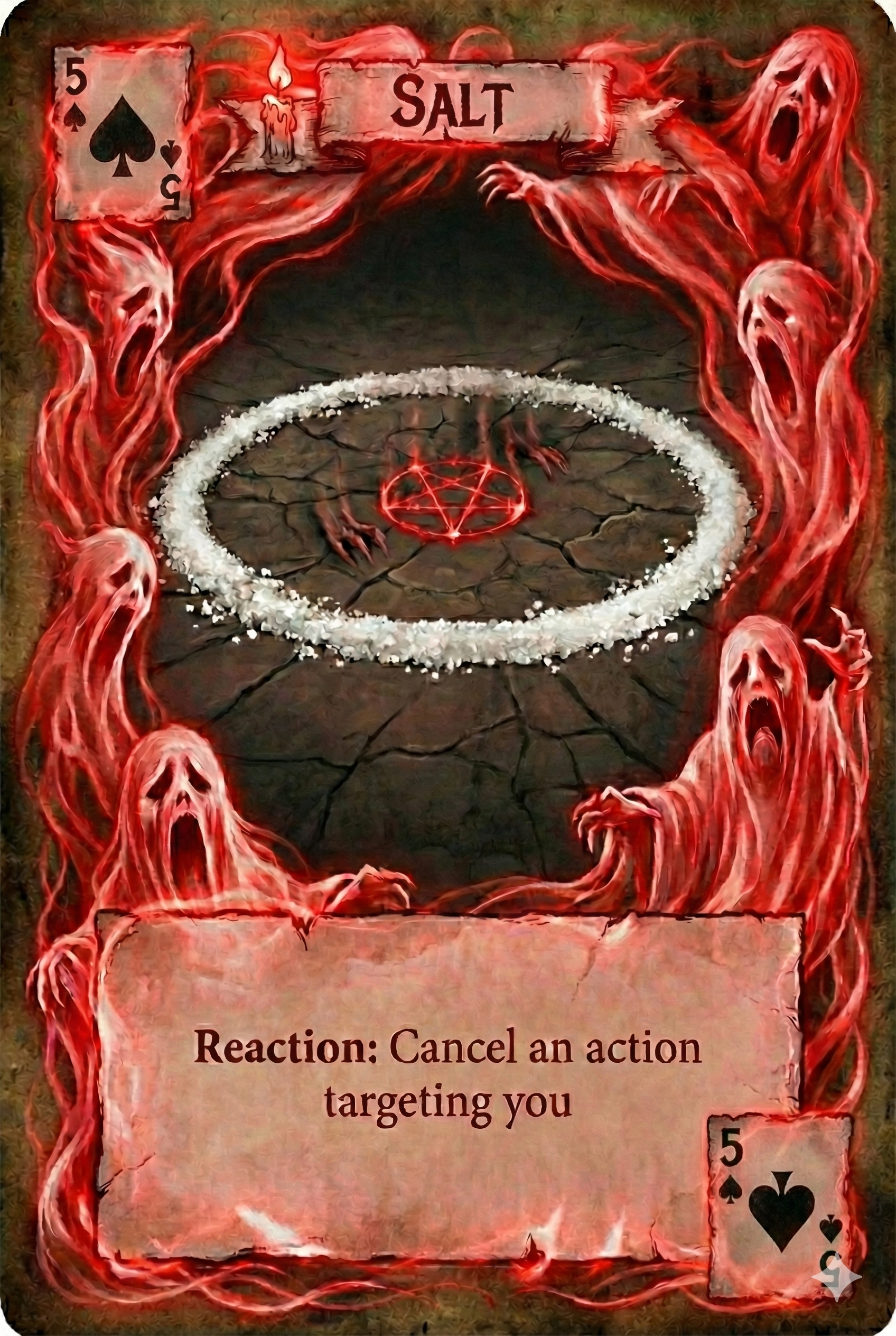 | 5 | SALT | Reveal to cancel any player’s action. Your 5 and their card go to The Dark. Details: Salt. |
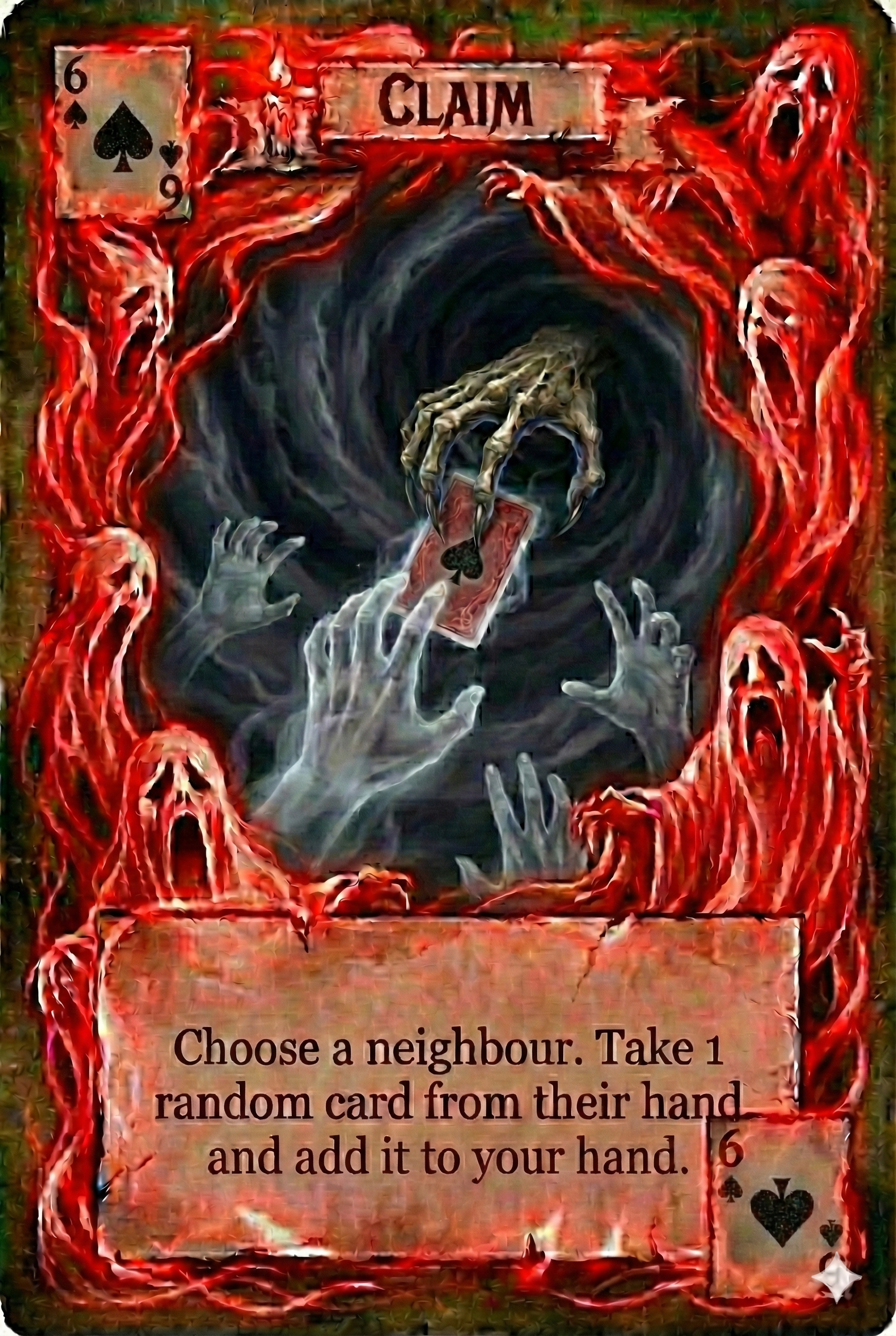 | 6 | SIGHT | View a neighbour’s hand and take 2 cards of your choice. |
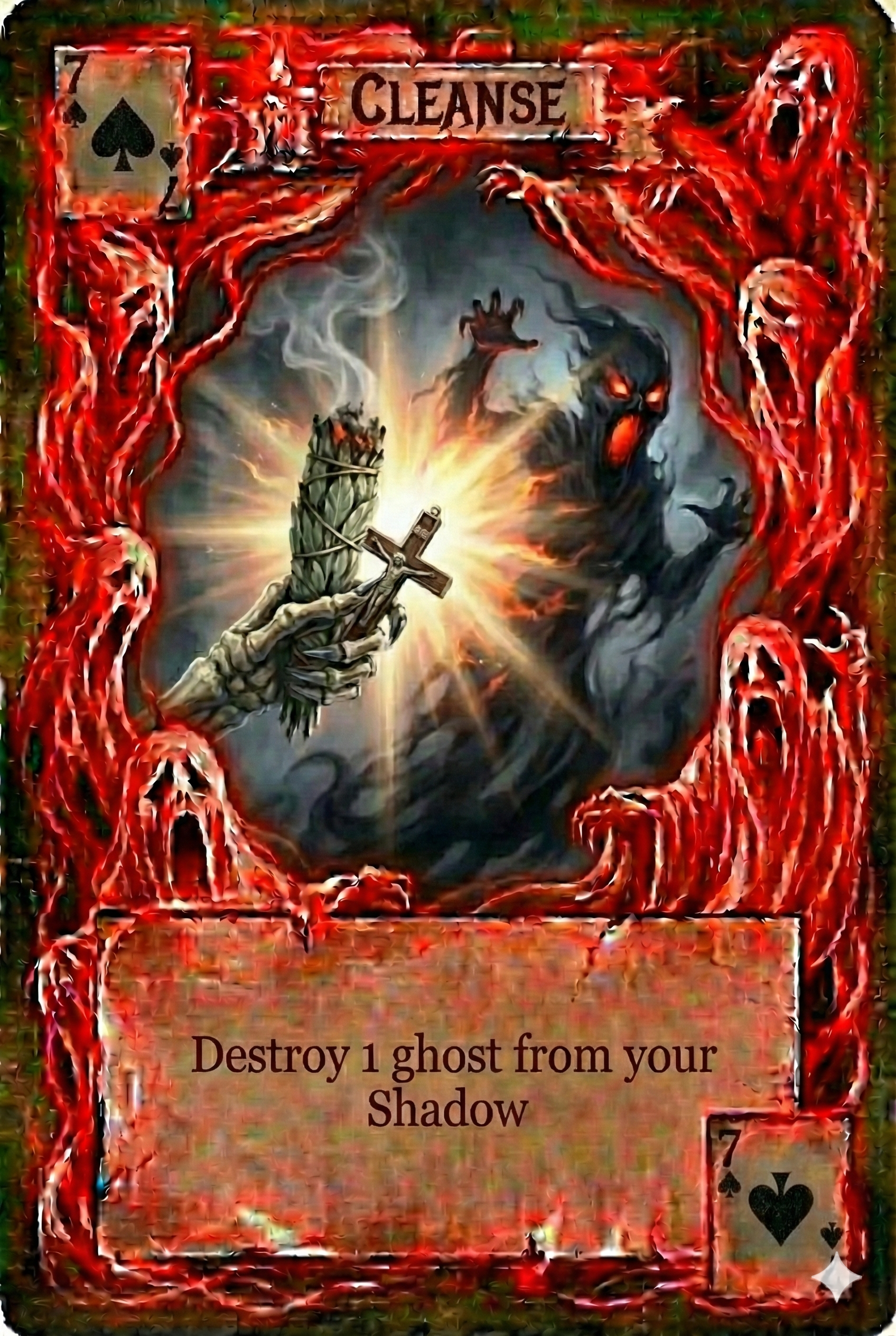 | 7 | CLEANSE | Cast to remove 1 ghost (no value check). Siphon if suits match (never ♠ or face ghosts). |
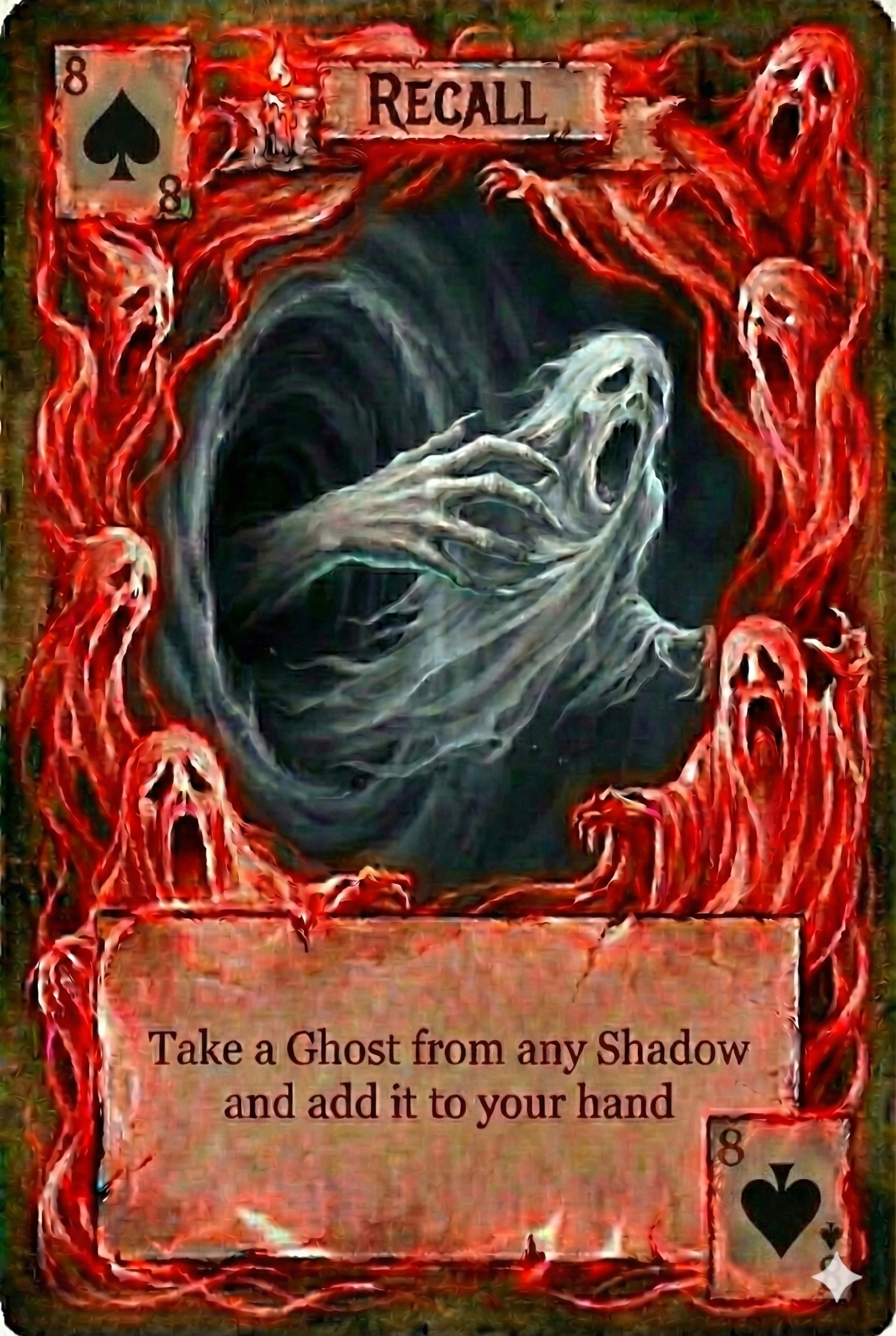 | 8 | RECALL | Take a ghost from any Shadow into your hand. |
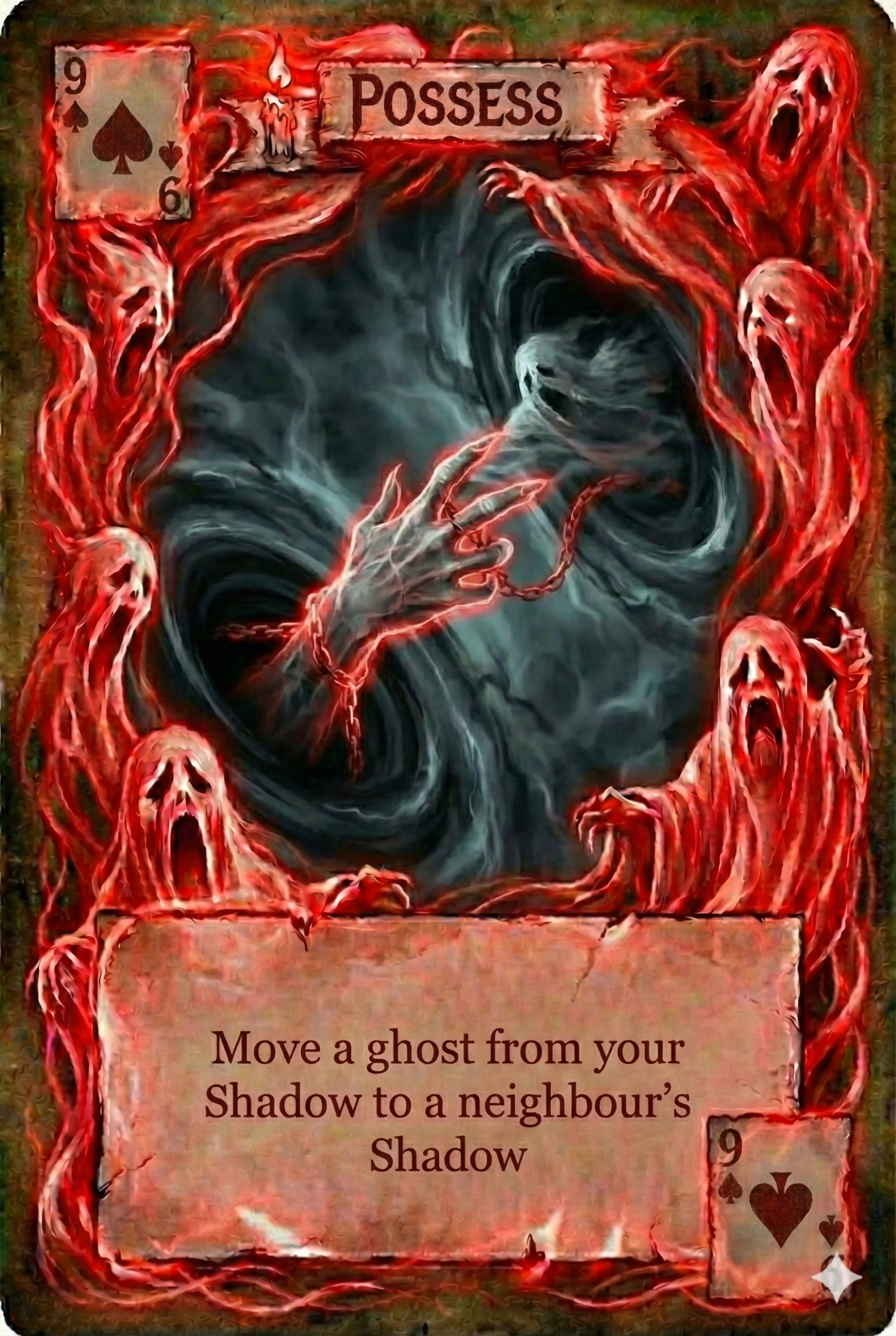 | 9 | POSSESS | Move a ghost from your Shadow to a neighbour’s Shadow. |
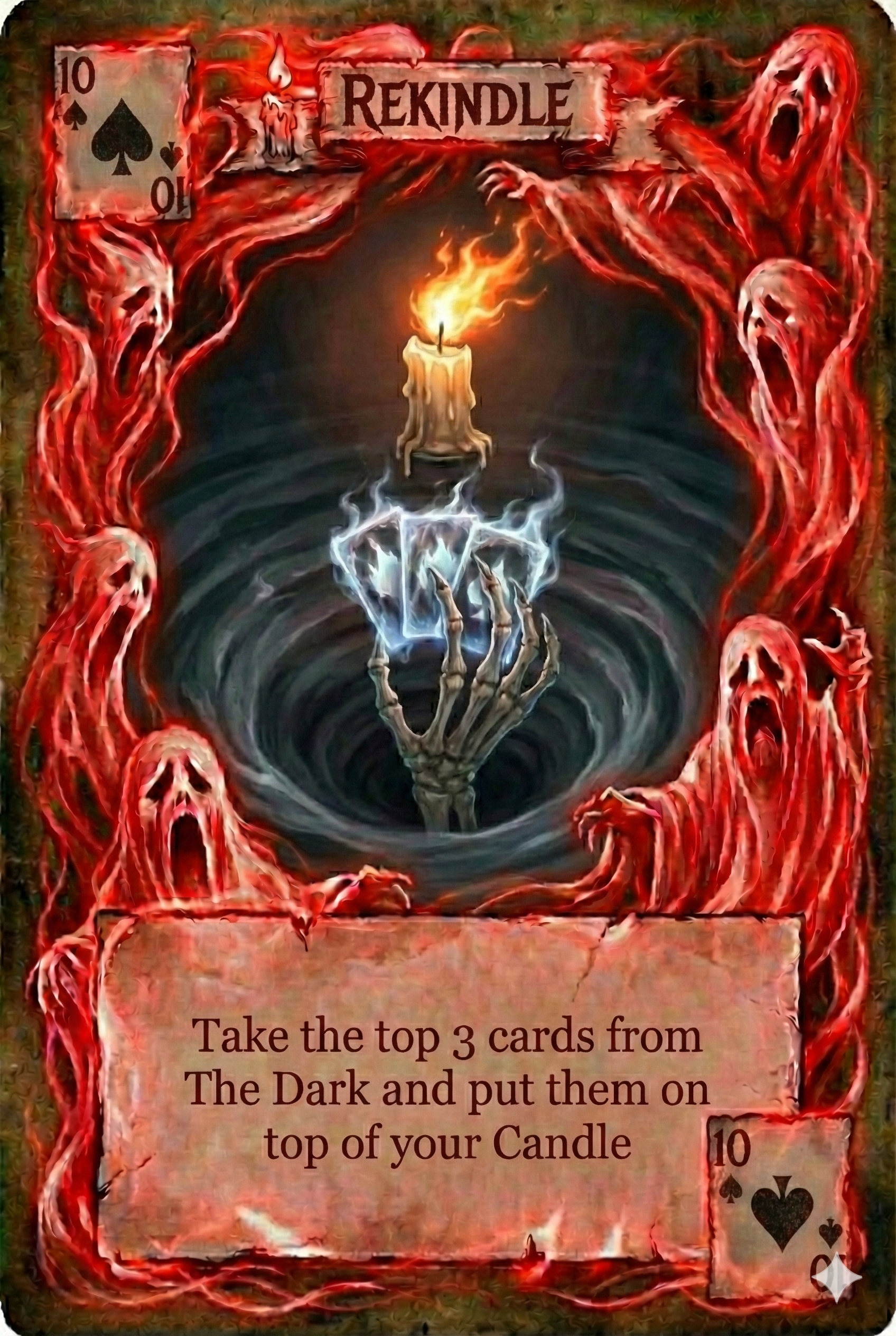 | 10 | REKINDLE | Top 3 of The Dark onto your Candle, then shuffle your Candle. |
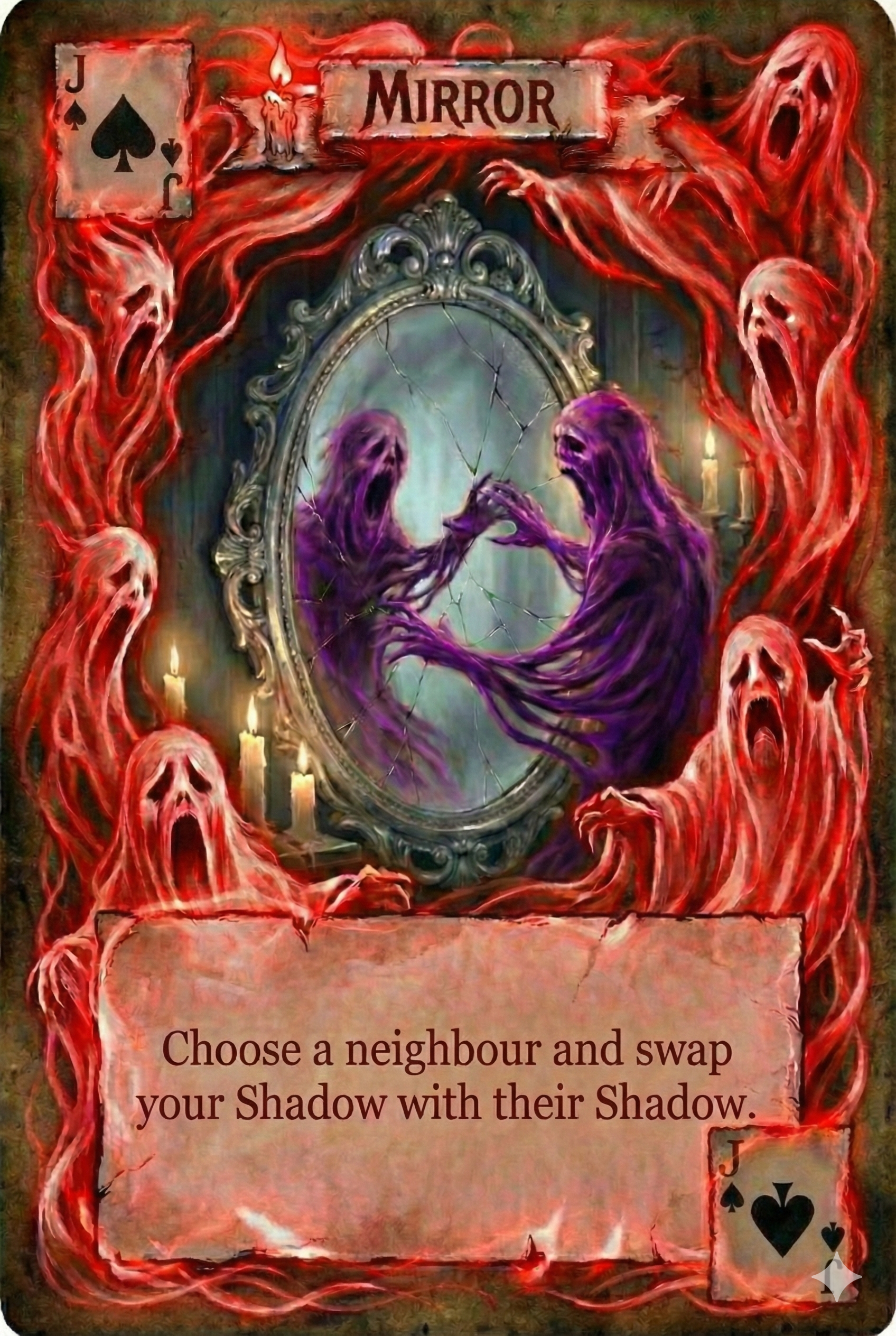 | J | MIRROR | Swap Shadows with a neighbour. Sealbinder-Haunted ghosts stay put. |
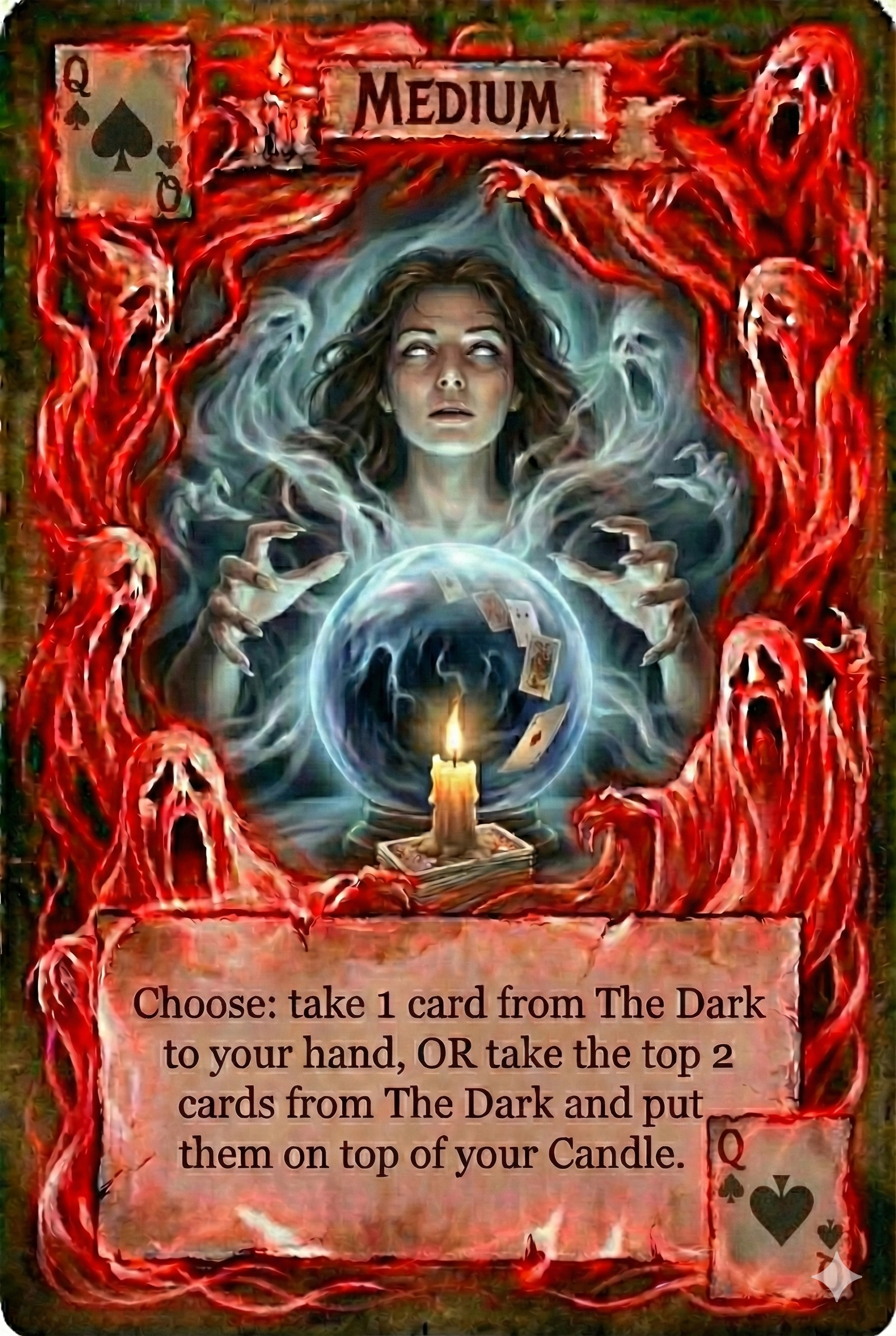 | Q | MEDIUM | Search The Dark; take 2 cards of your choice to hand (not Jokers). If fewer remain, take all. |
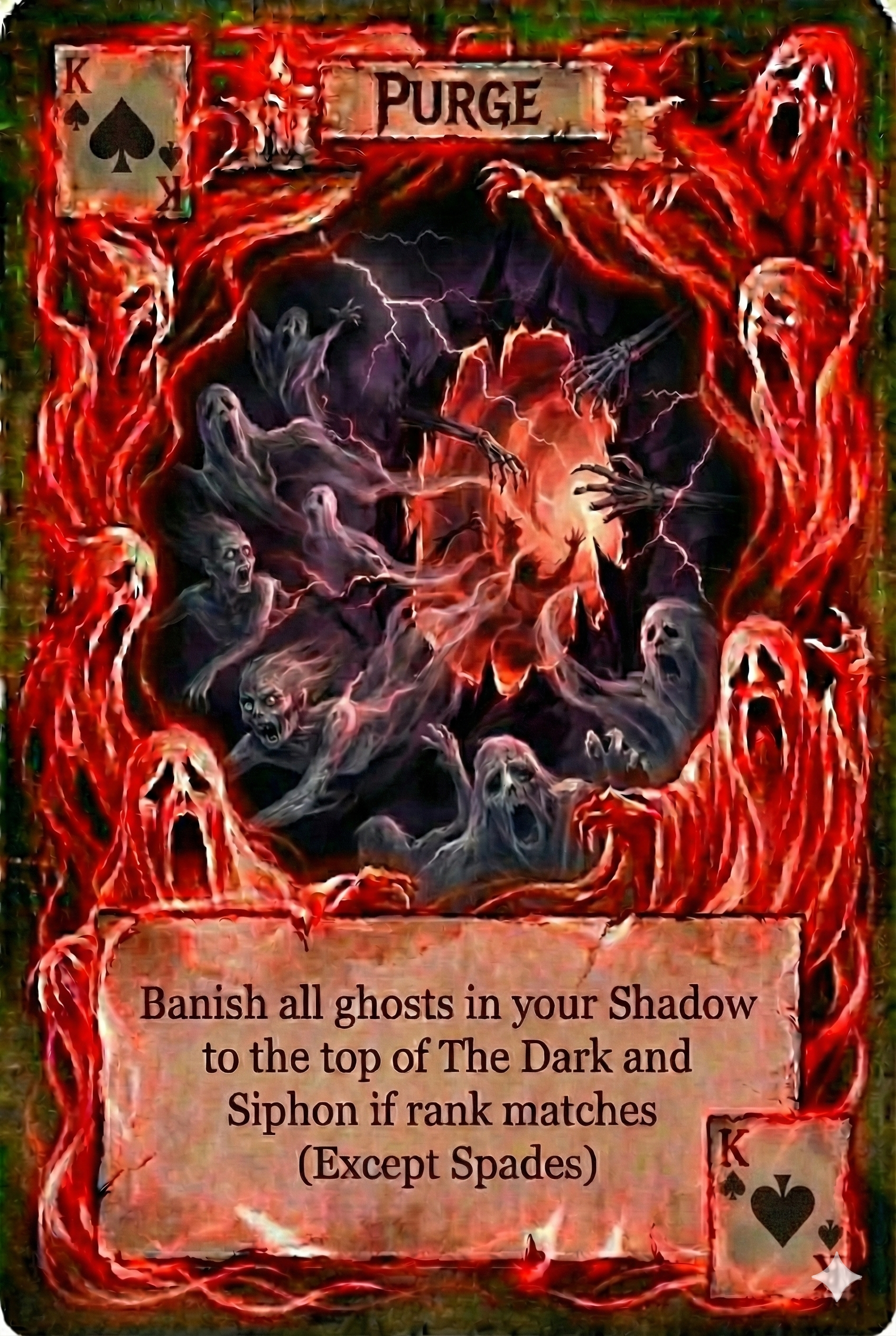 | K | PURGE | All ghosts in your Shadow go to The Dark. No Siphon. |
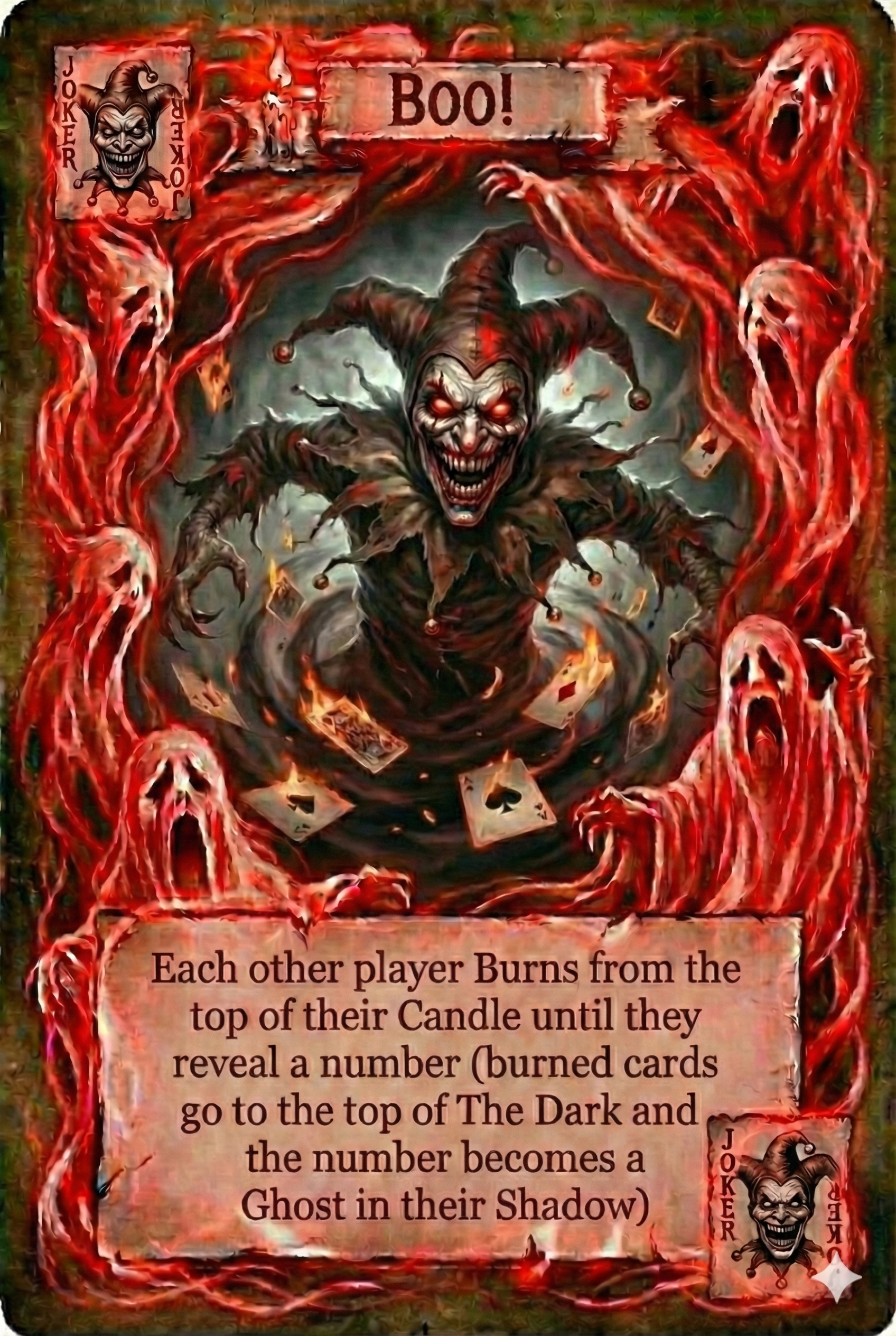 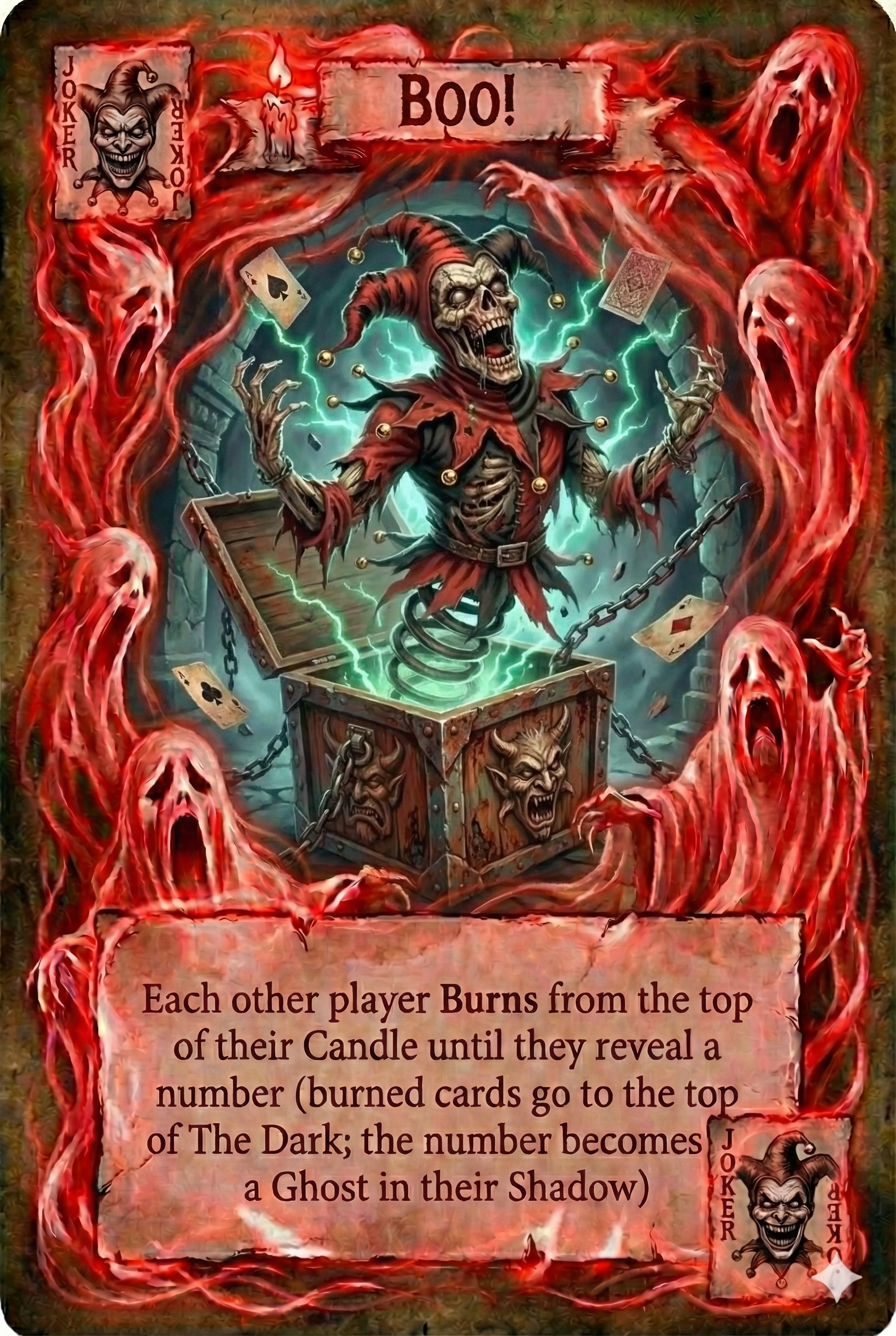 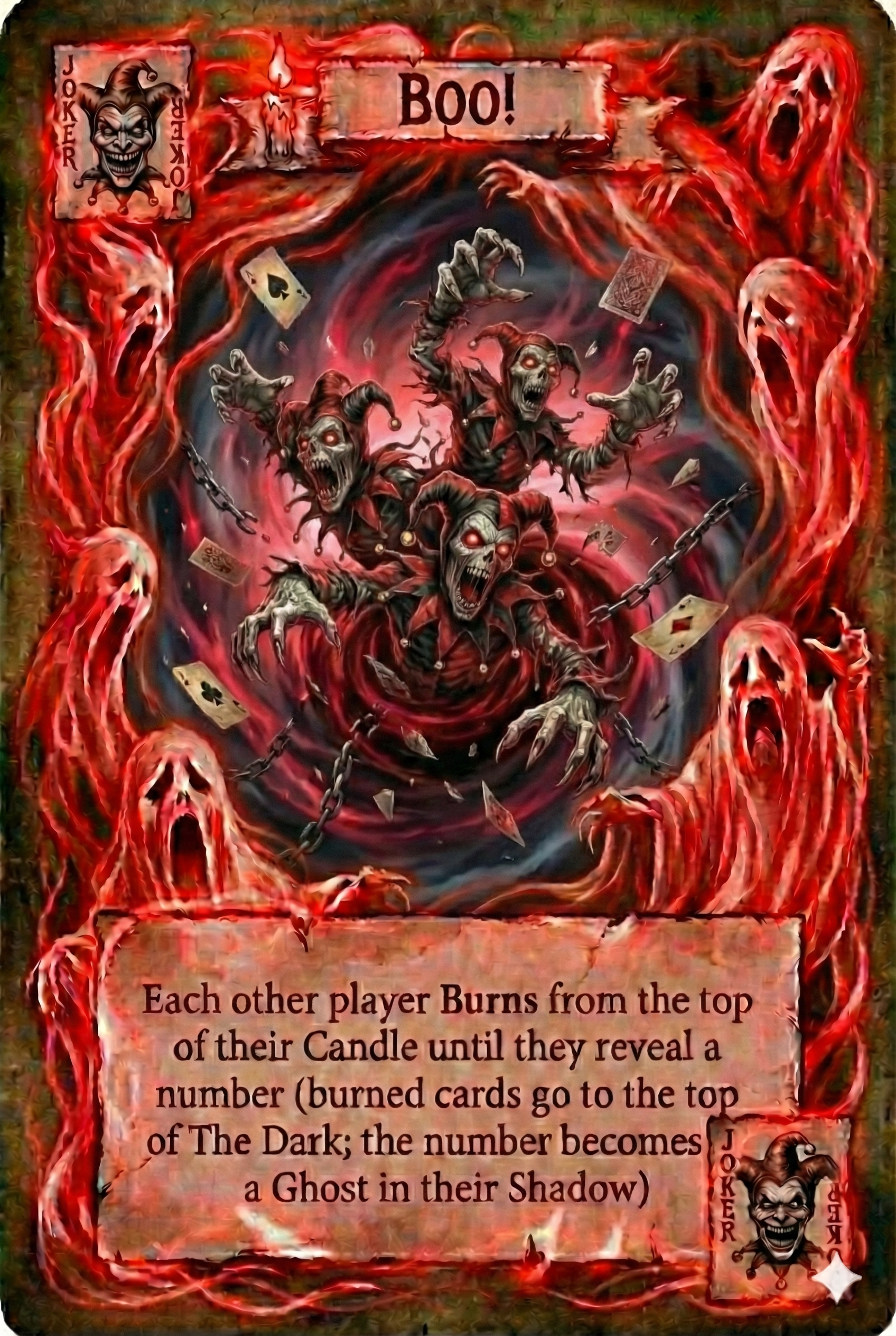 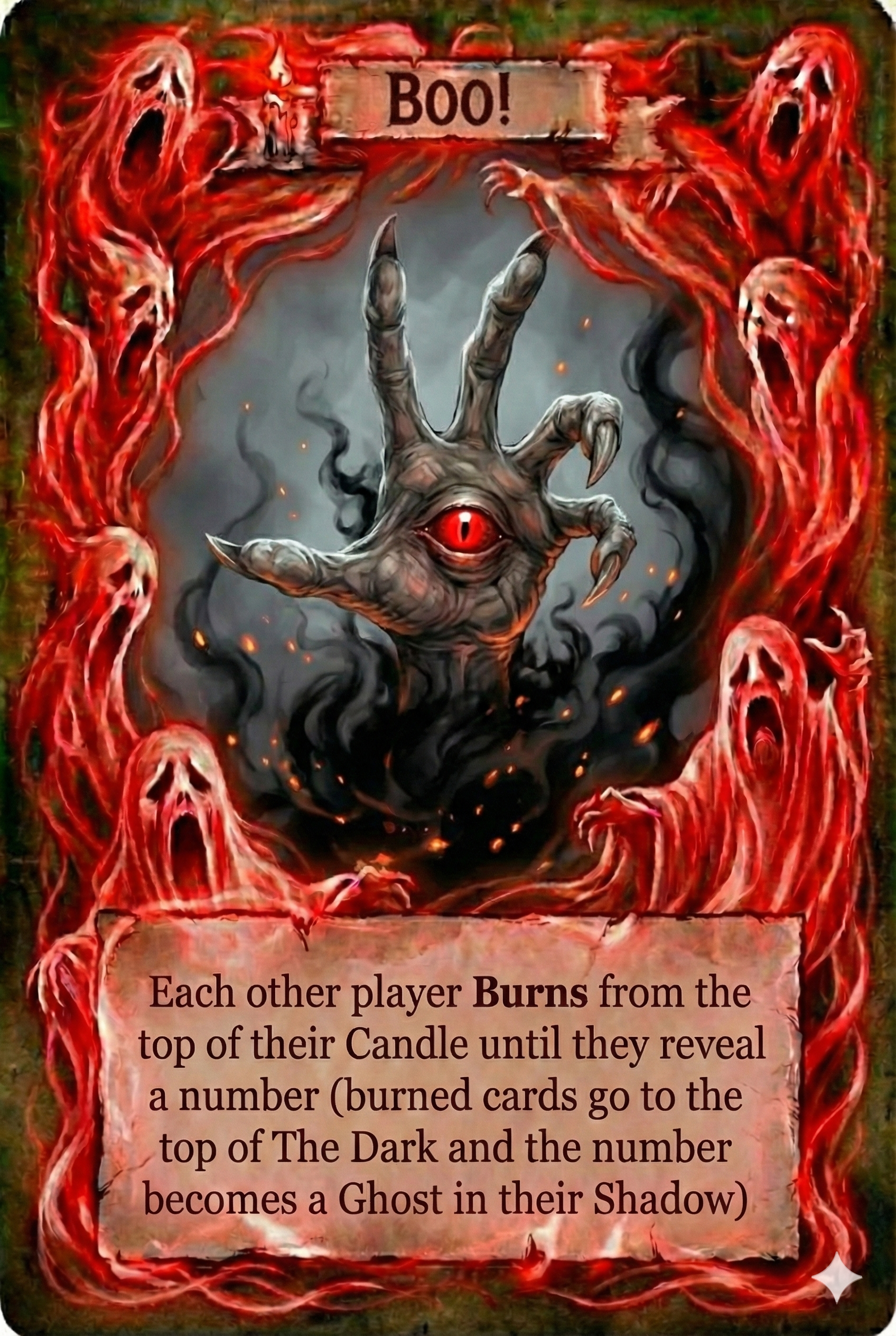 | JOKER | BOO! | Each other player Burns until they reveal a number; that number becomes a ghost in their Shadow. They may Salt to protect themselves only. |
5. The Classes
Classes are grouped by which pool they belong to. Use the filters to show only classes legal for your player count. Tap a class card image for a full-screen view; swipe continues through all classes.
6. FAQ & Edge Cases
Look-up section for disputed moments. Skip on a first read; return when something odd happens at the table.
When in doubt: If a rule could be read more than one way, choose the reading that denies an advantage: rule against whoever would benefit from the ambiguity, or in favour of whoever is defending or being targeted.
Haunting and class exceptions
- Haunt with a face or Joker? No, except The Warlock (face or Joker as Haunt, strength 10). Faces are J, Q, K only (Banish as 10, or Summon). Jokers are not faces; Summon for BOO! unless Warlock Haunts with them.
Walls (The Cryptkeeper)
Walls are not ghosts: no extra Burn, no Possession. Lay them horizontal (ghosts vertical). Full Wall rules are under Edge cases.
Removing ghosts / Siphon
Use Banish vs Cleanse vs Purge and the logic tables. Extra Siphon notes:
- Identical cards (3+ players, multiple decks): 7♥ on 7♥ Siphons via Banish (rank match) or via Cast Cleanse (suit match). Not if the ghost is ♠.
- You still discard the card you played; only the ghost goes to the bottom of your Candle.
Salt (reaction or Haunt)
A 5 in hand is Salt. Each 5 is used in exactly one way:
- Keep as a reaction: Leave it in hand. When any player performs a Ritual action, you may reveal Salt to cancel that Action (your Salt and their card go to The Dark; their turn ends). The only play that cannot be Salted is the Ace (Reprieve).
- Play as a Haunt: On your turn, play the 5 into a neighbour’s Shadow like any other number Haunt (strength 5). Once played this way, it is a ghost, not a reaction.
You cannot cancel with a 5 you already spent to Haunt, and you cannot Haunt with a 5 you already spent as a reaction.
- Optional rule: Salt only when targeted: You may agree before play to limit Salt reactions to actions that target you (Haunt, Scare, Drain, Sight, BOO!, etc.).
- What can be Salted? Anyone’s Ritual action can be cancelled by Salt, including King (Purge), Joker (BOO!), Haunt, Scare (3), Drain (4), Sight (6), Rekindle, Flicker, and other card plays that use your action. Exceptions (cannot be Salted): the Ace (Reprieve); The Silence’s actions; The Mimic’s Candle swap (Ability); a completed Hex reflect; and a revealed Grimoire of Rejection cancel. Class Abilities that do not use your Ritual action (e.g. Mimic) are not Ritual actions and are not Salt targets in the same way.
- When the defender uses Salt: The defender's Salt and the attacker's card both go to the top of The Dark. The attacker's turn ends immediately. The defender does not lose their turn; the interrupt happens during the attacker's turn.
- Counter-Salt: The attacker may respond with their own Salt to "counter" the interrupt. If they do, their Salt and the defender's Salt both go to the top of The Dark, and the defender may interrupt again with another Salt (if they have one). This can repeat as long as both players have Salt in hand. The last player to play Salt decides the outcome: if the defender played last, the action is cancelled (attacker's card and defender's Salt to the top of The Dark, attacker's turn ends). If the attacker played last (or the defender allows), the original action (e.g. Haunt) goes through.
When a player is eliminated (death)
Ghosts pass to neighbours, split evenly left and right (4 → 2 each). If odd, the eliminated player chooses who gets the extra (5 → 2 and 3). No ghosts: nothing passes. One neighbour left (e.g. 2-player, one just died): that neighbour takes all. Receiving those ghosts is not instant Possession (end of your turn).
Consumed / Possession / Cast vs Summon
Consumed: empty Candle at Draw or Am I Alive only. Possession: end of your turn. Cast numbers (A–10); Summon faces and Jokers - see Grimoire.
Other common questions
- What does “once per turn” mean? For your own abilities (e.g. The Pyromaniac’s burn), it means once per your turn; it resets at the start of your next turn. Reactions to someone else’s Haunt (e.g. The Hex) happen when that Haunt is played - you do not need a separate “once per turn” rule for those.
- What if I can’t play a valid action? You may Abstain from your Ritual action. This is especially common when your hand is all face cards and Jokers and your class does not allow Haunting with them (see Haunting and class exceptions).
- BOO! (Joker): Each other player Burns one card at a time until a number (A–10) shows; that number becomes a ghost in their Shadow. Faces and Jokers go to The Dark and they Burn again. Empty Candle mid-BOO! is not immediate elimination (Draw / Am I Alive). Your Salt only protects you. If The Silence played the Joker, nobody can Salt it.
- The Mime and Salt: A Mime redirect onto you is an action targeting you. Salt it: your Salt and the Mime’s discarded card go to The Dark; the ghost stays in The Mime’s Shadow.
- The Grimoire of Rejection: When a neighbour Haunts you and the ghost lands in your Shadow, you may take one card of your choice from the top 3 of The Dark face-down as a Grimoire page (max 3 pages; pages sit beside your class card and do not count toward hand size). If The Dark has fewer than 3 cards, choose from all that are there. You may skip if you do not want a page. Blocked or reflected Haunts (Cryptkeeper Wall, Hex reflect, Mime redirect away from you, etc.) do not trigger this. When a neighbour plays a card as their Ritual action, you may reveal a page whose rank matches (e.g. your page 5♣ rejects their 5♥). Cancel that play: both cards go to The Dark. That page is removed; other pages stay. The cancel cannot be interrupted by Salt.
- The Voodoo Doll: When you Burn at the Haunting, each Haunted ♠/♣/♦ ghost makes that haunter Burn 1 too. ♥ and non-Haunt ghosts (including BOO!) do not reflect. Repeats each turn while the ghost remains. Mirror and Possess keep the original haunter; returning to your Shadow does not clear it. ♥ ghosts can still be Siphoned normally.
- If two effects happen at once (e.g. death and “when a neighbour dies”), who resolves first? The active player’s triggers resolve first, then clockwise. If still unclear, rule in favour of the defending player.
- Large groups: do circles ever merge mid-game? No. Each circle keeps its own Dark and turn order. When circles finish, the Last Lit from each (see Large groups & Final Ritual) begin a separate Final Ritual (same classes, fresh Candles, empty Dark), not a merged pile from every table.
Edge cases
- Mirror (J) or Possess (9) vs The Gatekeeper. Blocked; card not spent.
- Recall (8), Possess (9), or Mirror (J) vs The Sealbinder. Only ghosts that The Sealbinder Haunted are sealed. You may still Possess or Recall other ghosts in that Shadow (Haunted by someone else). Mirror (Jack) swaps everything that is not Sealbinder-Haunted; sealed ghosts stay put on their current owner. The Jack is not blocked just because a sealed ghost is present.
- Banish vs The Clown. Ghosts that The Clown Haunted reject Banish with a number card other than Cast Cleanse (7); the play is blocked. You can still use a Jack, Queen, or King either as Banish (one ghost, value 10) or as Summon (Mirror, Medium, Purge, etc.).
- Walls (The Cryptkeeper). Walls are face-down cards in The Cryptkeeper’s Shadow; lay them horizontally (ghosts in the Shadow stay vertical). They cannot be Banished, Recalled, Cleanse, or Possessed; they can only be discarded by The Cryptkeeper to cancel a Haunt onto them (ghost and Wall both go to The Dark). Walls do not cause Burn; only ghosts do.
- Mirror (J) vs The Cryptkeeper. The Jack (Mirror) can target The Cryptkeeper. You swap your entire Shadow with theirs, so you can trade your ghosts for their Walls (they get your ghosts; you get their Walls). Walls still cannot be Banished, Recalled, or Cleanse.
- The Exorcist. When you Cast Cleanse (7), choose two ghosts in your Shadow (not one). Both are removed; you Siphon each that is not a Spade and not a face card (♠ and faces go to The Dark).
- The Mimic. Once per game, use your Ability (does not use your Ritual action): choose a neighbour and swap Candles. The swap cannot be prevented by Salt. You may still perform a Ritual action on the same turn.
- The Occultist. Your Possess (9) may target any player, not just neighbours. When you Possess to a non-neighbour, add 2 cards from the top of The Dark to the bottom of your Candle (once per turn; if The Dark has only 1 card, you take 1).
- The Priest. When you Banish, take the top card of The Dark into your hand first, including on Siphon. If The Dark is empty, nothing happens.
- The Watcher. When you cast a 6 (Sight), you see both neighbours’ hands and may take up to 2 cards from each (4 total). You may stop early by closing the hand view once you have taken all you want.
- The Sadist. When you Cast Scare (3), your chosen neighbour shuffles and blindly discards 3 cards to The Dark (instead of 2). No one chooses which cards - same as a normal Scare, just one more discard.
- The Sufferer. You need 4 ghosts of the same suit in your Shadow to be Possessed (everyone else needs 3).
- Scare (3) / Drain (4) vs The Skeptic. The Skeptic is immune to both. Scare: that neighbour discards nothing; the 3 still goes to The Dark. Drain: no cards are taken from that neighbour; the 4 is still discarded to The Dark. Other neighbours are still Drained normally. The Sadist’s extra Scare discard also does not apply.
- The Plague. When a ghost that The Plague Haunted is Banished (and not Siphoned), it spreads to a neighbour of the Banisher instead of The Dark. Each time it is Banished again, it passes to one of that player’s neighbours. A plagued ghost cannot visit the same player twice; when it cannot spread, it goes to The Dark. The Plague cannot receive their own plagued ghosts.
- The Lich. The first time you would be eliminated, you revive: steal the top 2 cards from each other living player’s Candle onto yours. A second death is final.
- The Vulture. When a neighbour dies, add the top 5 cards from The Dark to the bottom of your Candle (if The Dark has fewer than 5, take all that remain).
- The Witness. The Witness cannot win. If only two players remain and one is The Witness, both lose (no winner). In a 2‑player game with The Witness, there is no winner.
- The Hex. Number-card Haunts only (A–10). Reveal a matching suit from hand (rank irrelevant; must have it when the Haunt is played). Order: (1) Hex may reflect; (2) if they Allow Haunt or have no match, Salt / Wall / etc. apply as normal. Success: Hex’s card to The Dark; the Haunt becomes a ghost in the original attacker’s Shadow and never enters Hex. Completed reflect cannot be Salted. Warlock face/Joker Haunts cannot be reflected. Mime redirect: Hex still reacts; reflect goes to the original attacker (not Mime, unless Mime Haunted). Wall only if Allow Haunt; a reflect does not use a Wall. Multi-circle: reactions stay in that circle. The reflected ghost counts as the attacker Haunting themselves (Burn, Possession, Voodoo / Plague / Sealbinder tracking).
- Hand limit (e.g. The Hoarder 8): The Hoarder starts with 5 cards and discards down to 8 at end of turn. Burden extras go to the bottom of their Candle, not The Dark. Everyone else starts with 3 and discards down to 5 (those extras go to The Dark). Effects that add cards can push you over until then.
- “Top of Candle” with no cards: Effect fizzles (e.g. Drain does nothing).
Advanced: large groups & Final Ritual
For 9+ people. First game: one circle of 2–8.
Split into separate circles (own seating, neighbours, Dark, turn order). One player acts at a time in each. You can keep one circle above 8; rounds just run long.
How to split
Split as evenly as you can. Examples when you divide the group:
| Total players | Split |
|---|---|
| 9 | 5 + 4 |
| 10 | 5 + 5 |
| 11 | 6 + 5 |
| 12 | 6 + 6 |
| 13 | 7 + 6 |
| 14 | 7 + 7 |
| 15 | 8 + 7 |
| 16 | 8 + 8 |
| 17 | 6 + 6 + 5 |
| 18 | 6 + 6 + 6 |
For even larger events, use three or more circles the same way (e.g. 20 → 7 + 7 + 6), aiming for 8 or fewer per circle when you can.
The Final Ritual
Do not merge piles mid-game. Gather the Last Lit into a new Final Ritual:
- Who advances: From each circle, take either the sole player still Lit when that circle ends, or the last two players still Lit (house choice - two per circle makes a fuller Final Ritual).
- Same classes: Each player keeps the class they chose in their circle.
- Fresh flame: Deal new Candles and starting hands as normal for the Final Ritual player count (The Hoarder still starts with 5). The Dark starts empty (or as you would for a brand-new game of that size).
- New turn order: Decide order again (tiebreaker, random, or agree at the table).
- Play to one winner: The last player still Lit in the Final Ritual wins the gathering.
Digital: One circle up to 8. For 9+ at a table, run separate circles (or one larger circle), then a new digital game for the Final Ritual with the Last Lit and the same classes.
Full deck: all ranks and suits
Every playing card in the deck, by rank and suit. Click a card to preview it.
| Rank | ♠ Spades | ♥ Hearts | ♣ Clubs | ♦ Diamonds |
|---|---|---|---|---|
| A | | 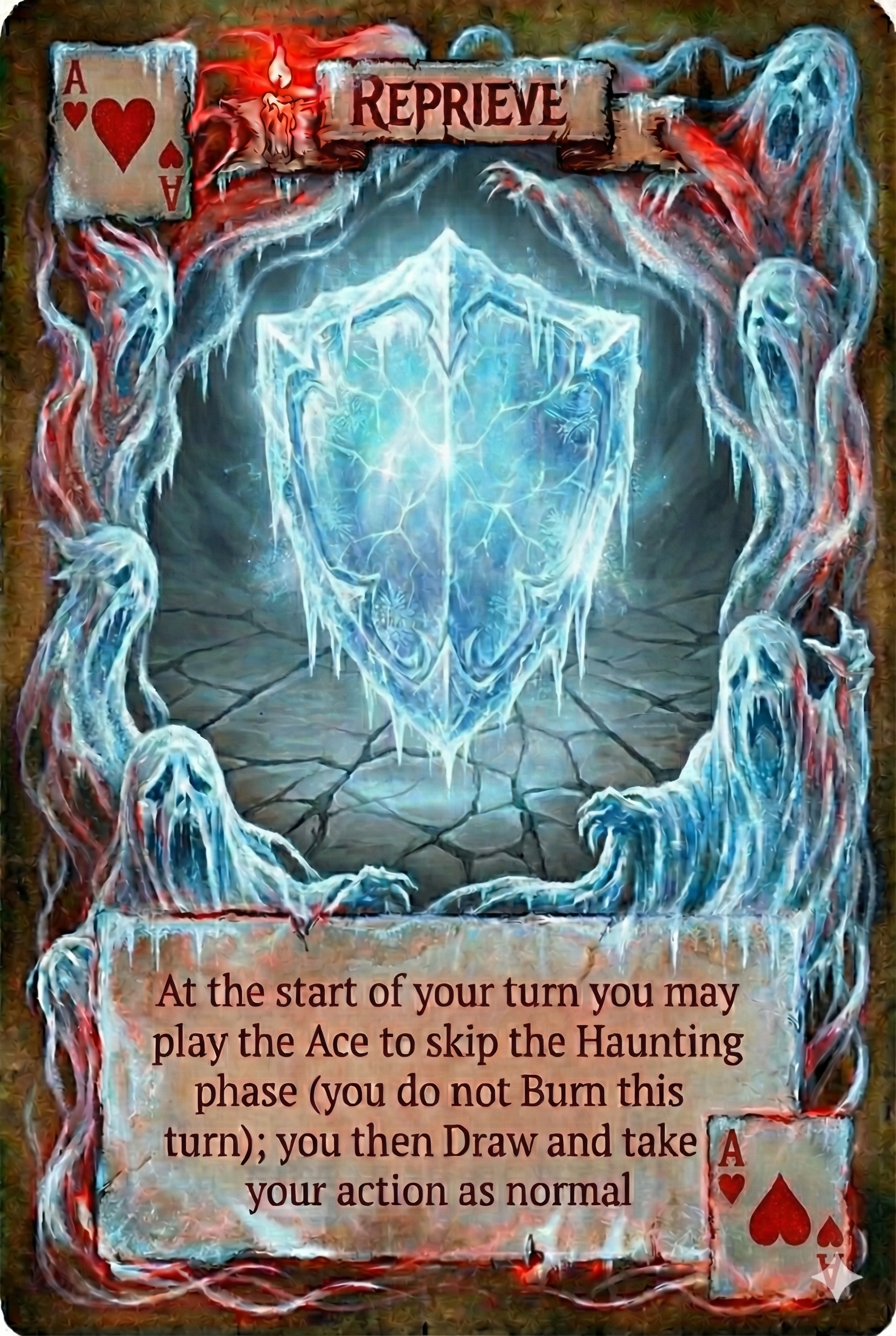 | 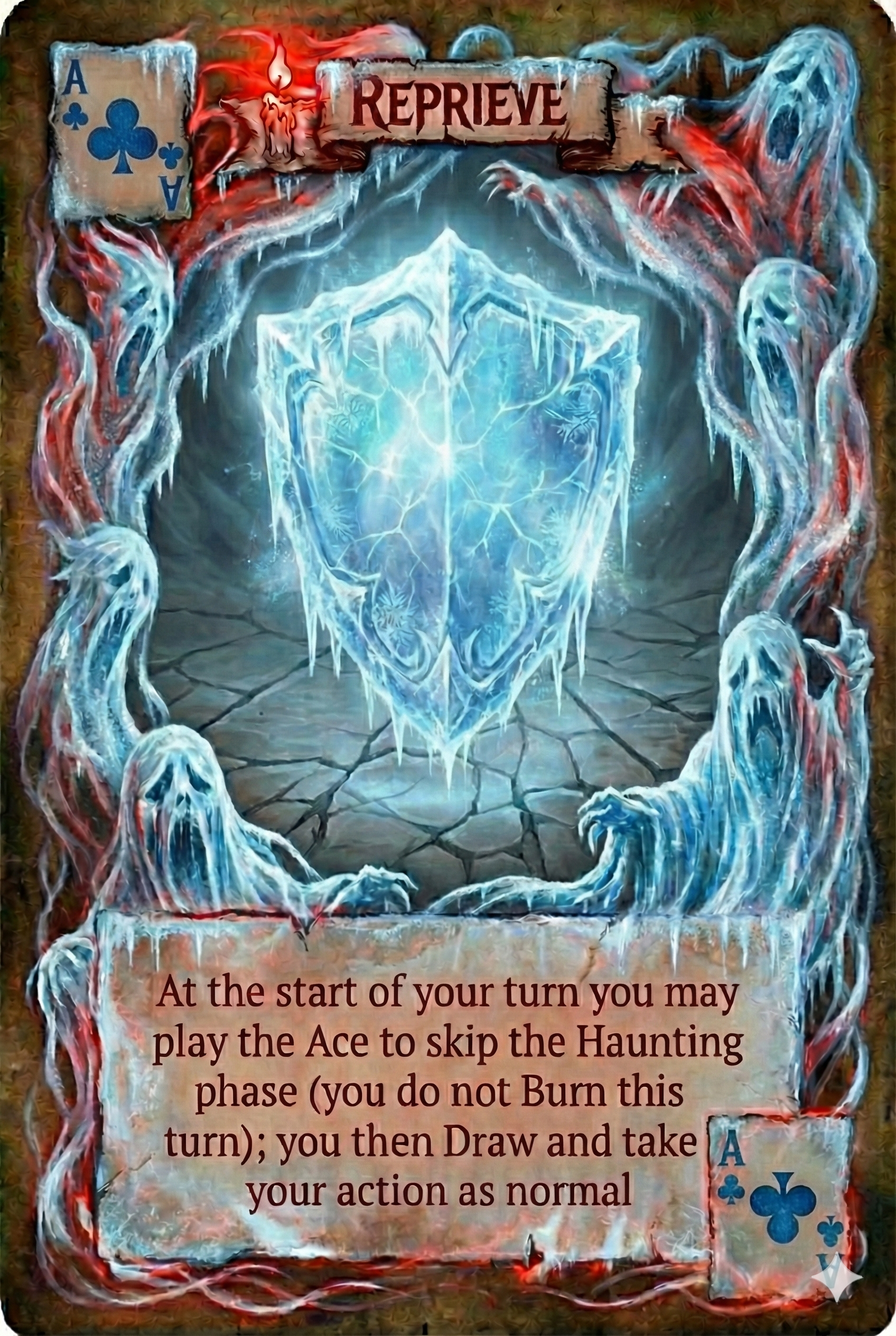 | 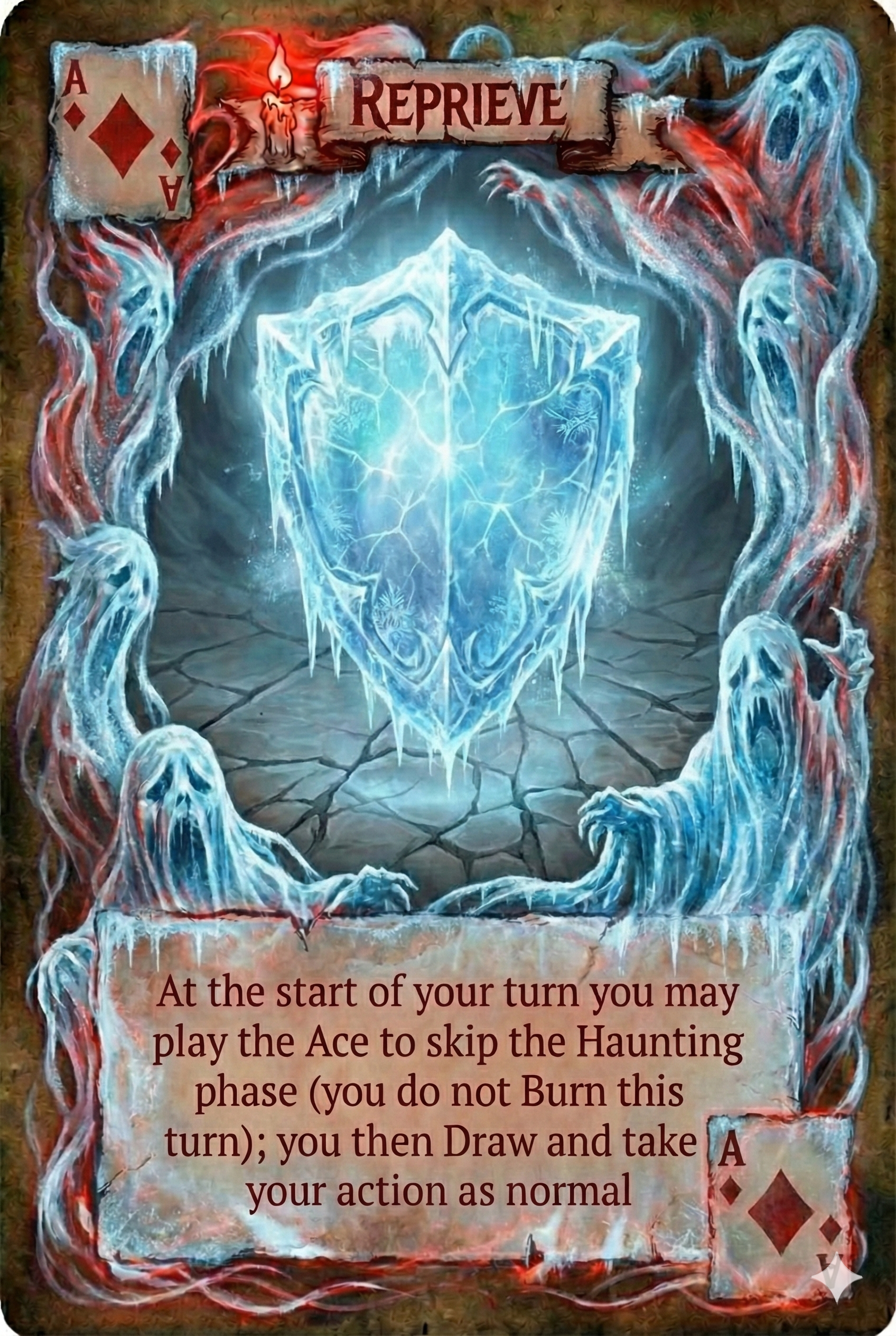 |
| 2 | | 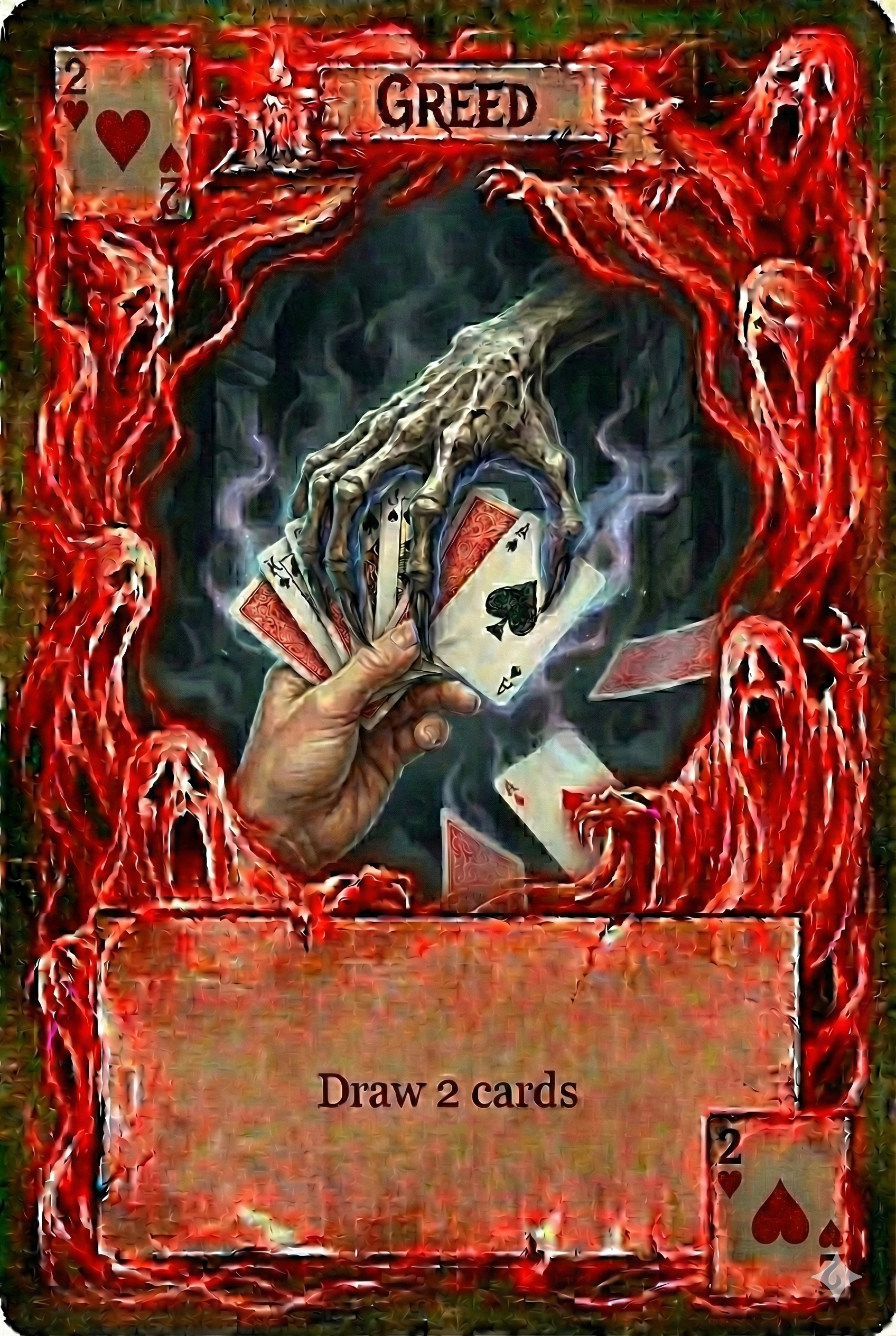 | 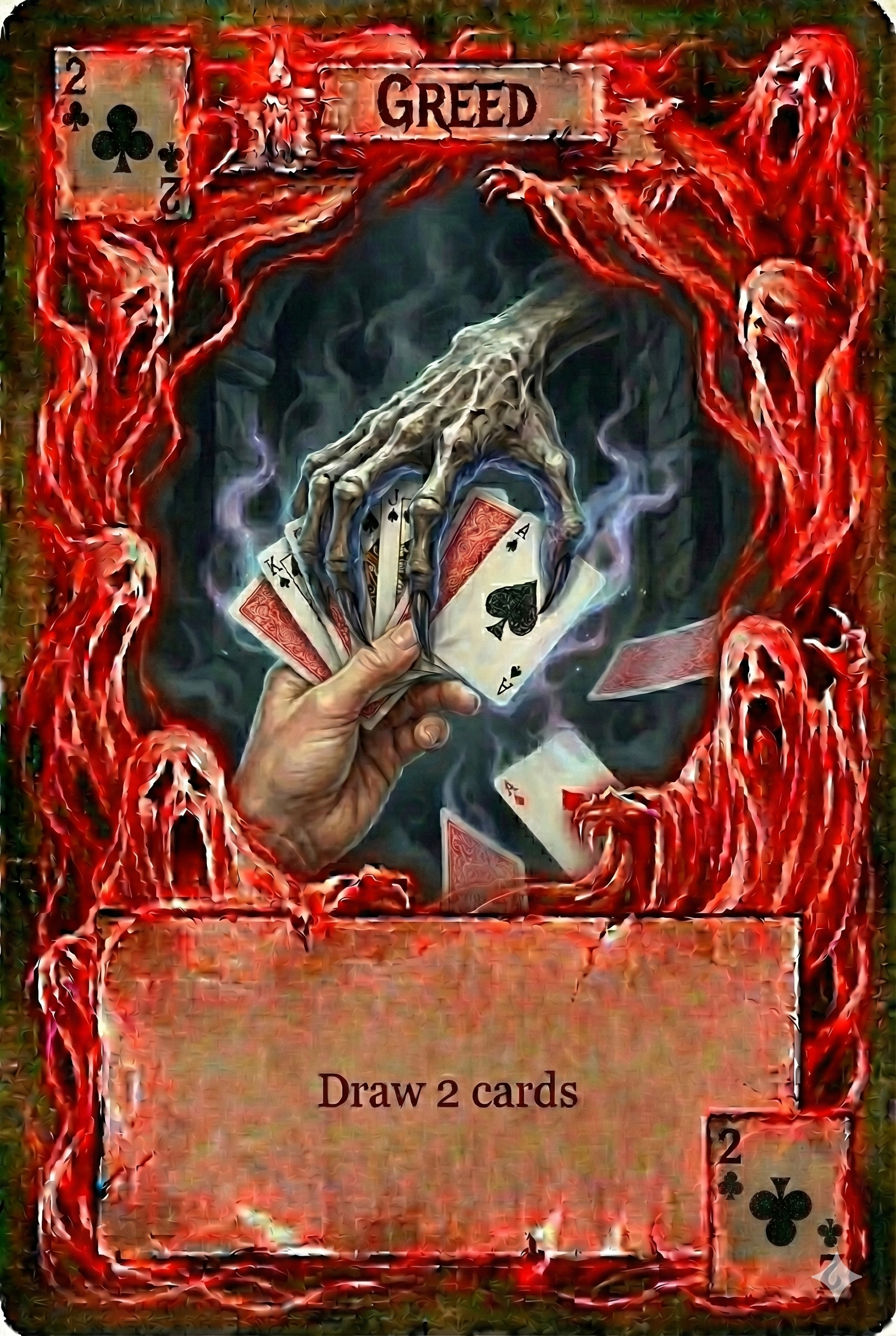 | 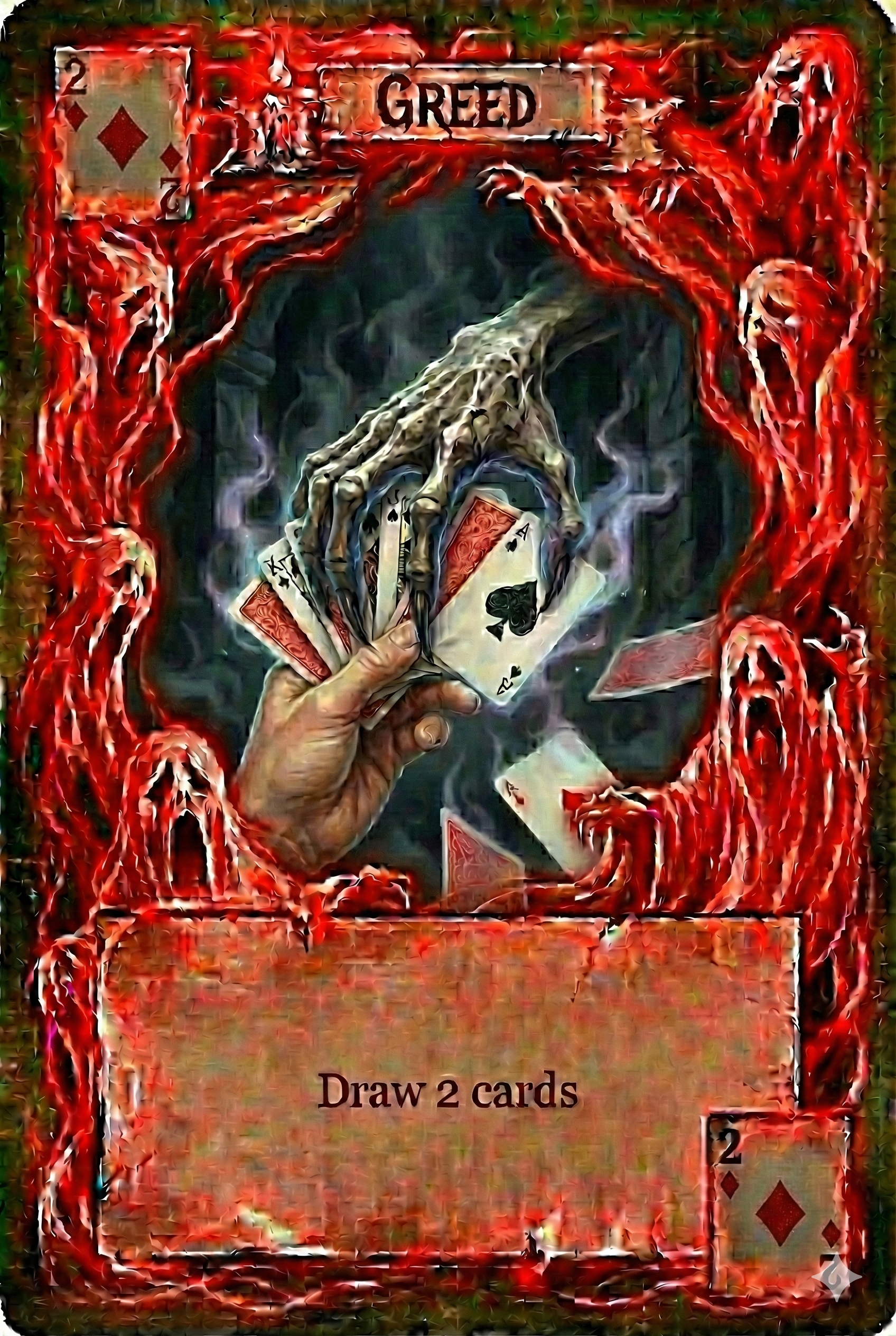 |
| 3 | | 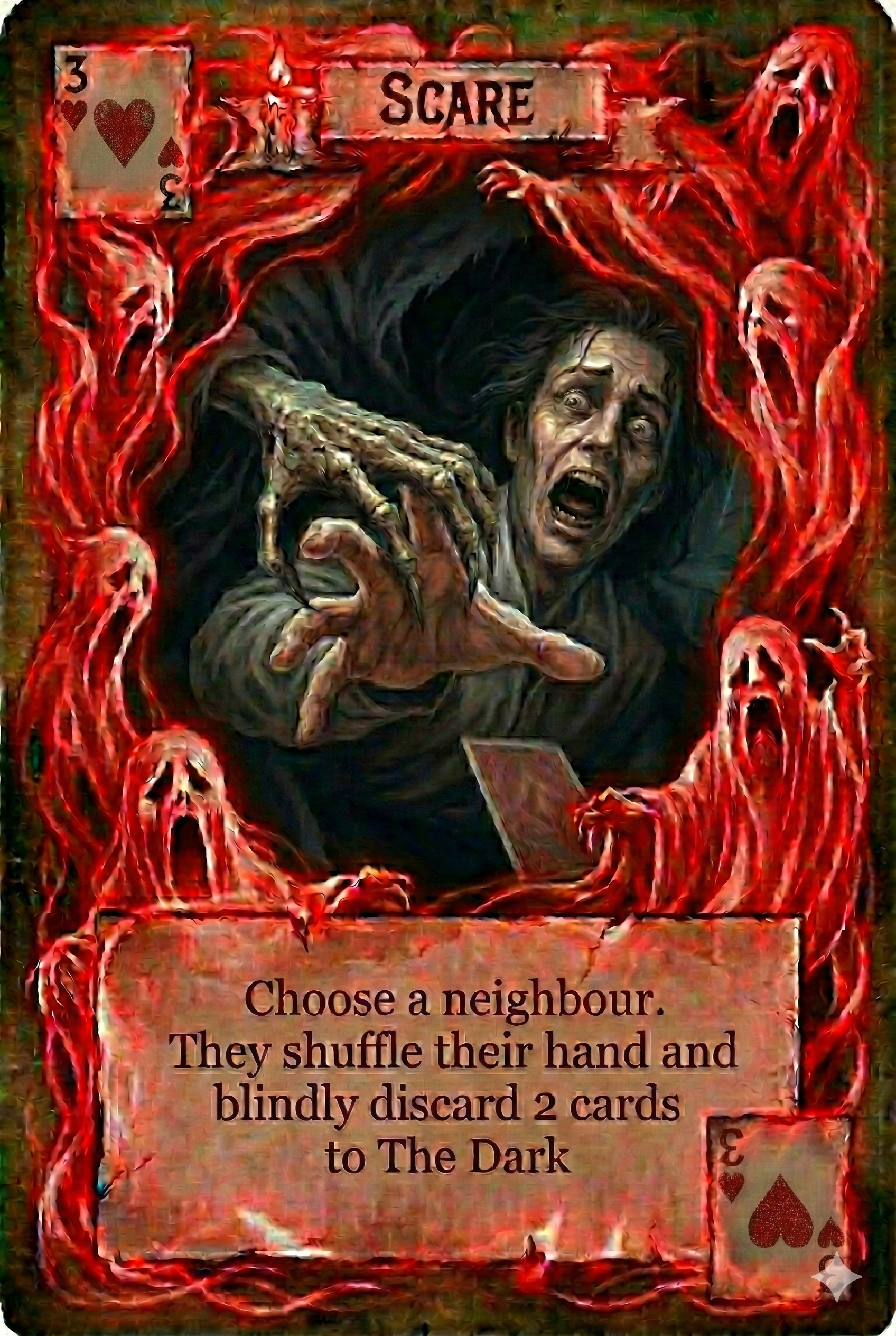 | 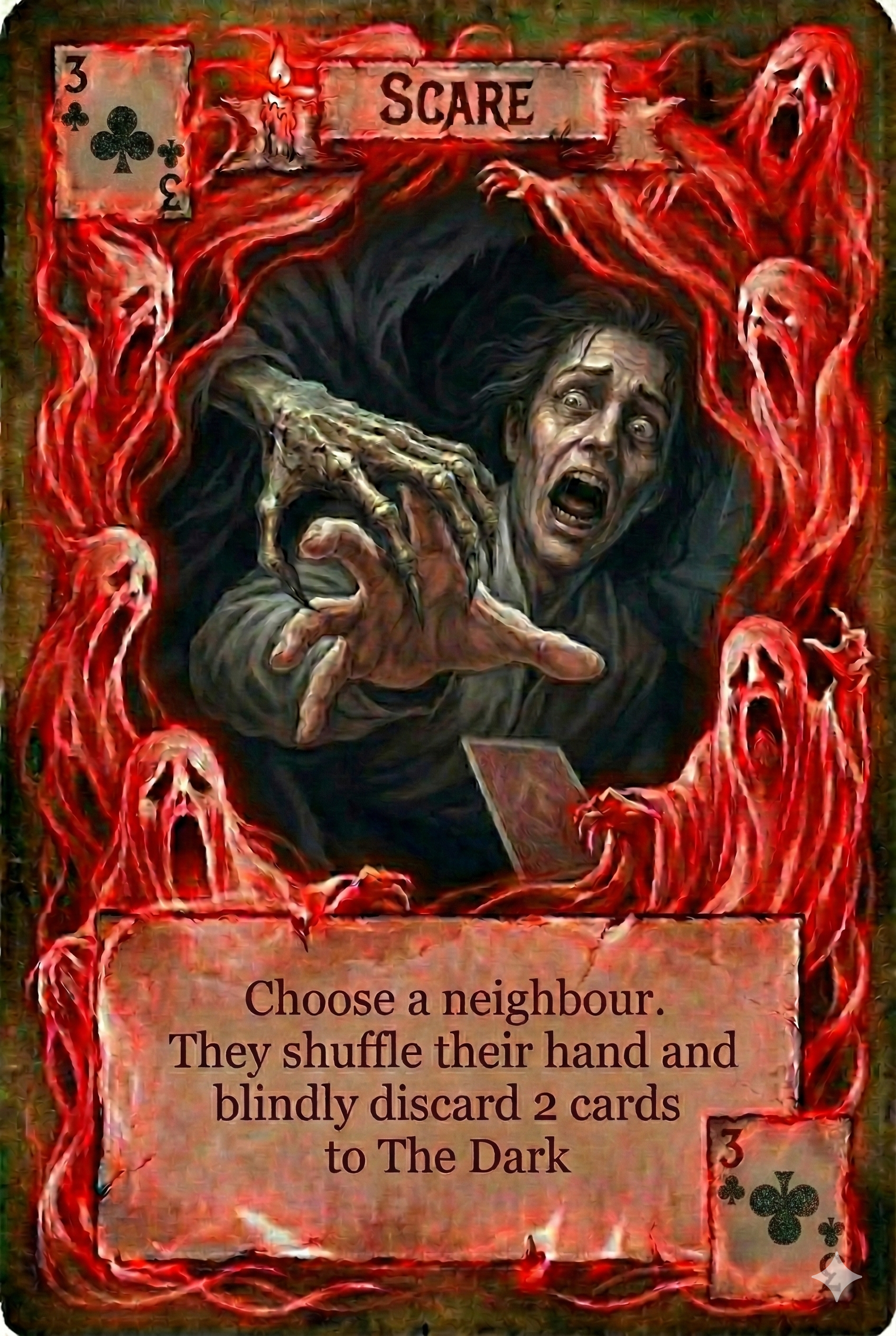 | 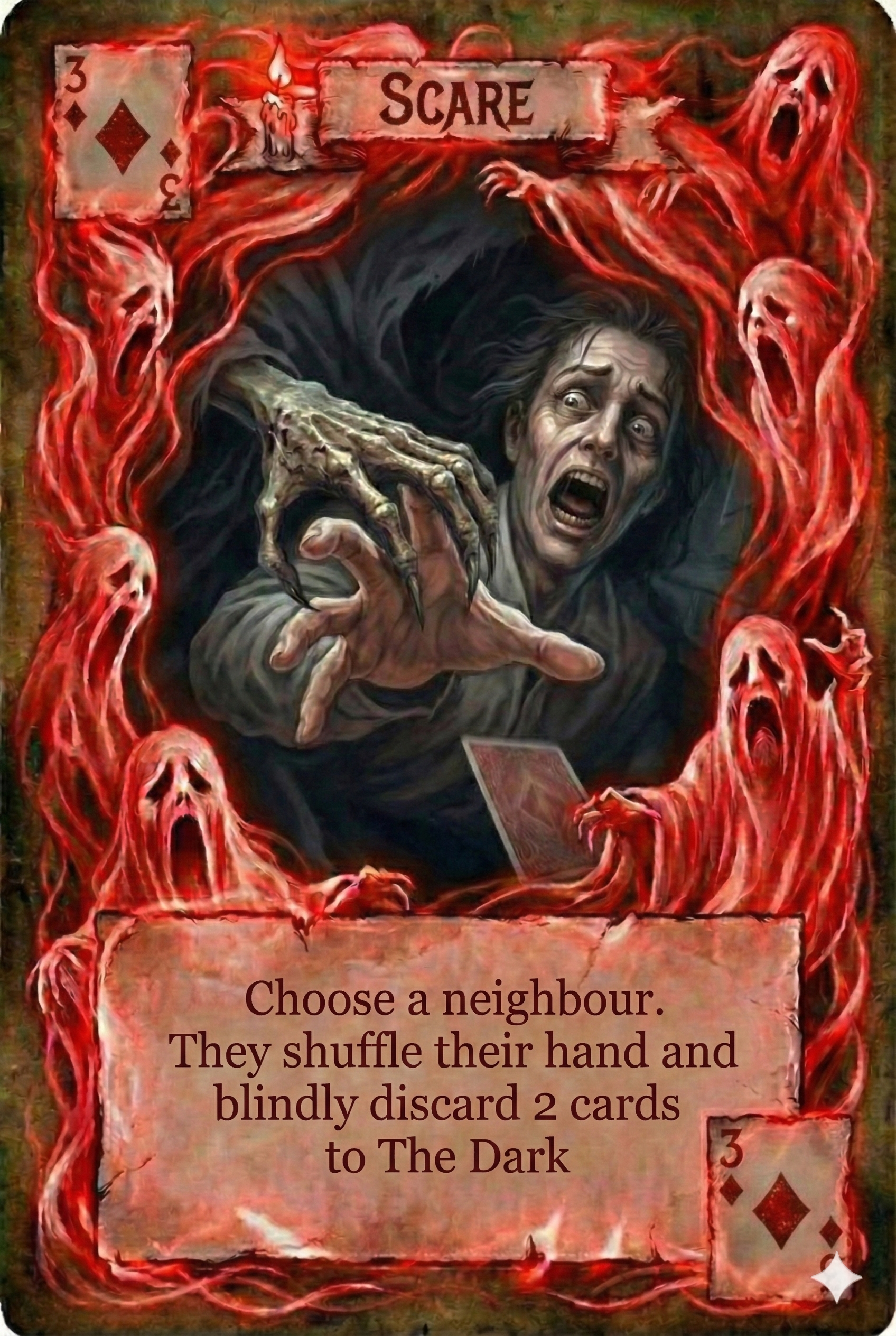 |
| 4 | | 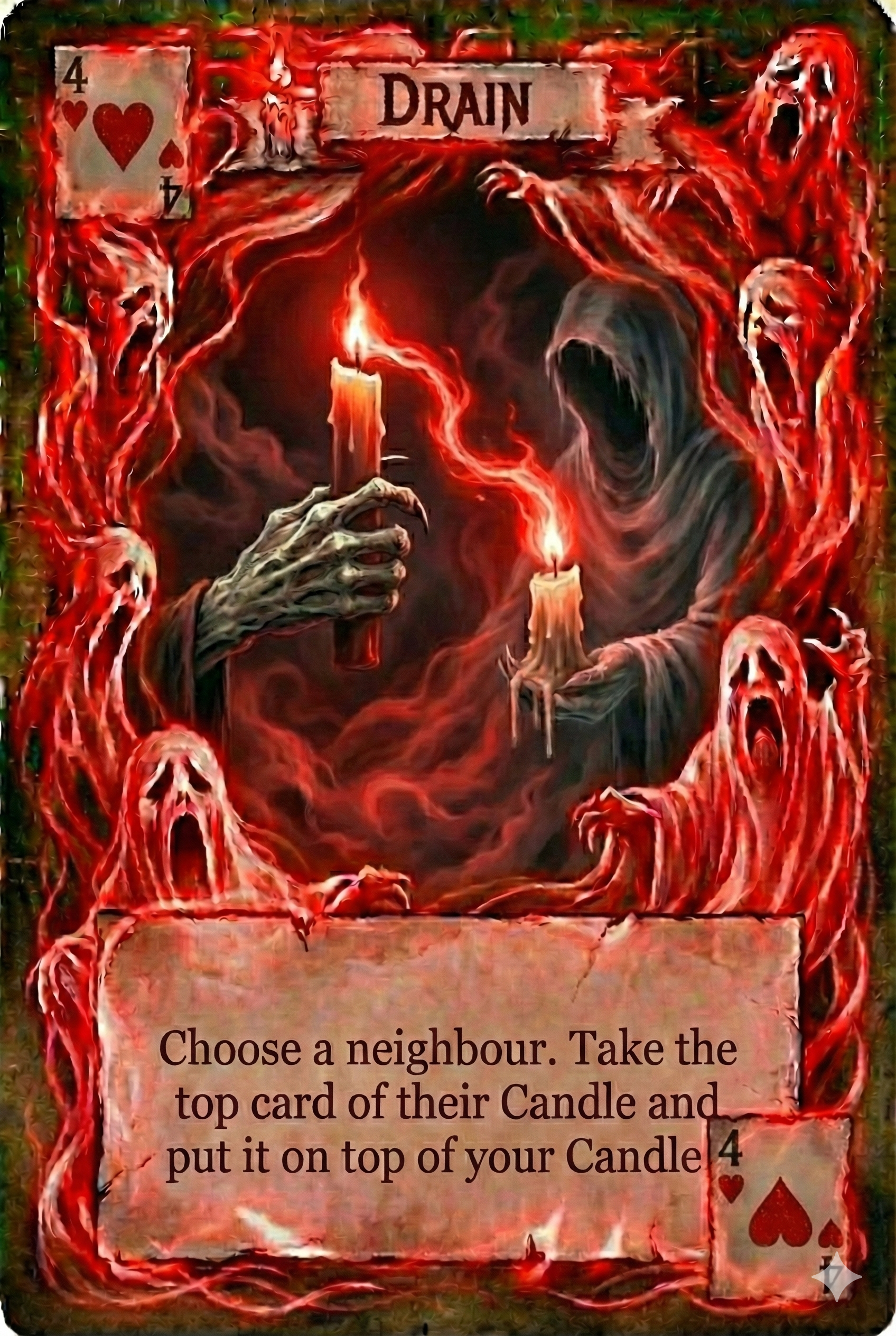 | 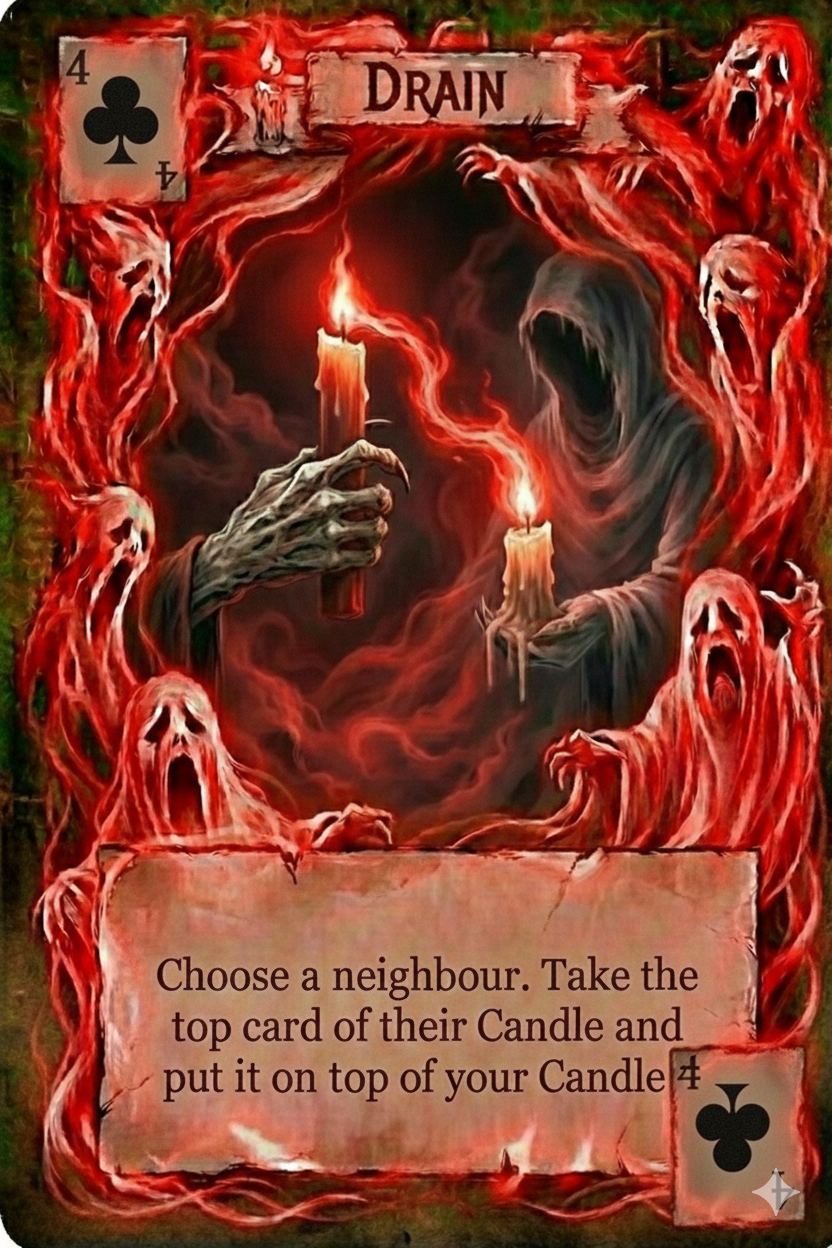 | 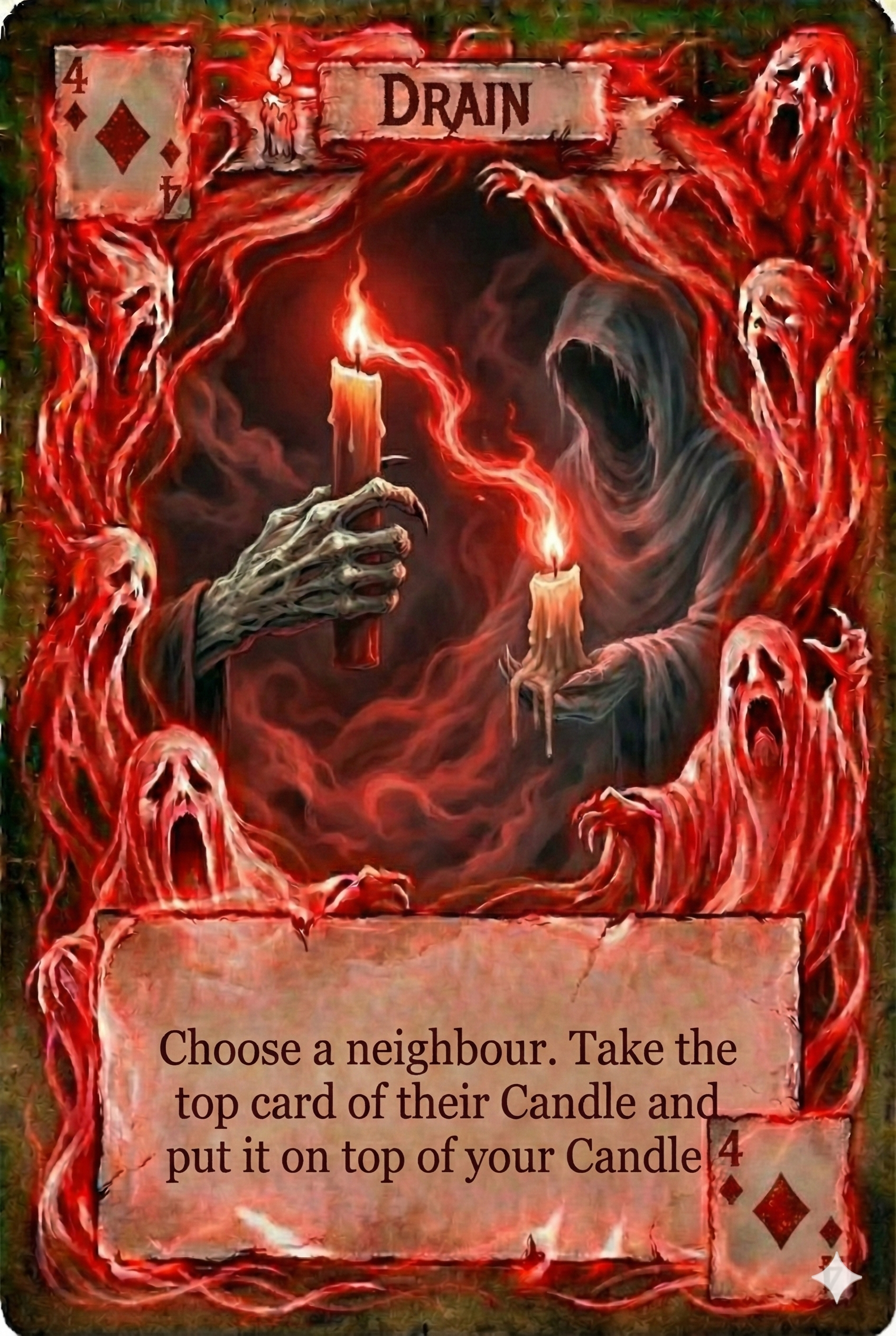 |
| 5 | | 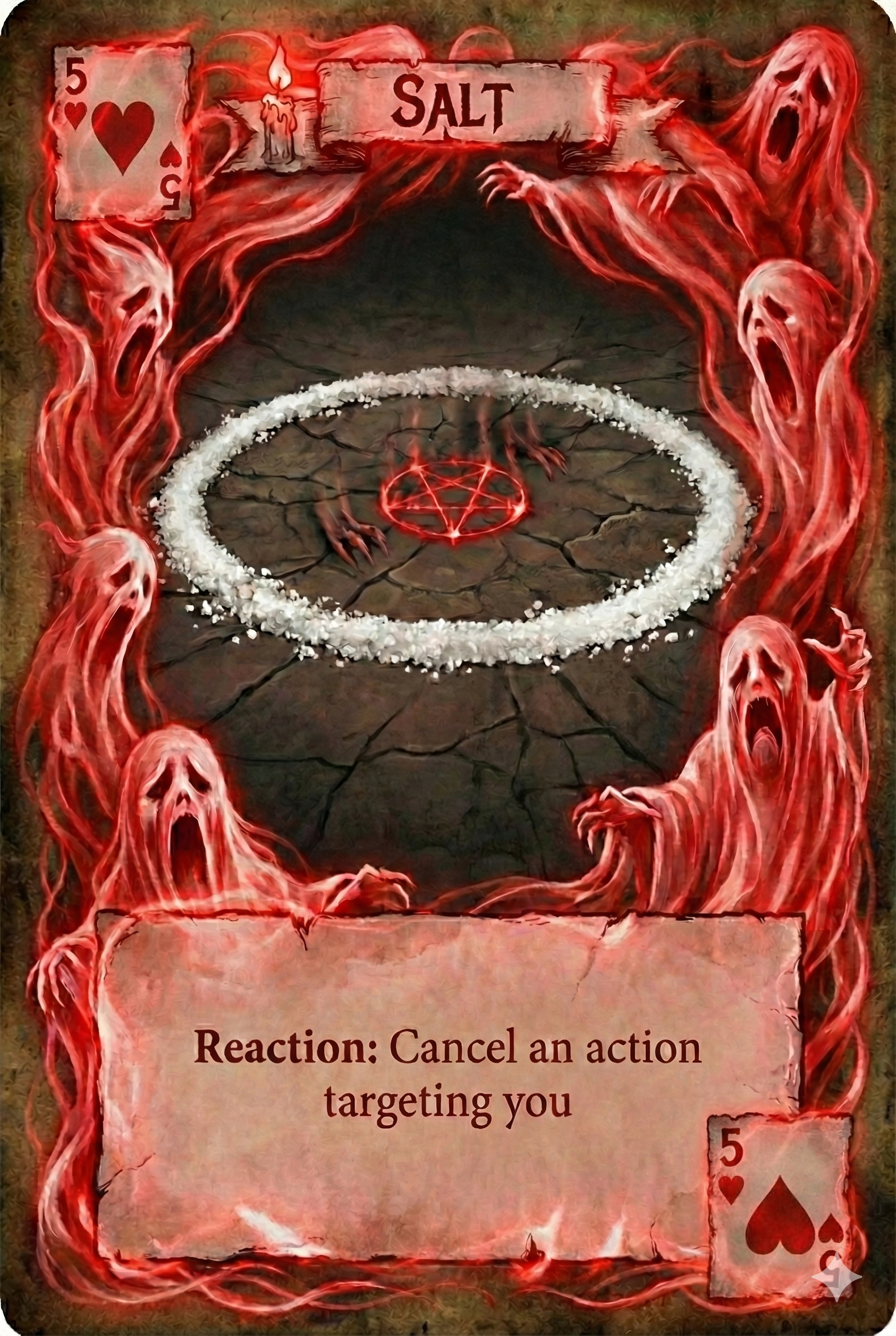 | 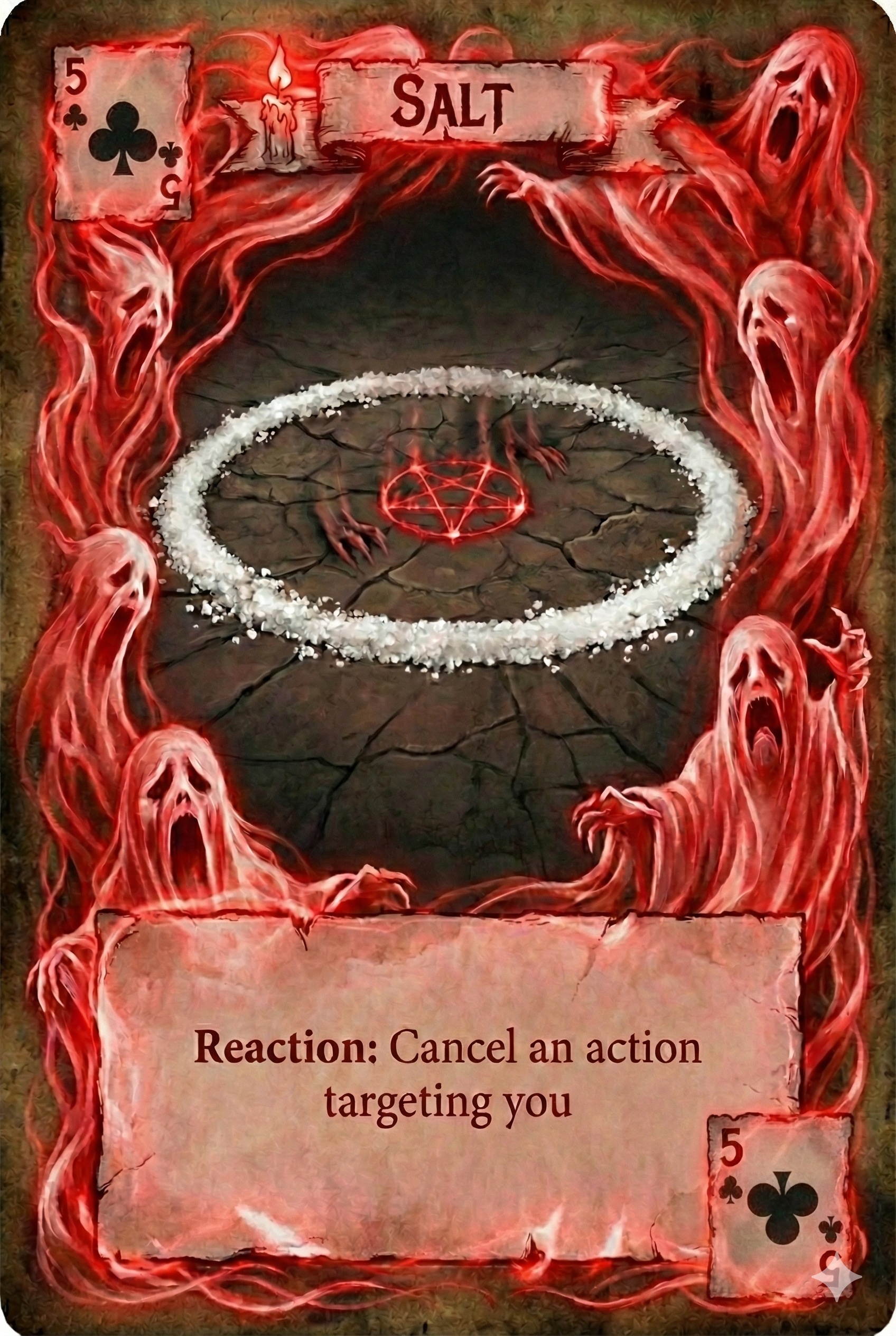 | 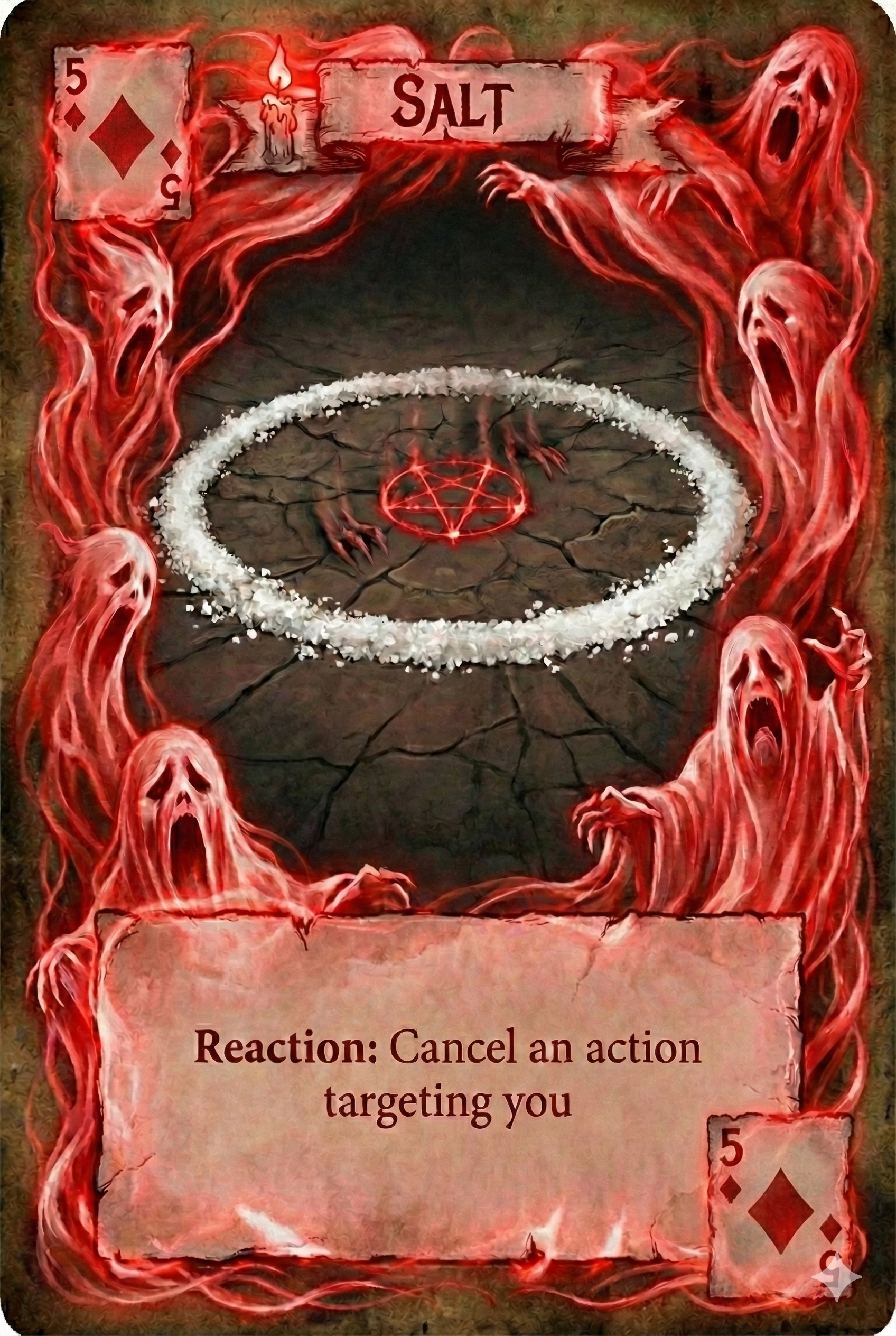 |
| 6 | | 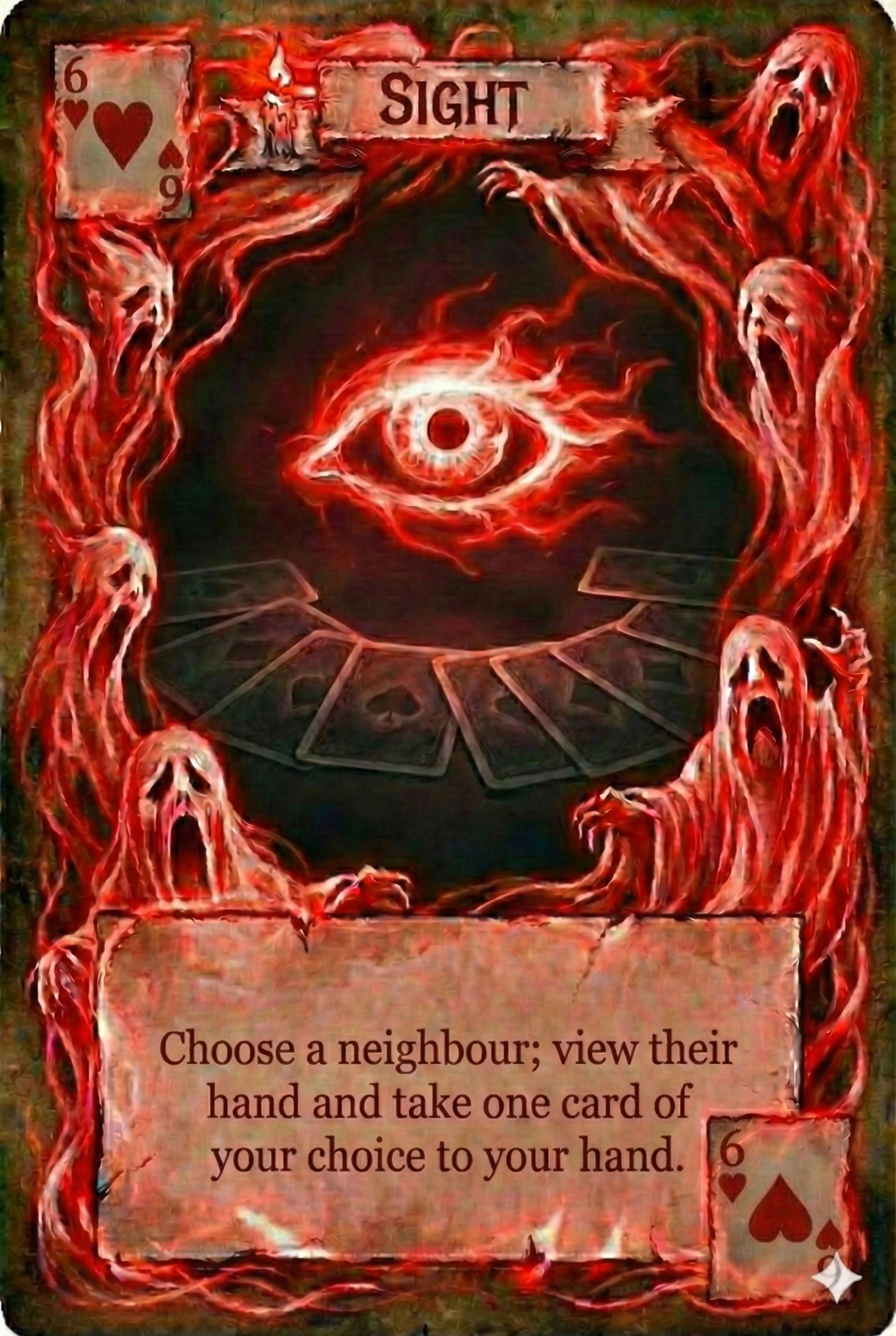 | 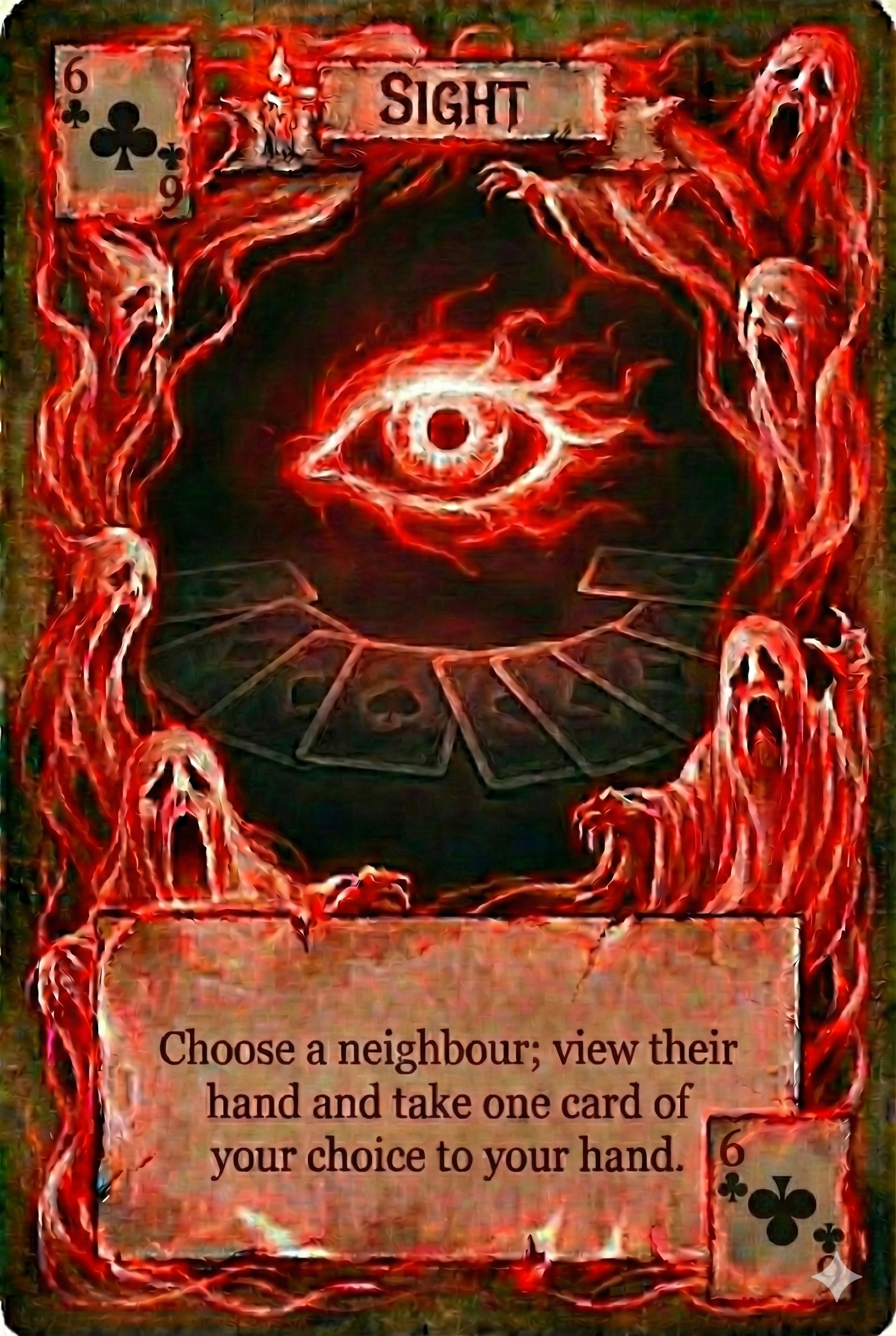 | 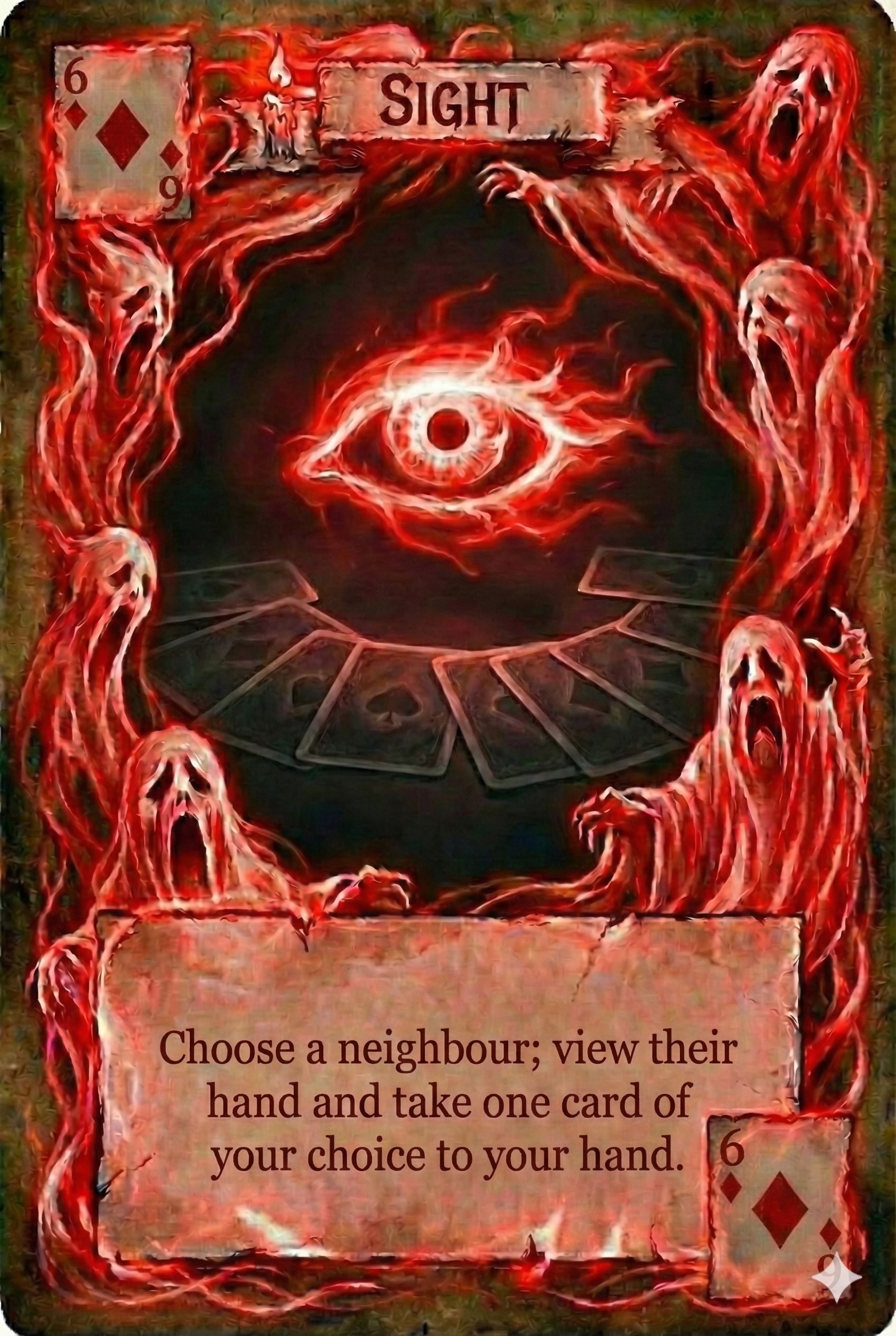 |
| 7 | | 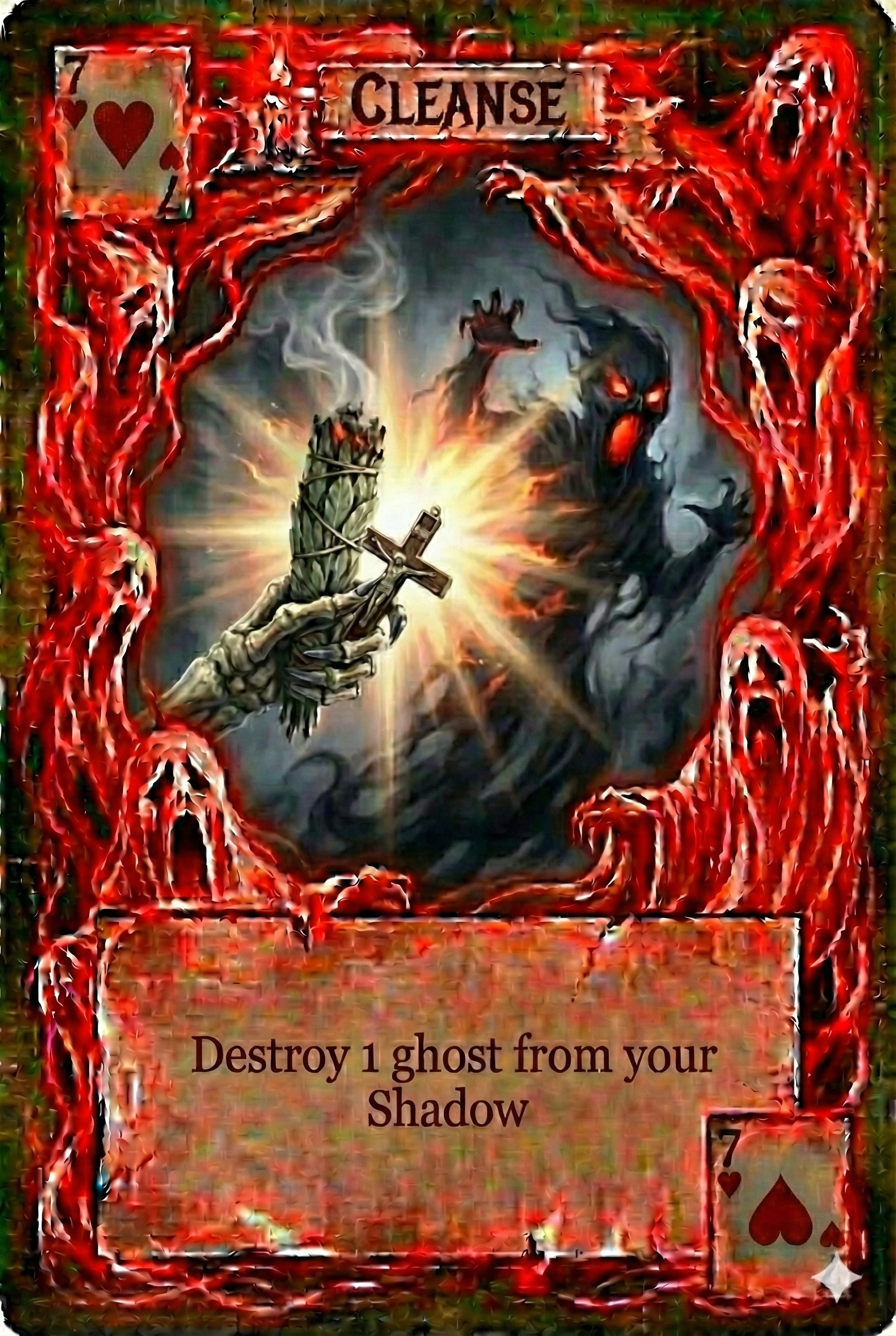 | 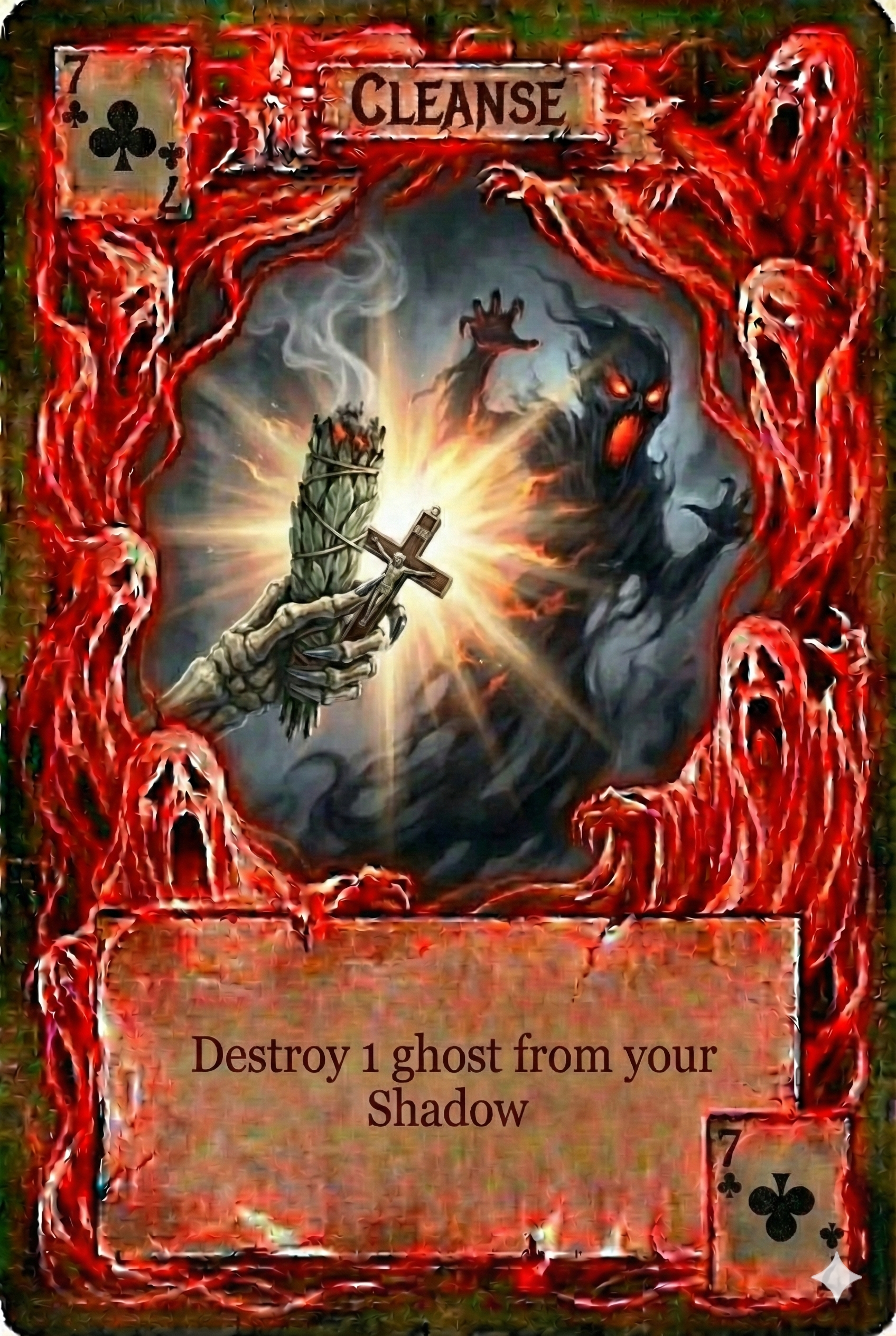 | 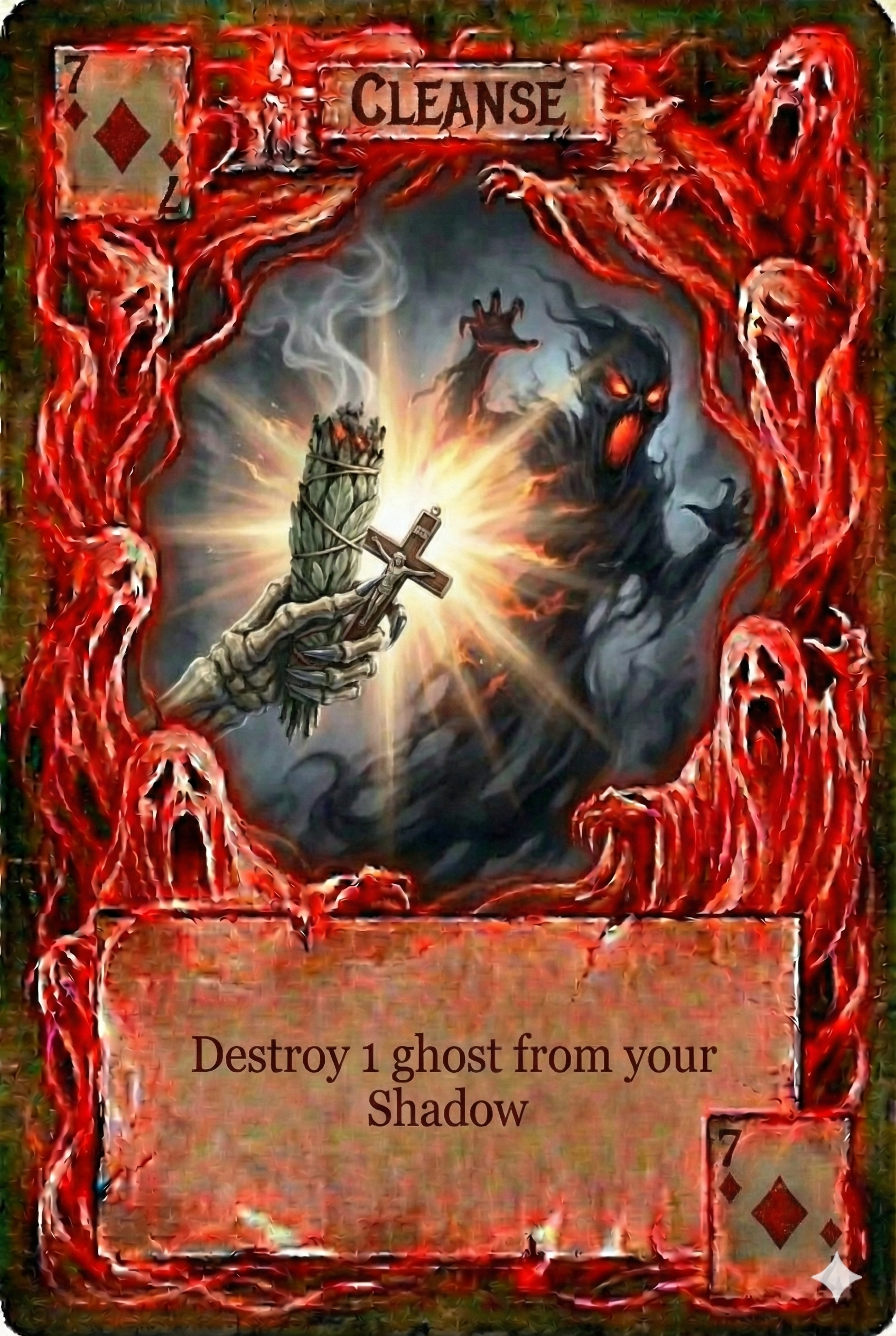 |
| 8 | | 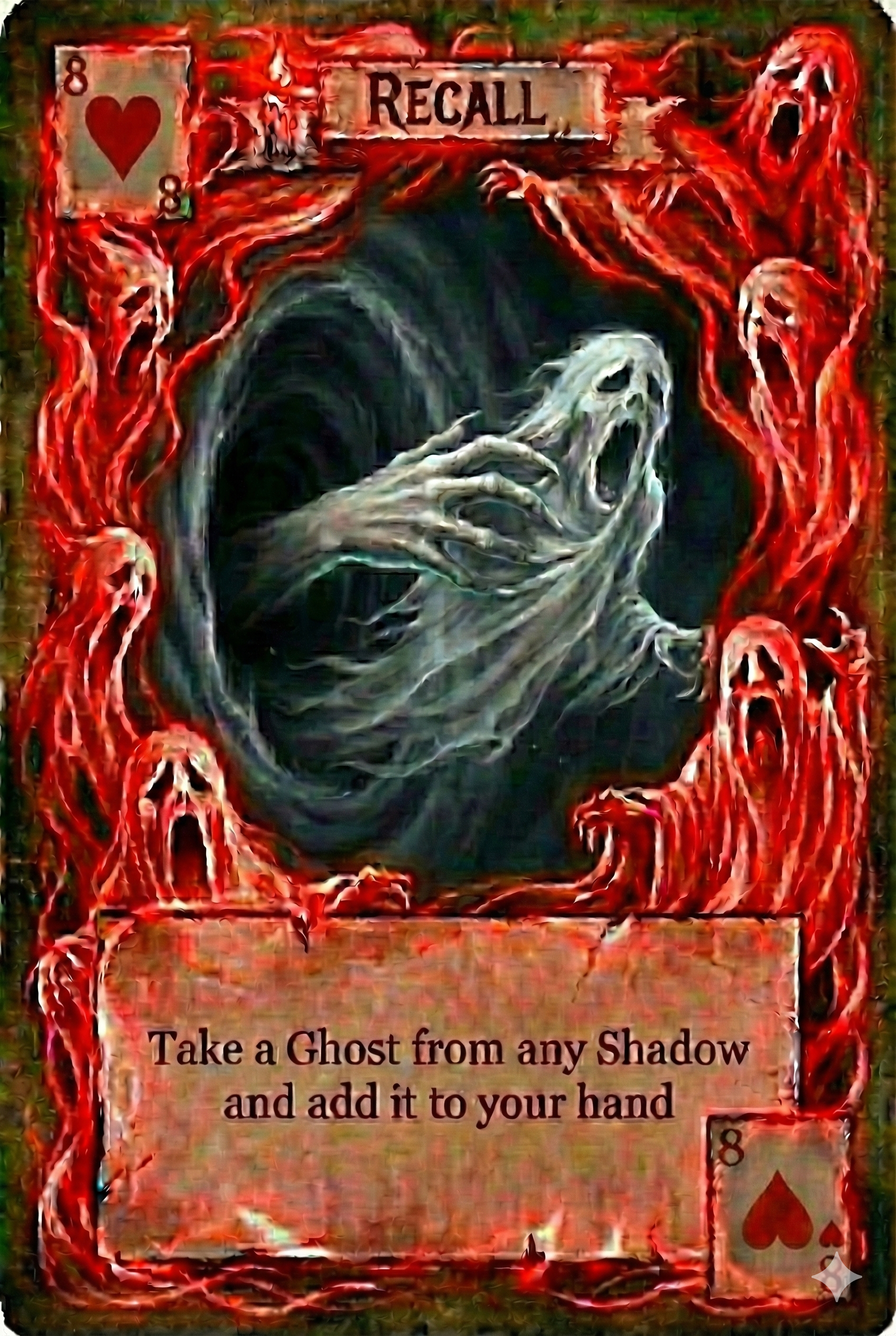 | 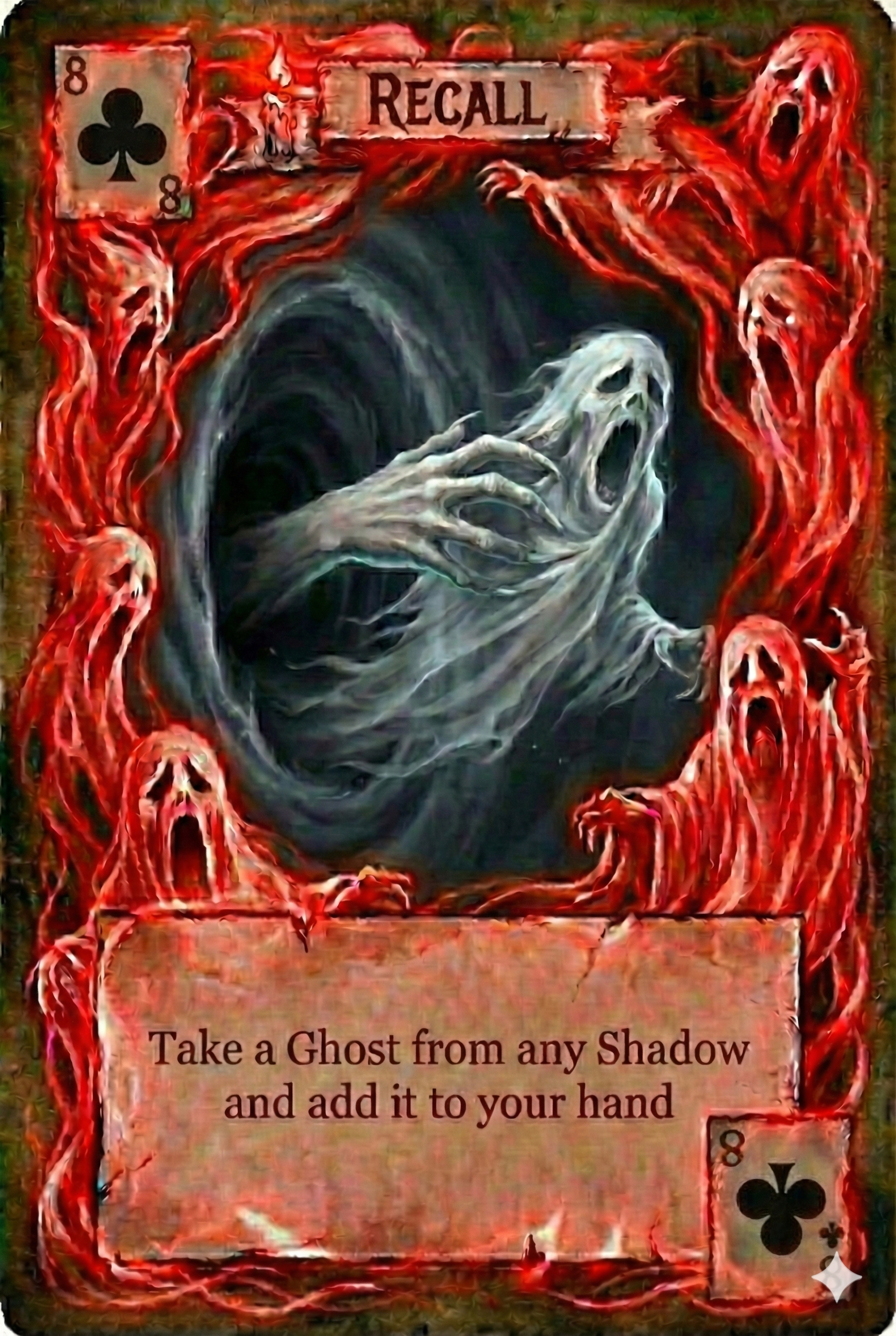 | 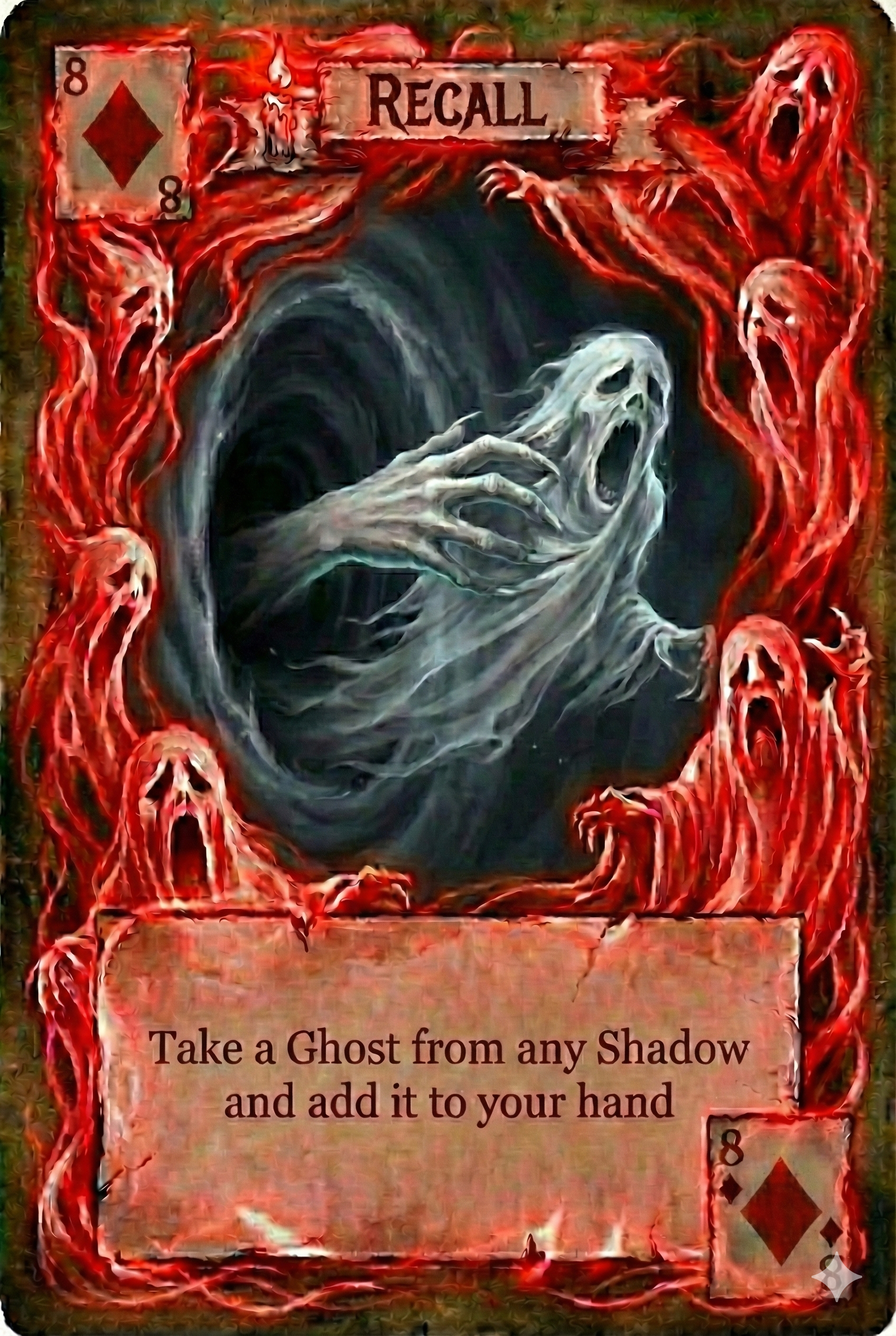 |
| 9 | | 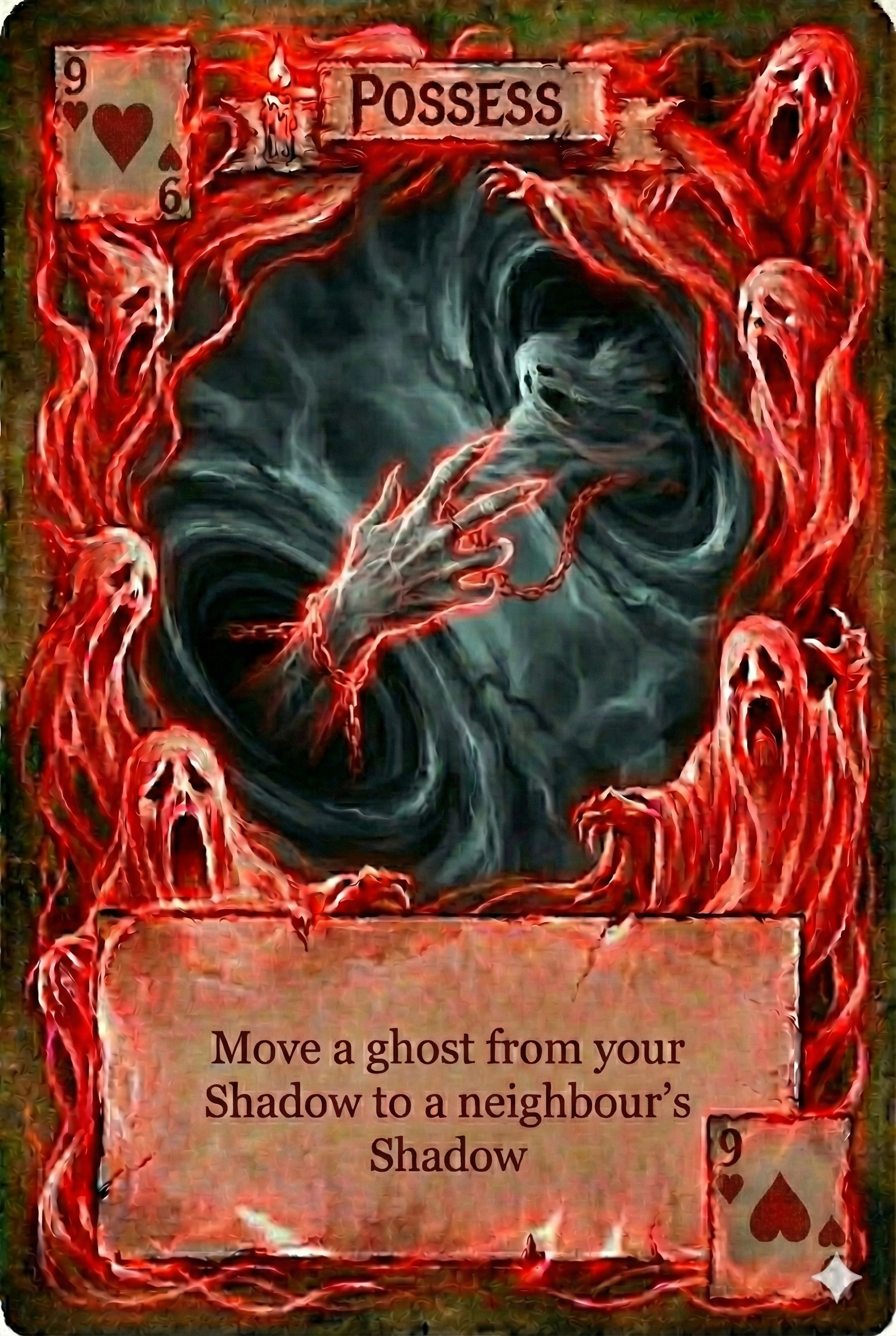 | 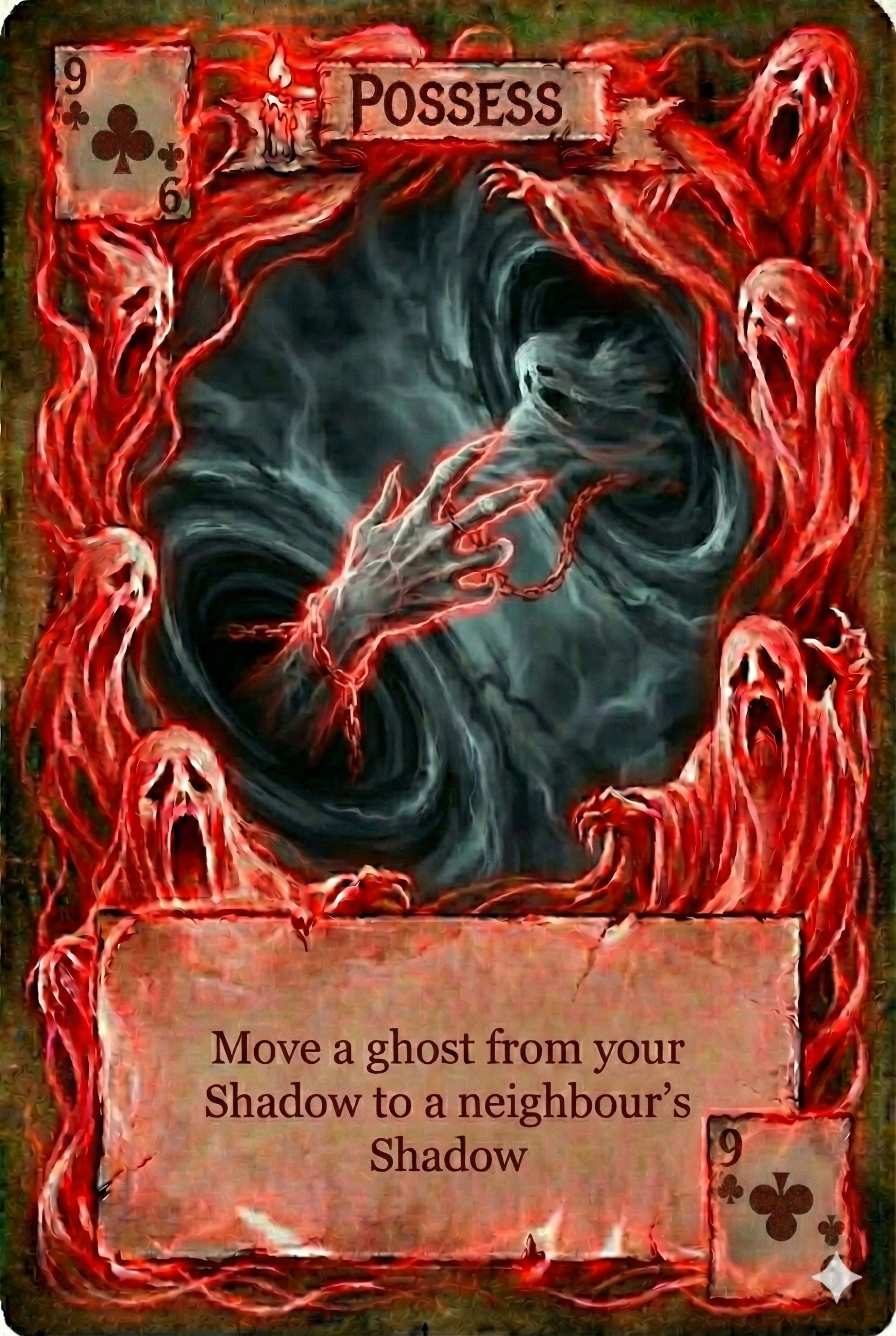 | 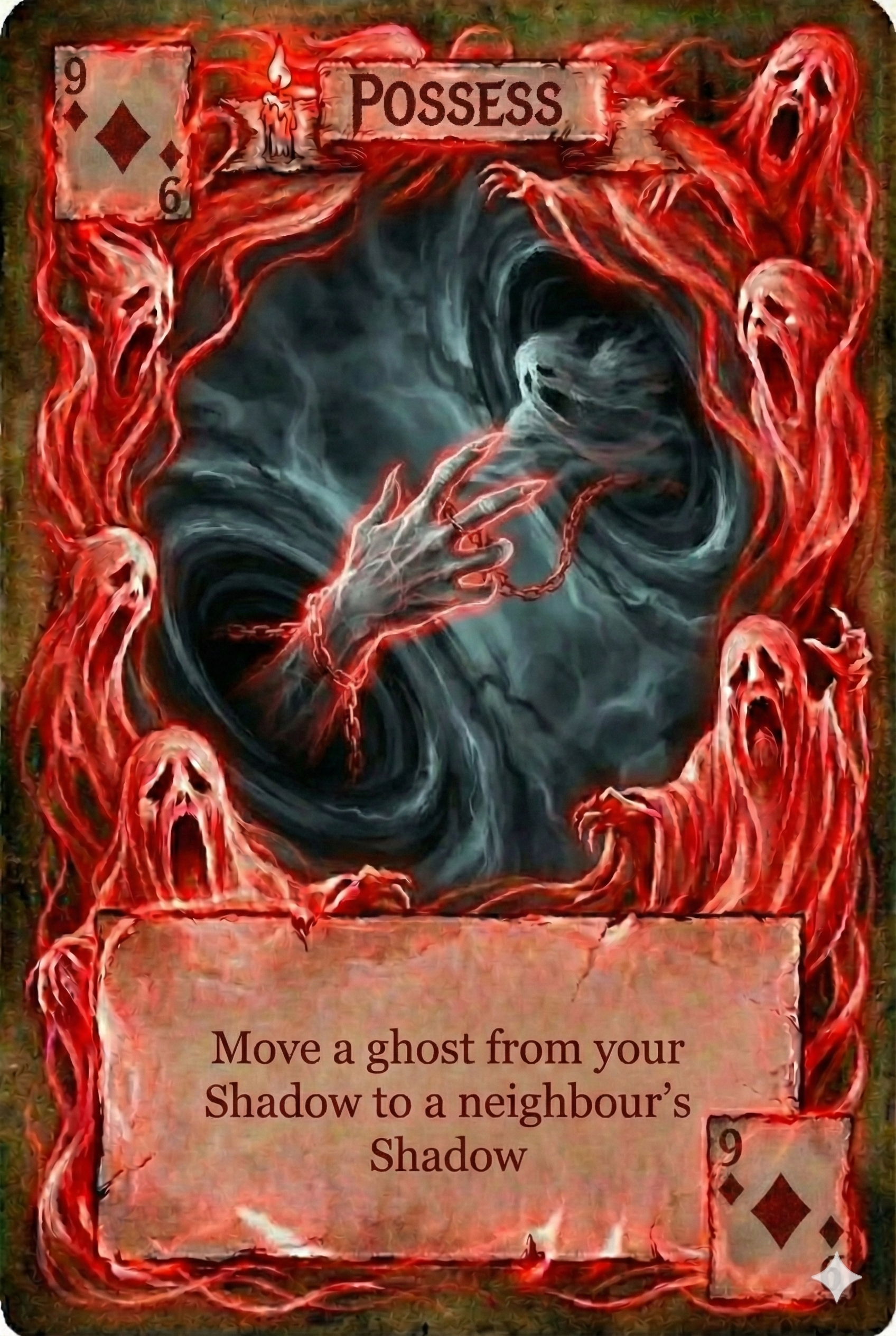 |
| 10 | | 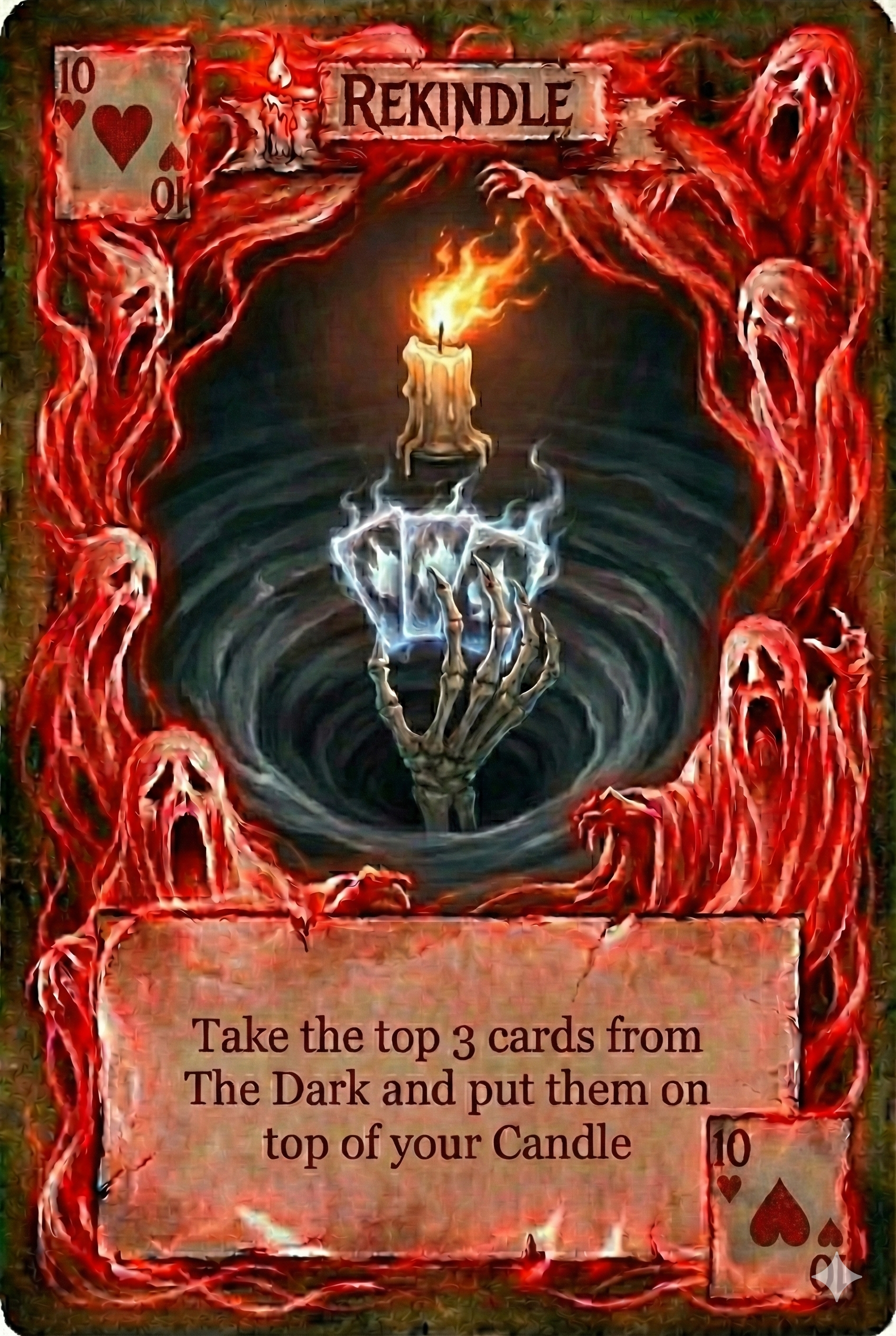 | 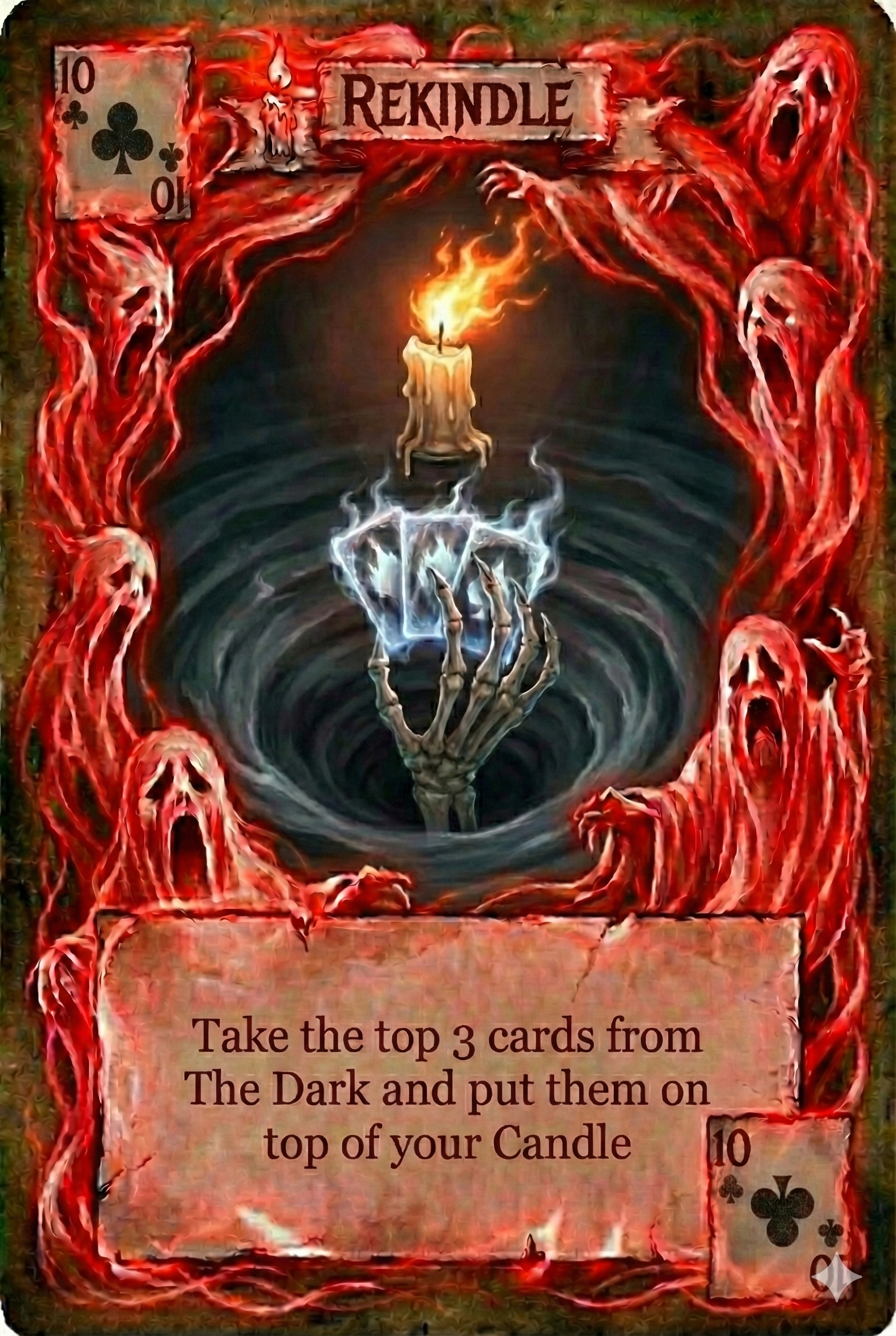 | 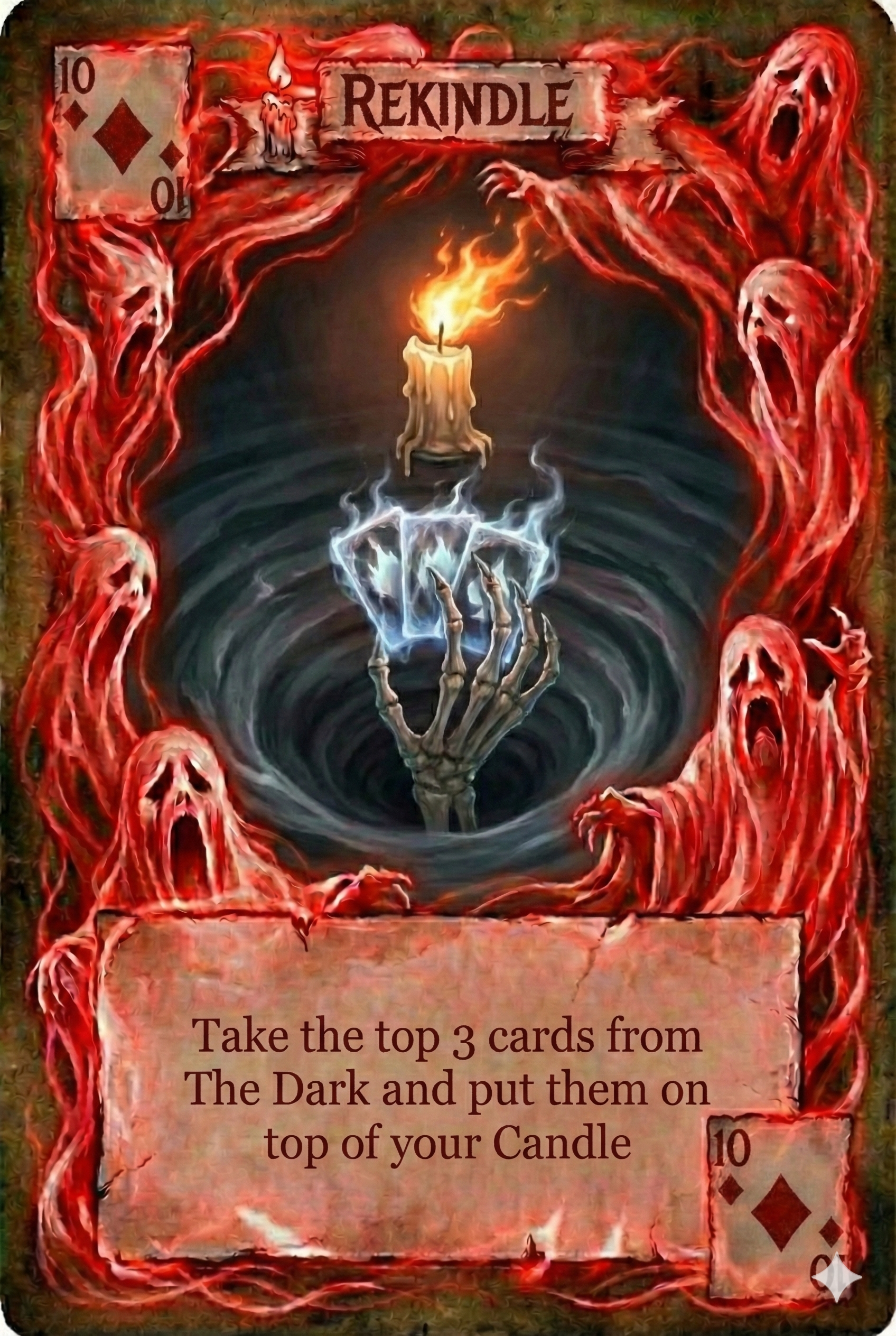 |
| J | | 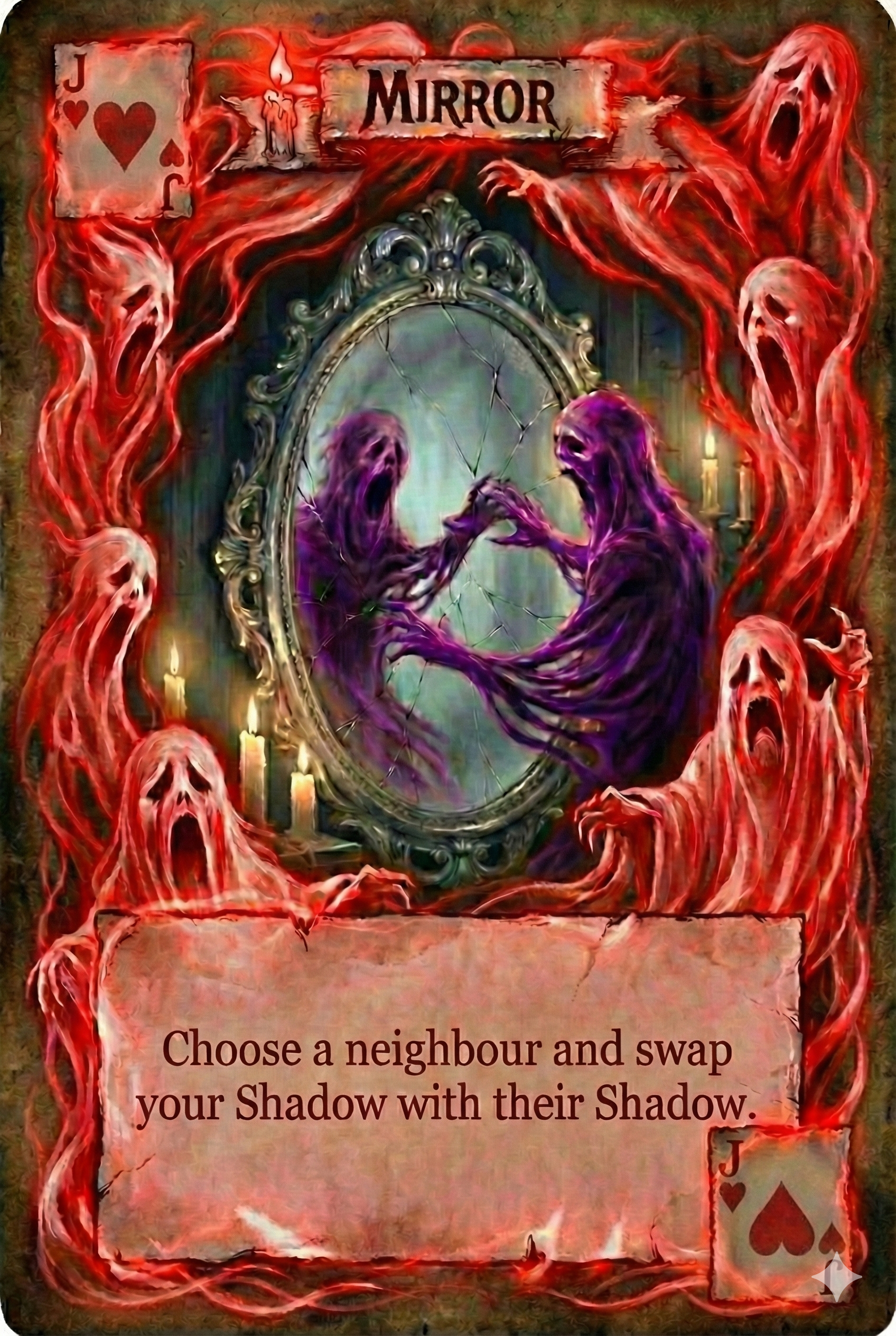 | 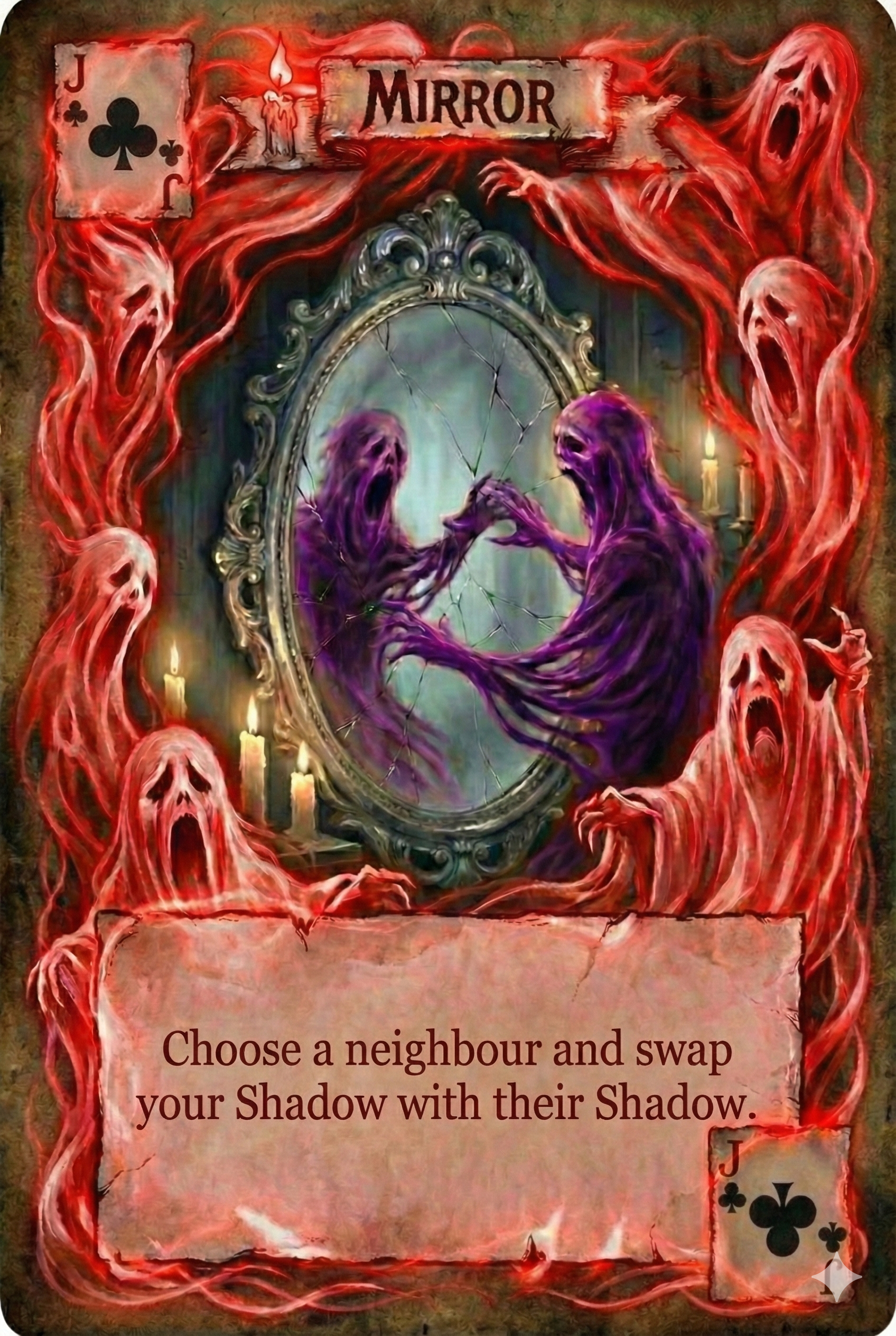 | 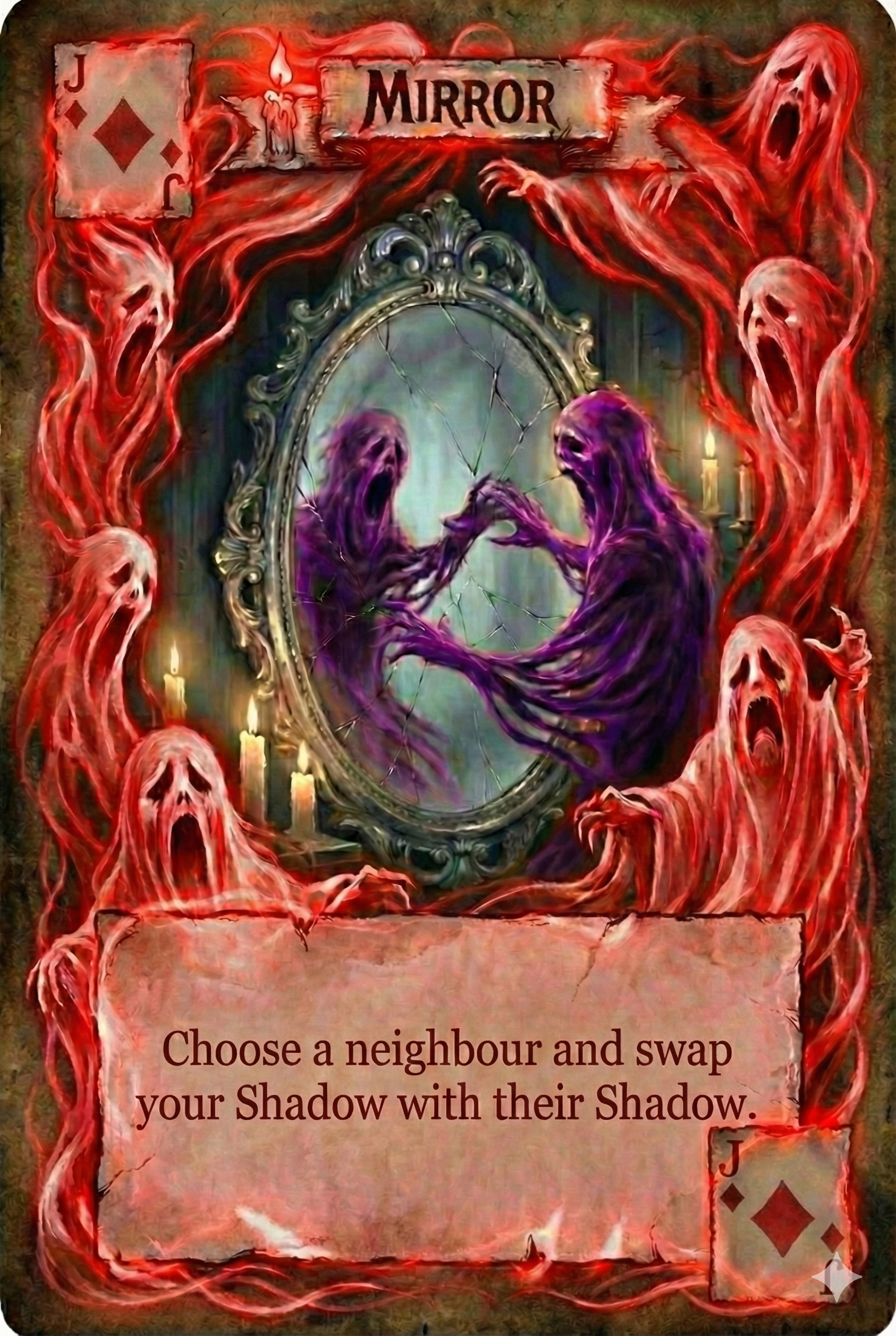 |
| Q | | 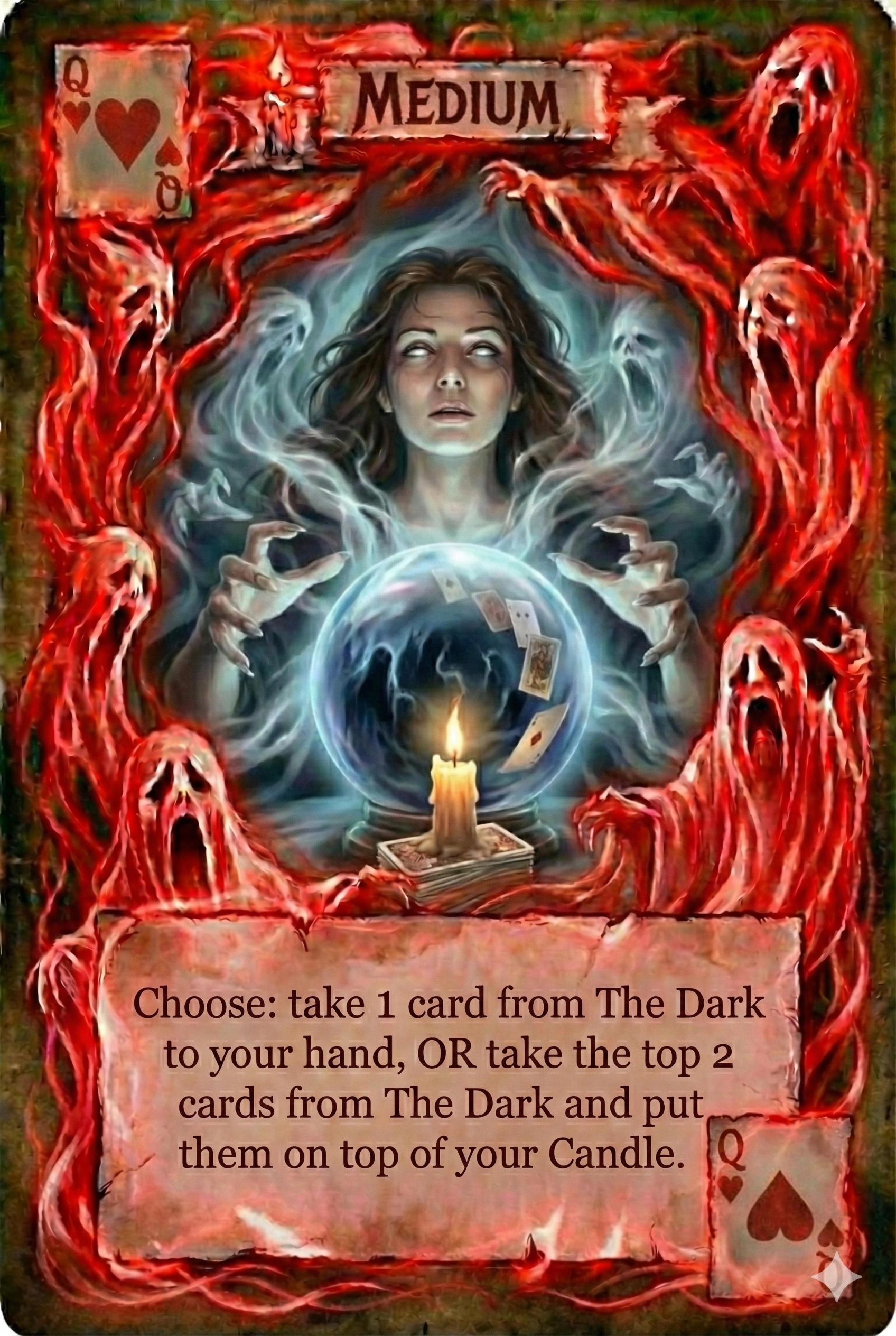 | 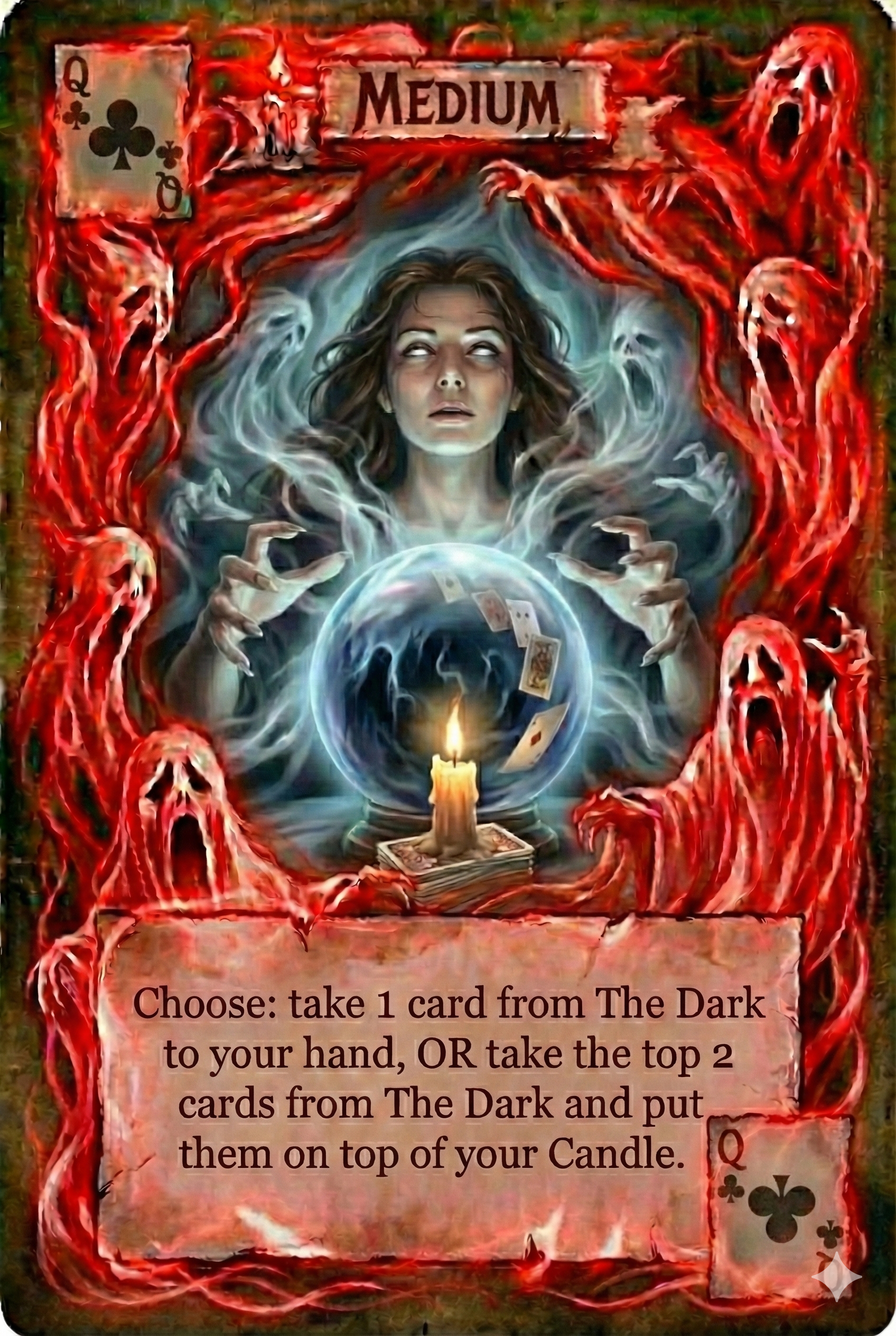 | 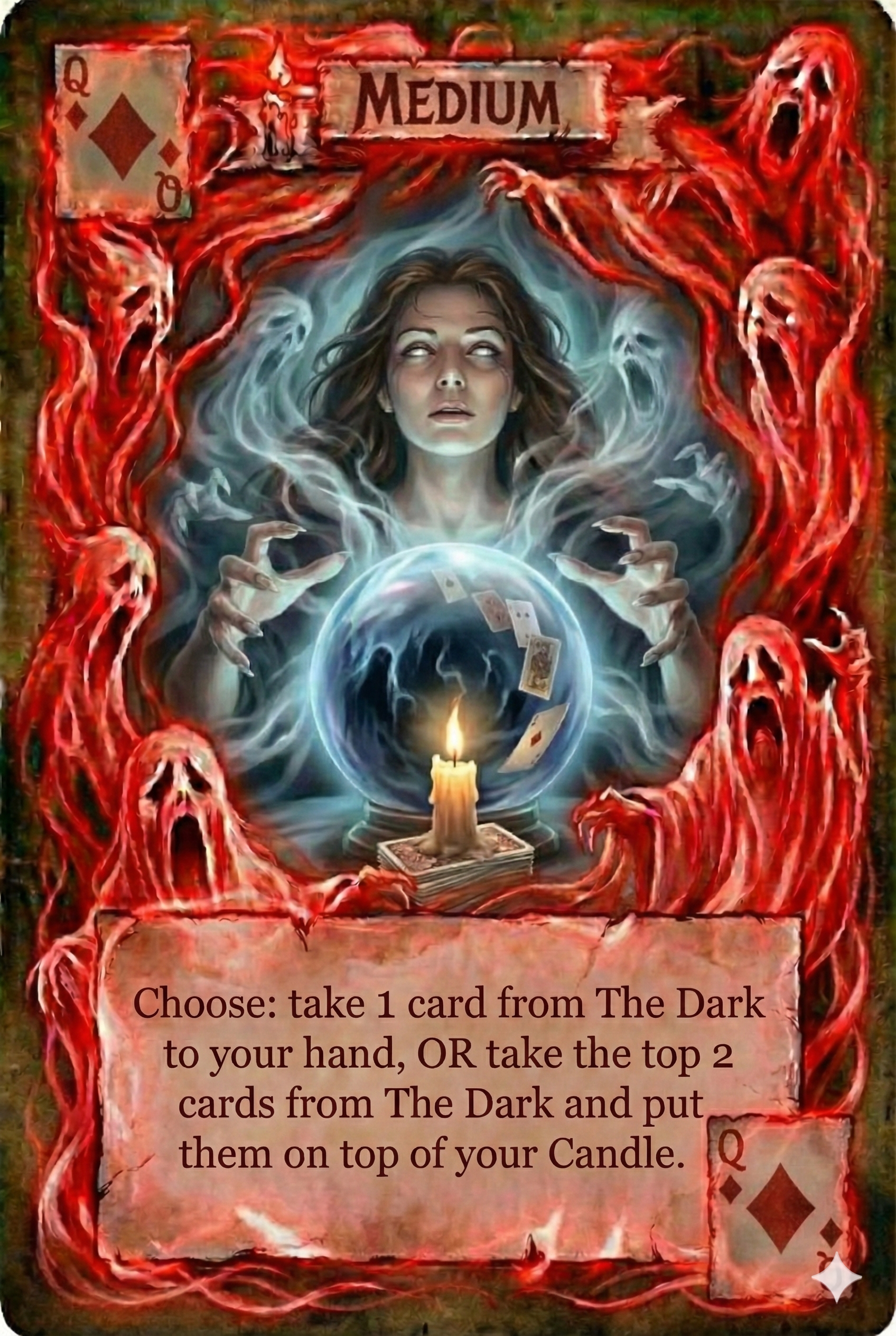 |
| K | | 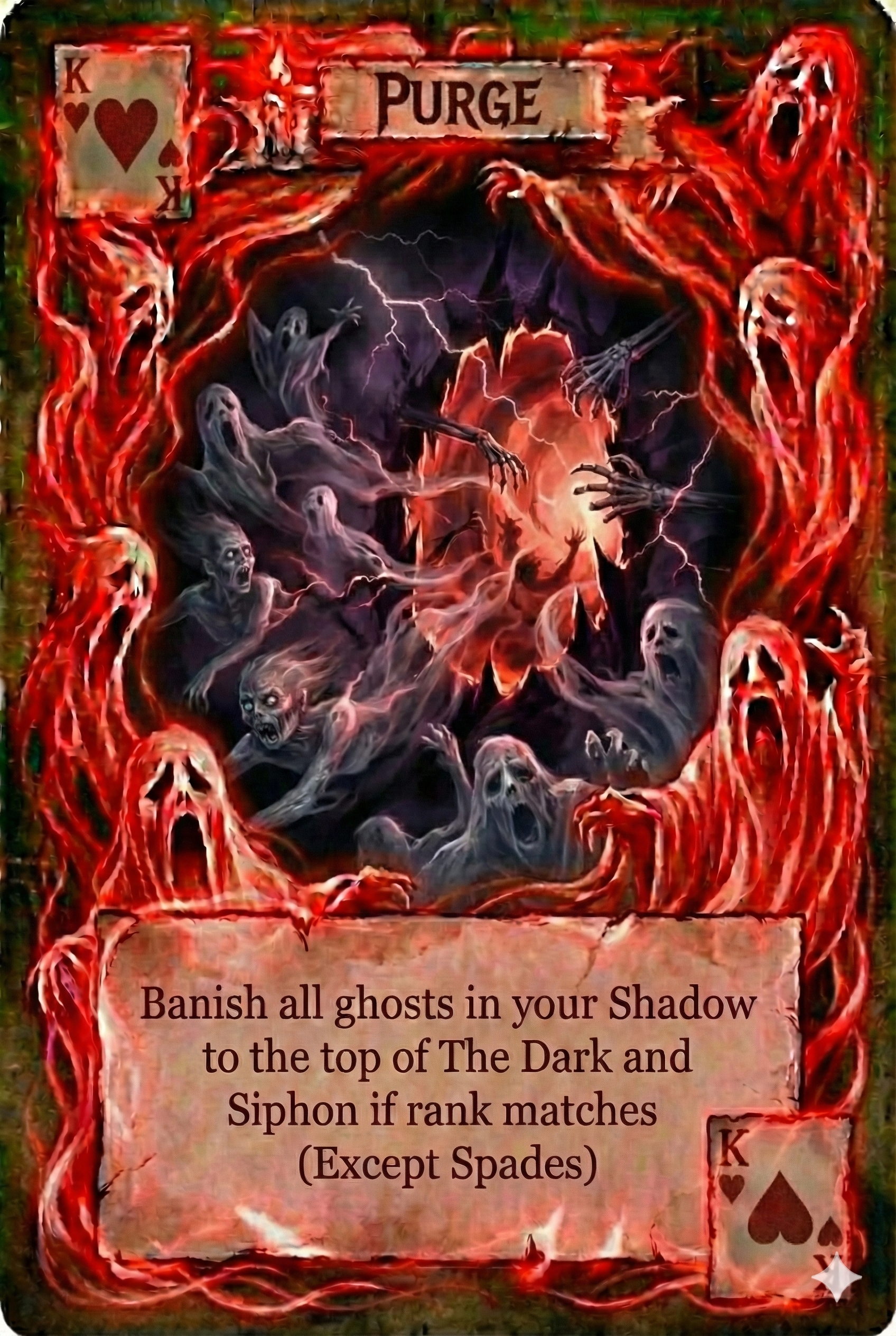 | 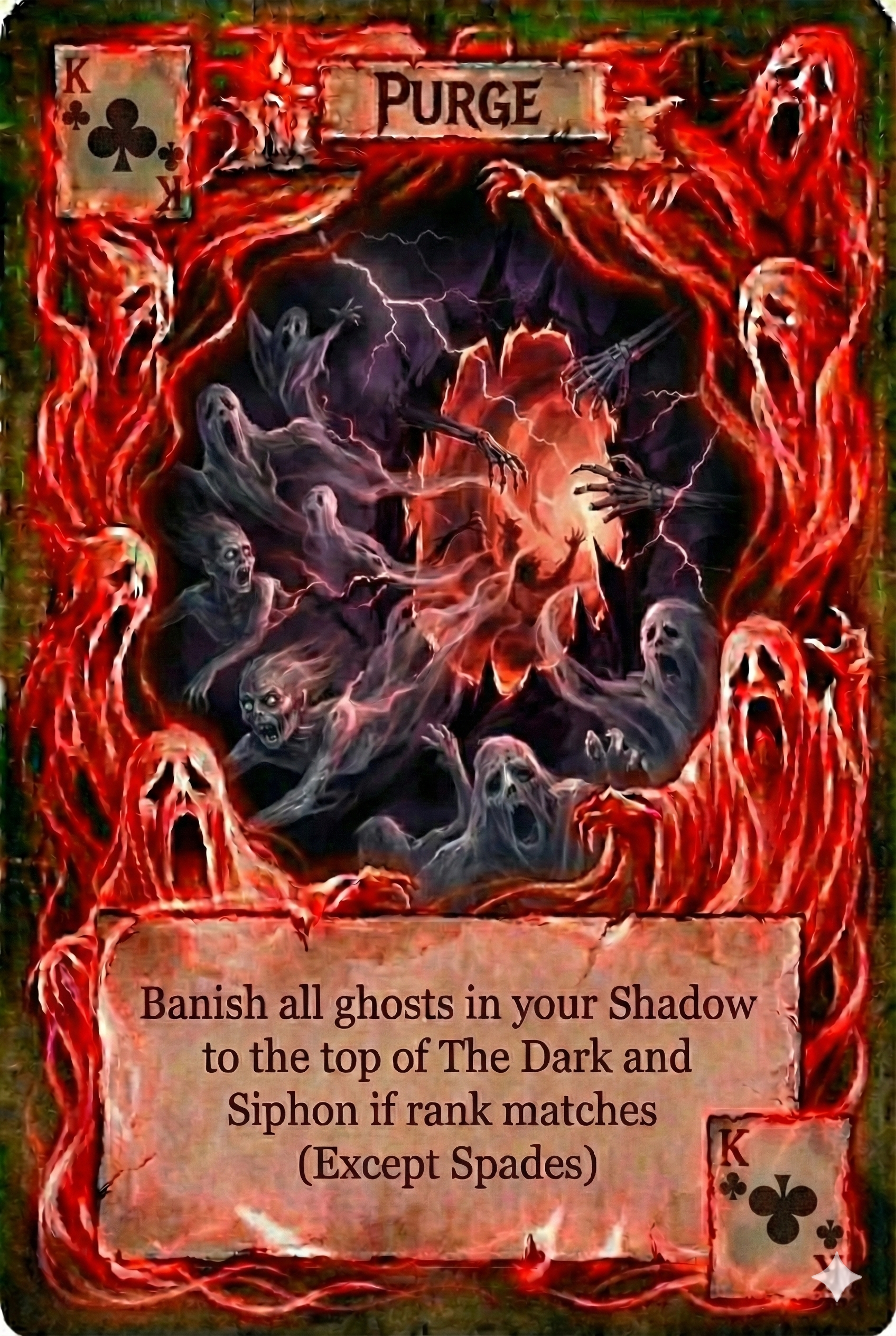 | 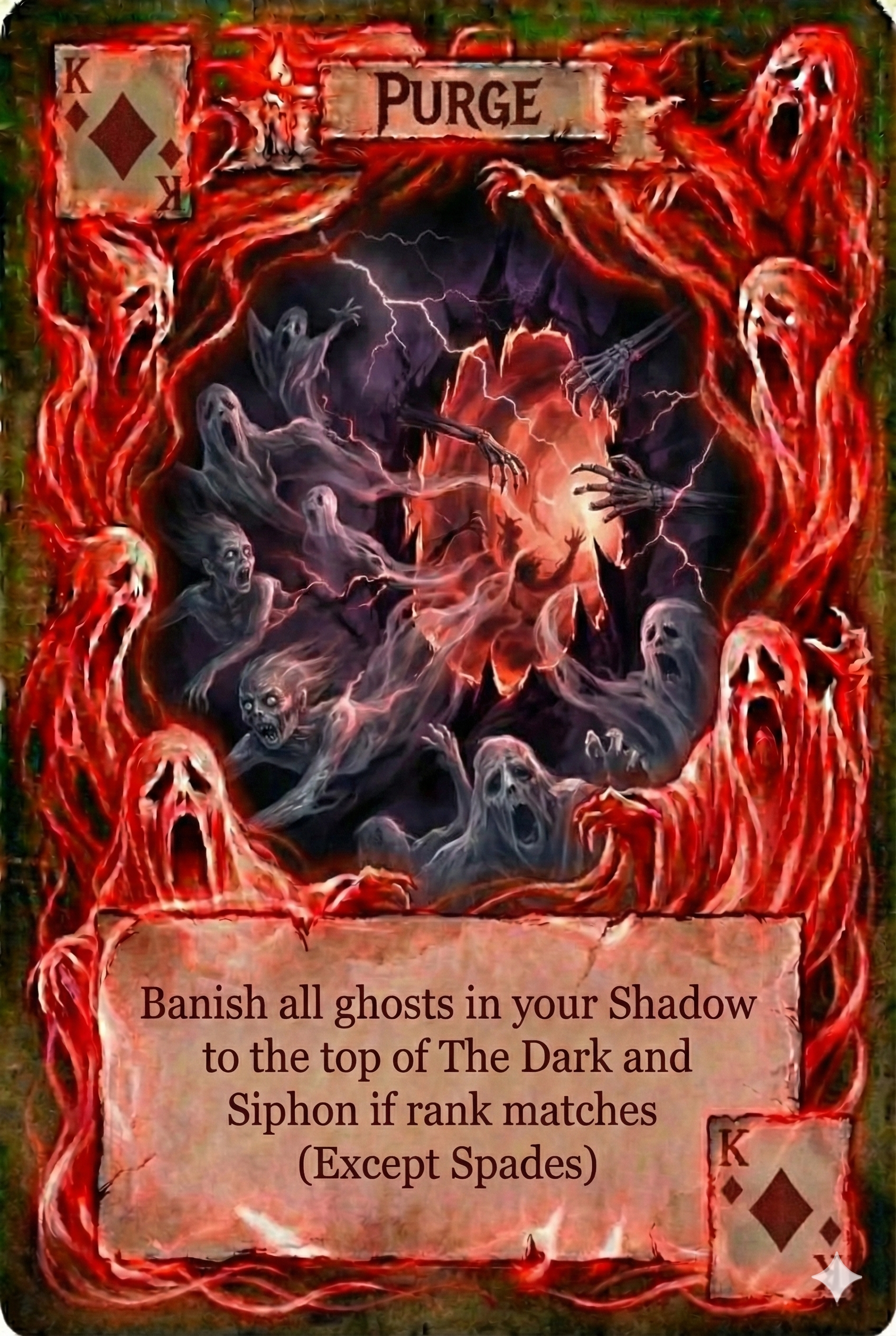 |
| ★ Joker | | |||